
What this calculator does
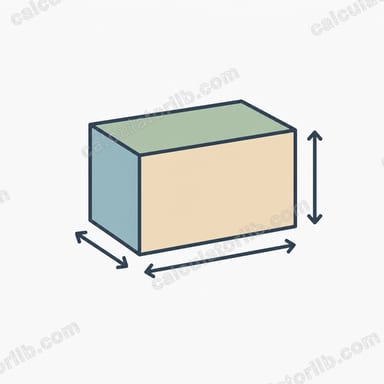
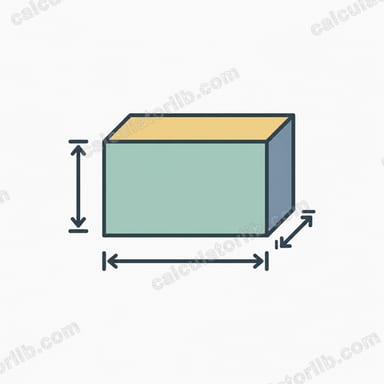
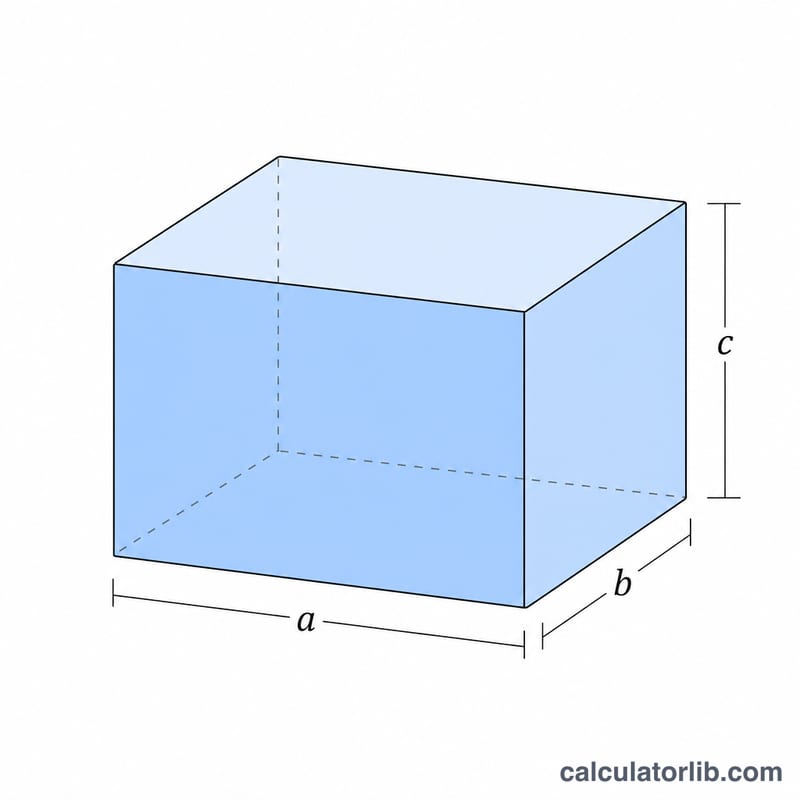
A cuboid (also called a rectangular box, rectangular parallelepiped or rectangular prism) is a solid with six rectangular faces. This tool takes the three edge lengths — Length a, Width b and Height c — and instantly returns the volume V and the total surface area S. The inputs are unitless: simply enter all three lengths in the same unit and read the answers in the matching power of that unit. If you enter centimetres, V comes out in cm³ and S in cm².
How to use it
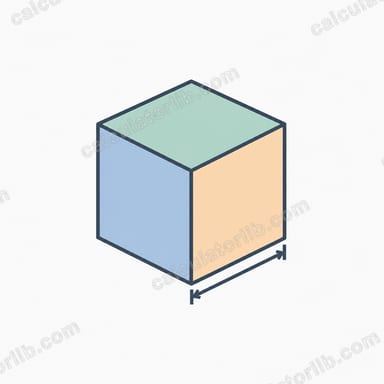
Enter the three edge lengths in any consistent unit, then read the results. Because 1 cm³ equals 1 mL, this calculator is handy for estimating the liquid capacity of box-shaped containers — divide a result in cm³ by 1000 to get litres. A cube is just the special case where \(a = b = c\).
The formulas explained
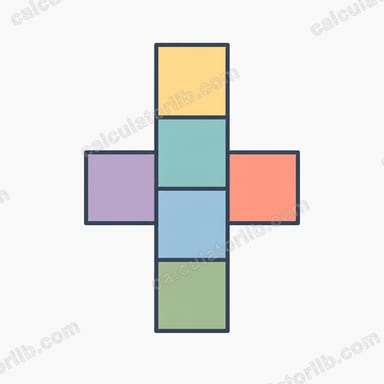
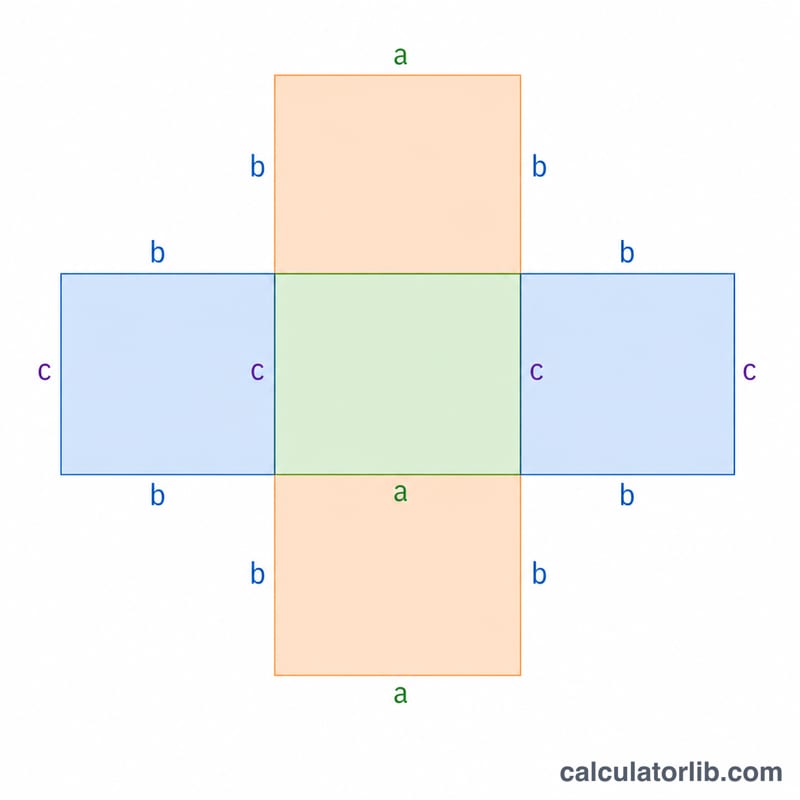
The volume is the simple product of the three edges, $$V = a \times b \times c$$ The surface area sums the areas of all six faces. Opposite faces are equal, so there are three distinct face areas: \(ab\), \(bc\) and \(ca\). Doubling their sum gives $$S = 2(ab + bc + ca)$$
Worked example
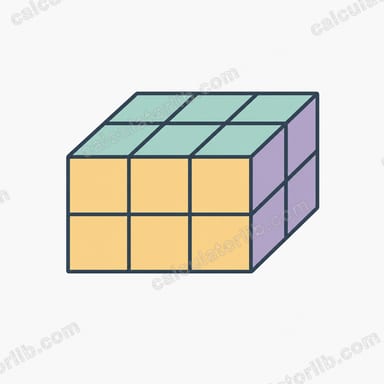
For a box with \(a = 3\), \(b = 2\), \(c = 1\):
$$V = 3 \times 2 \times 1 = 6 \text{ cubic units} \quad (6 \text{ cm}^3 = 6 \text{ mL})$$
$$S = 2 \times (3 \times 2 + 2 \times 1 + 1 \times 3) = 2 \times (6 + 2 + 3) = 2 \times 11 = 22 \text{ square units}$$
FAQ
What units does it use? None in particular — use any single length unit for all three inputs. The volume is that unit cubed and the surface area is that unit squared.
Can an edge be zero? Yes, but the box collapses: volume becomes 0 and only the remaining face area contributes. Negative lengths are physically meaningless and are treated as zero.
How do I get litres? Enter lengths in centimetres, then divide the cm³ volume by 1000 to convert to litres.