
What Are MET Minutes?
MET stands for Metabolic Equivalent of Task, a way of expressing the energy cost of physical activity. One MET equals the energy you use sitting quietly. An activity rated at 8 METs burns roughly eight times the energy of resting. MET-minutes combine that intensity with how long you exercise, giving a single number that captures the total "dose" of activity.
How to Use This Calculator
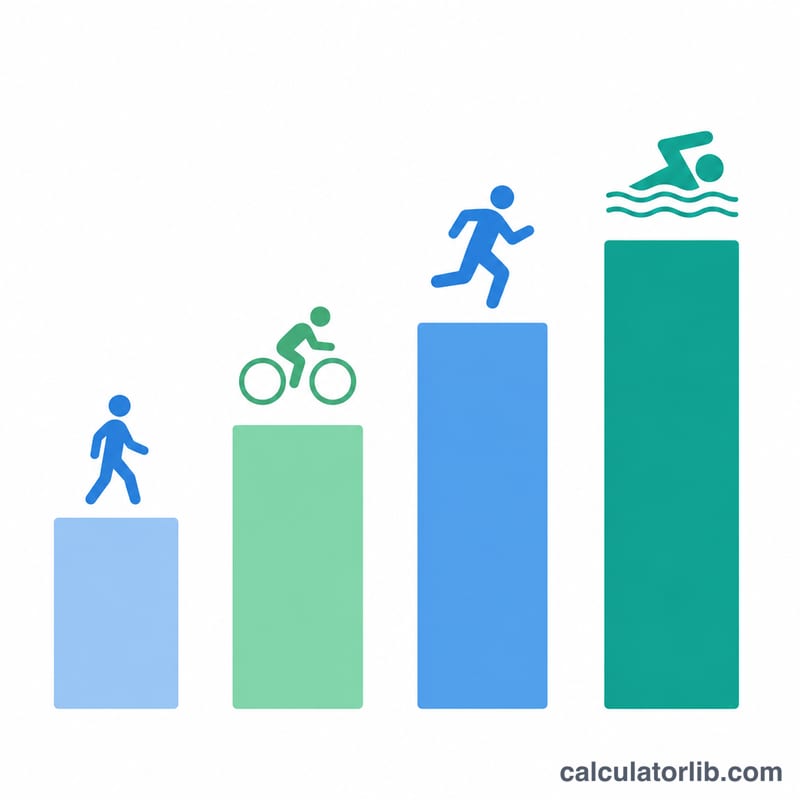
Enter the MET value of your activity, the duration in minutes, and how many times per week you do it. The calculator returns MET-minutes for a single session and your total weekly MET-minutes. Look up MET values from the Compendium of Physical Activities — for example, walking briskly is about 3.8 METs, running is 8–11 METs, and cycling vigorously is around 8 METs.
The Formula
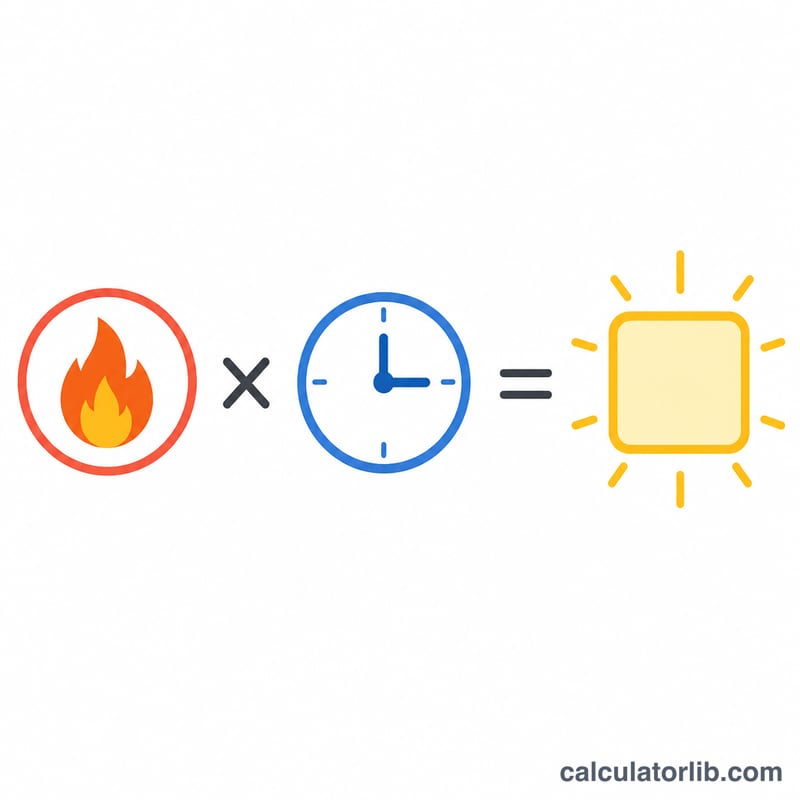
The core calculation is simple: \(\text{MET-minutes} = \text{MET} \times \text{duration (minutes)}\). To get a weekly figure, multiply by the number of sessions per week. Health guidelines often recommend at least 500–1,000 MET-minutes per week for substantial health benefits.
$$\text{Weekly MET-min} = \text{MET} \times \text{Duration (min)} \times \text{Sessions/week}$$
Worked Example
Suppose you run at 8 METs for 30 minutes. Your per-session MET-minutes are $$8 \times 30 = 240 \text{ MET-min}.$$ If you run 3 times a week, your weekly total is $$240 \times 3 = 720 \text{ MET-min/week}$$ — comfortably within the recommended range.
FAQ
What is a good weekly MET-minutes target? Many guidelines suggest 500–1,000 MET-minutes per week, with greater benefits above that range.
Where do I find MET values? The Compendium of Physical Activities lists METs for hundreds of activities. Common values: light walking ~2.5, brisk walking ~3.8, swimming ~6–8, running ~8–11.
Does MET-minutes account for body weight? No. MET-minutes measure relative intensity and time. To estimate calories burned you also need body weight.