
What is a normal heart rate by age?
Resting heart rate is the number of times your heart beats per minute (BPM) while you are calm and at rest. The "normal" range shrinks as we grow: a newborn's heart beats very fast, while a healthy adult typically rests between 60 and 100 BPM. This calculator returns the expected normal resting BPM range for your age band and flags whether an entered pulse looks high (tachycardia) or low (bradycardia). It is an educational tool and not a substitute for medical advice.
How to use it
Enter the person's age in years. For infants under one year, use a fraction (for example 0.5 for six months). Optionally enter a measured resting heart rate to see whether it falls inside, above, or below the normal range. To measure resting BPM accurately, count the pulse for 60 seconds after sitting quietly for at least five minutes.
The age bands explained
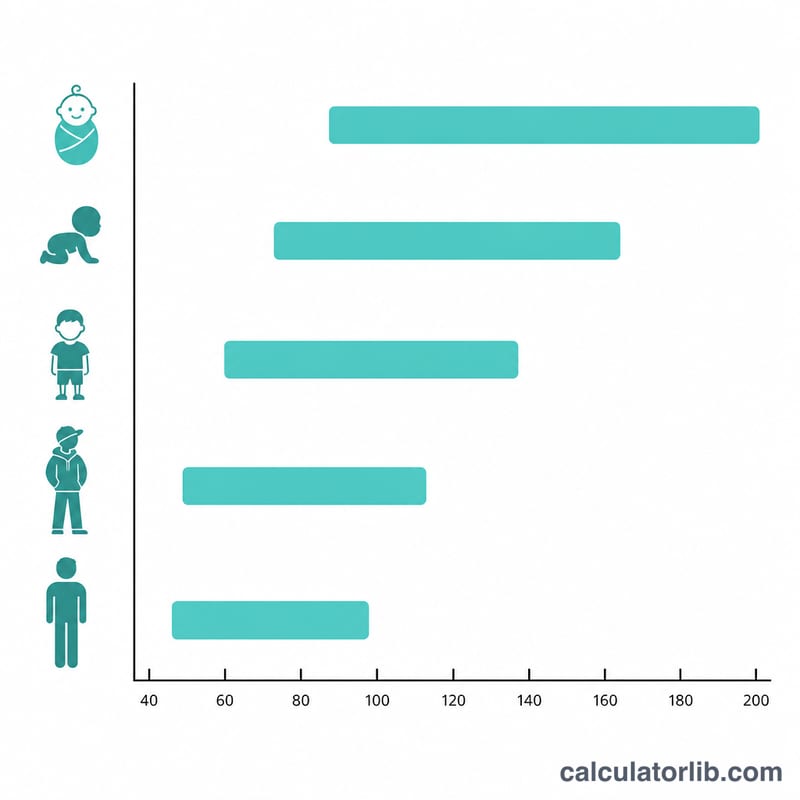
The calculator uses widely cited pediatric and adult resting-rate bands: newborns 70–190, infants 80–160, toddlers 80–130, preschool 80–120, school age 70–115, adolescents 60–105, and adults 15+ 60–100 BPM. Values below the band's low number suggest bradycardia; values above the high number suggest tachycardia. The status is determined as:
$$\text{Status} = \begin{cases} \text{Tachycardia} & \text{BPM} > \text{High}(\text{Age}) \\[4pt] \text{Bradycardia} & \text{BPM} < \text{Low}(\text{Age}) \\[4pt] \text{Normal} & \text{otherwise} \end{cases}$$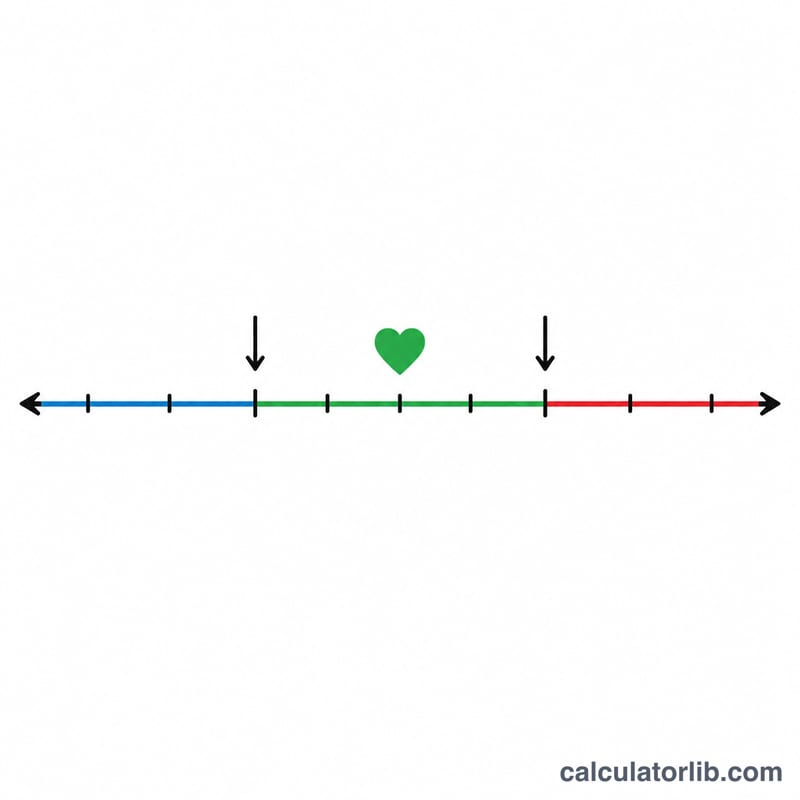
Worked example
For a 30-year-old, the band is Adult (15+ years) with a normal range of 60–100 BPM. The bradycardia threshold is 60 and the tachycardia threshold is 100. If you enter a resting pulse of 72, the status returns "Within normal range." A pulse of 110 would return "Above normal (possible tachycardia)."
FAQ
Is a heart rate of 55 dangerous? In trained athletes a low resting rate can be normal and healthy. In others, persistent rates below 60 with symptoms like dizziness should be checked by a clinician.
Why is my child's rate so high? Younger children naturally have faster hearts. Fever, crying, excitement, and activity raise the rate further, so always measure at rest.
Does this replace a doctor? No. These are general reference ranges; individual normals vary and only a healthcare professional can interpret your situation.