

What Is the Operating Cash Flow Ratio?
The operating cash flow (OCF) ratio is a liquidity metric that measures how well a company can cover its current liabilities with the cash generated from its core operations. Unlike the current ratio, which relies on balance-sheet figures that may include slow-moving inventory or receivables, the OCF ratio uses actual cash flow, making it a stricter and more realistic test of short-term solvency.
How to Use This Calculator
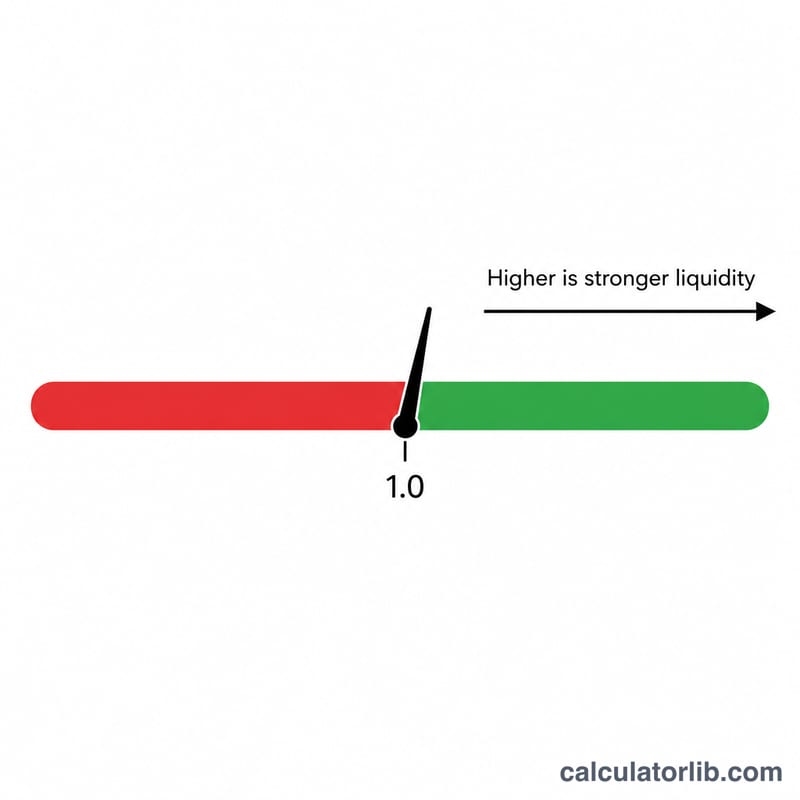
Enter two figures from your financial statements: operating cash flow (from the cash flow statement) and total current liabilities (from the balance sheet). The calculator divides one by the other to produce the ratio. A result of 1.0 or higher means operating cash fully covers current obligations; below 1.0 suggests the business may need to rely on financing, asset sales, or reserves to meet short-term debts.
The Formula Explained
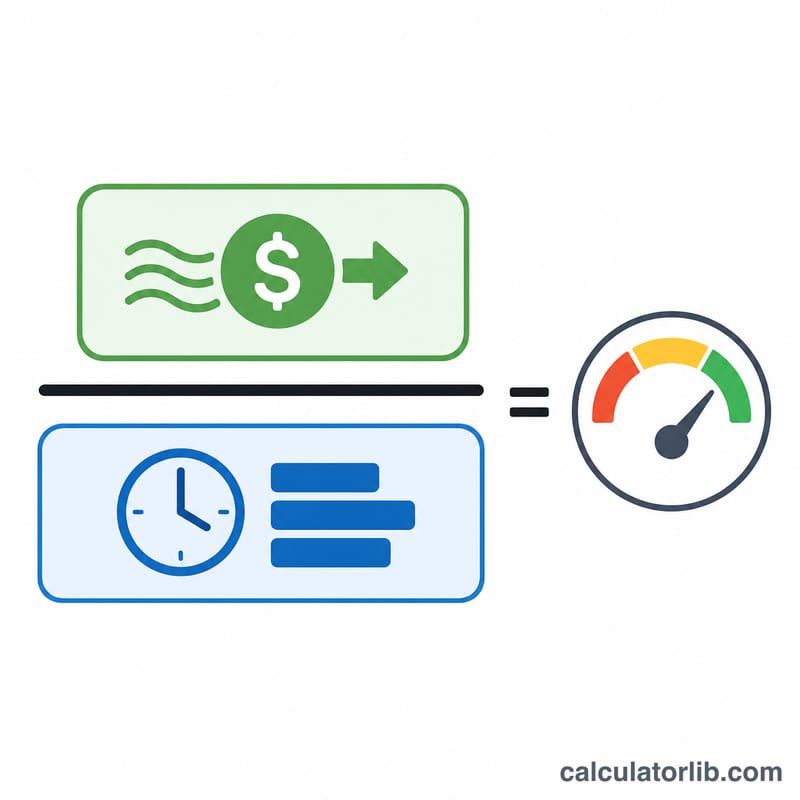
The equation is simply:
$$\text{OCF Ratio} = \frac{\text{Operating Cash Flow}}{\text{Current Liabilities}}$$Both numbers should cover the same accounting period. The result is expressed as a multiple (e.g., \(1.5\times\)), meaning operations generate 1.5 times the cash needed to pay current liabilities. We also show it as a percentage for convenience.
Worked Example
Suppose a company reports operating cash flow of $120,000 and current liabilities of $80,000. The ratio is
$$120{,}000 \div 80{,}000 = 1.5$$This means the company generates 50% more cash than it needs to settle its near-term obligations — a healthy position.
FAQ
What is a good OCF ratio? Generally, a ratio above 1.0 is considered healthy, indicating operations cover current liabilities. Higher is usually better, though norms vary by industry.
Where do I find operating cash flow? It appears at the bottom of the "cash flow from operating activities" section of the cash flow statement.
How is this different from the current ratio? The current ratio uses current assets, which can include illiquid items. The OCF ratio uses real cash flow, offering a tougher liquidity test.