
What Is the Cash Flow to Debt Ratio?
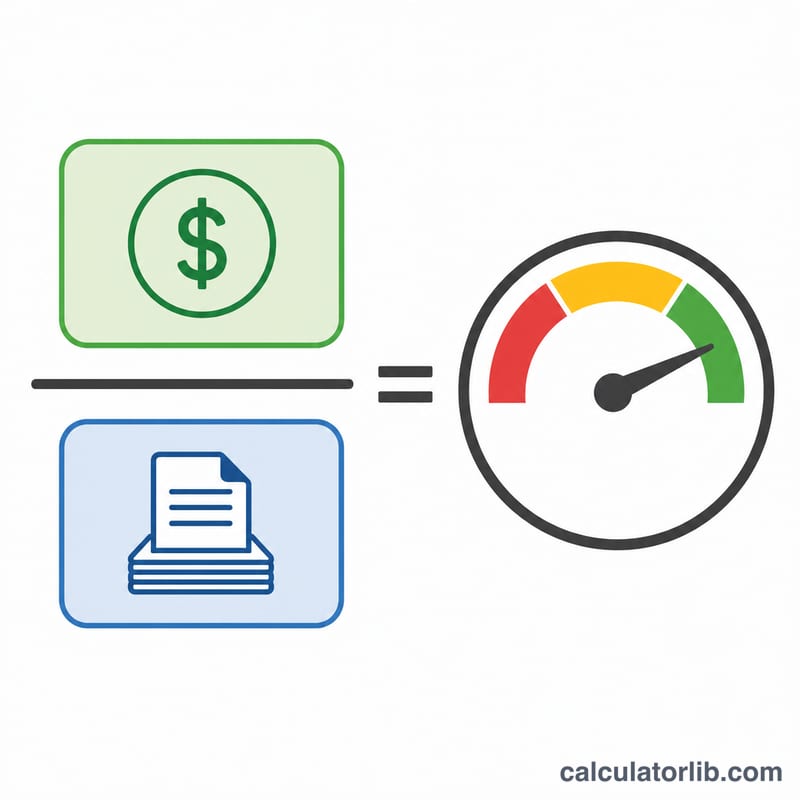
The cash flow to debt ratio measures how much of a company's total debt could be covered by the cash generated from its core operations in a year. It divides operating cash flow by total debt, giving a quick read on a firm's ability to repay obligations using internally generated cash rather than new borrowing or asset sales. A higher ratio signals stronger debt-servicing capacity.
How to Use This Calculator
Enter your operating cash flow (from the cash flow statement) and your total debt (short-term plus long-term interest-bearing debt from the balance sheet). The calculator returns the ratio and its percentage form. As a rough guide, a ratio above 0.20 (20%) is often considered healthy, while a low or negative ratio may indicate repayment stress.
The Formula Explained
$$\text{Cash Flow to Debt} = \frac{\text{Operating Cash Flow}}{\text{Total Debt}}$$ If the result is \(0.30\), the company generates enough operating cash each year to retire about 30% of its total debt — implying it could theoretically clear all debt in roughly 3.3 years if cash flow held steady and were fully dedicated to repayment.
Worked Example
Suppose a business reports operating cash flow of $120,000 and total debt of $400,000. The ratio is $$120{,}000 \div 400{,}000 = 0.30,$$ or 30%. That means operating cash flow covers 30% of total debt in one year — a reasonably comfortable position.
FAQ
What counts as total debt? Typically all interest-bearing liabilities: short-term borrowings, the current portion of long-term debt, and long-term debt.
Is a higher ratio always better? Generally yes, since it shows stronger ability to cover debt from operations, though extremely high ratios may also suggest underuse of leverage.
What if the ratio is negative? A negative ratio means operating cash flow is negative — the business is burning cash and cannot service debt from operations.