
What Is Free Cash Flow?
Free Cash Flow (FCF) is the cash a company has left over after it pays for its day-to-day operations and the long-term investments needed to maintain or grow its business. It is one of the most closely watched metrics in fundamental analysis because, unlike accounting profit, it reflects real cash that can be returned to shareholders, used to pay down debt, or reinvested.
The Formula
This calculator uses the standard definition:
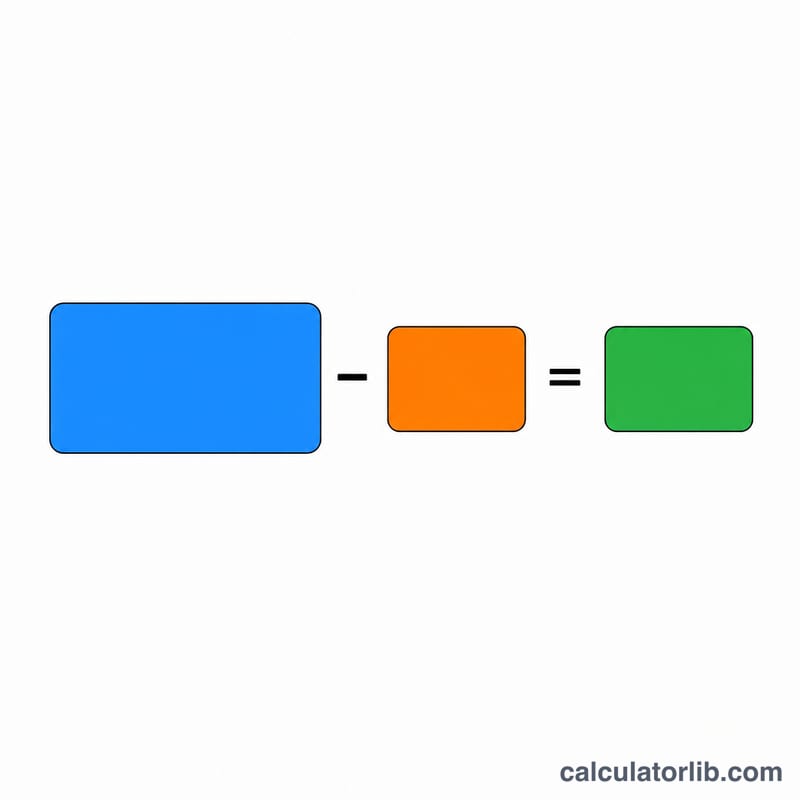
$$\text{FCF} = \text{Operating Cash Flow} - \text{Capital Expenditures}$$Operating Cash Flow (OCF) comes from the top of the cash flow statement and represents cash generated by core operations. Capital Expenditures (CapEx) are the funds spent on property, plant, and equipment, typically found under investing activities. Subtracting CapEx leaves the cash that is genuinely "free."
How to Use It
Enter the Operating Cash Flow and Capital Expenditures from a company's cash flow statement (use the same currency and period). The calculator returns the Free Cash Flow and an FCF margin showing what share of operating cash survives after investment.
Worked Example
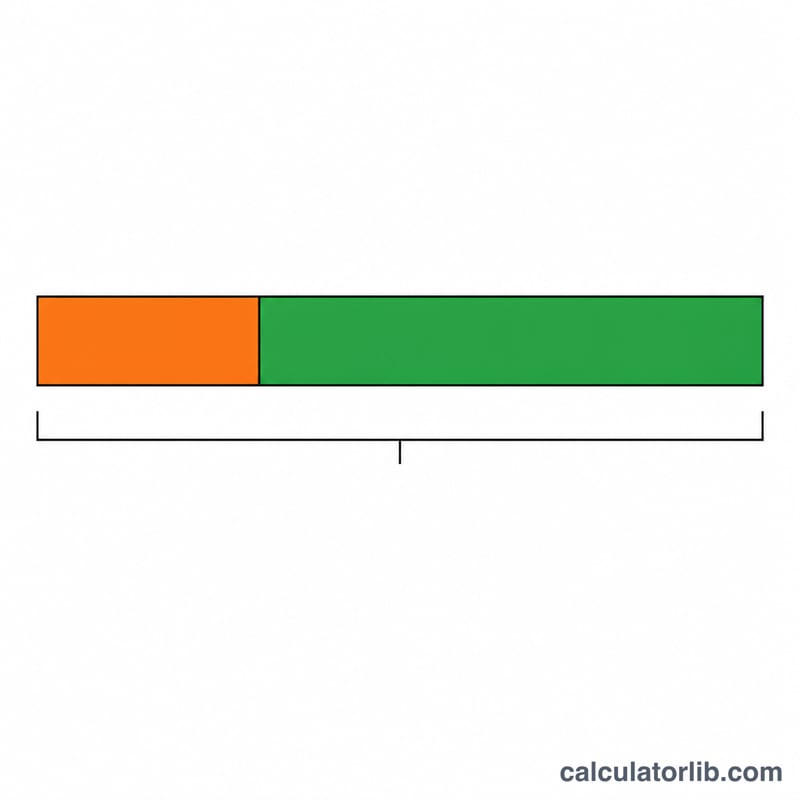
Suppose a company reports Operating Cash Flow of 1,000,000 and Capital Expenditures of 300,000. Then
$$\text{FCF} = 1{,}000{,}000 - 300{,}000 = 700{,}000$$The FCF margin is
$$\frac{700{,}000}{1{,}000{,}000} = 70\%$$meaning 70 cents of every operating-cash dollar is free after reinvestment.
FAQ
Can FCF be negative? Yes. Heavy investment or weak operations can push FCF below zero, common for fast-growing or capital-intensive firms.
Is higher FCF always better? Generally yes, but very high FCF could also signal under-investment in future growth.
Where do I find CapEx? Look for "purchases of property and equipment" in the investing-activities section of the cash flow statement. Enter it as a positive number here.