
What Is the LTV:CAC Ratio?
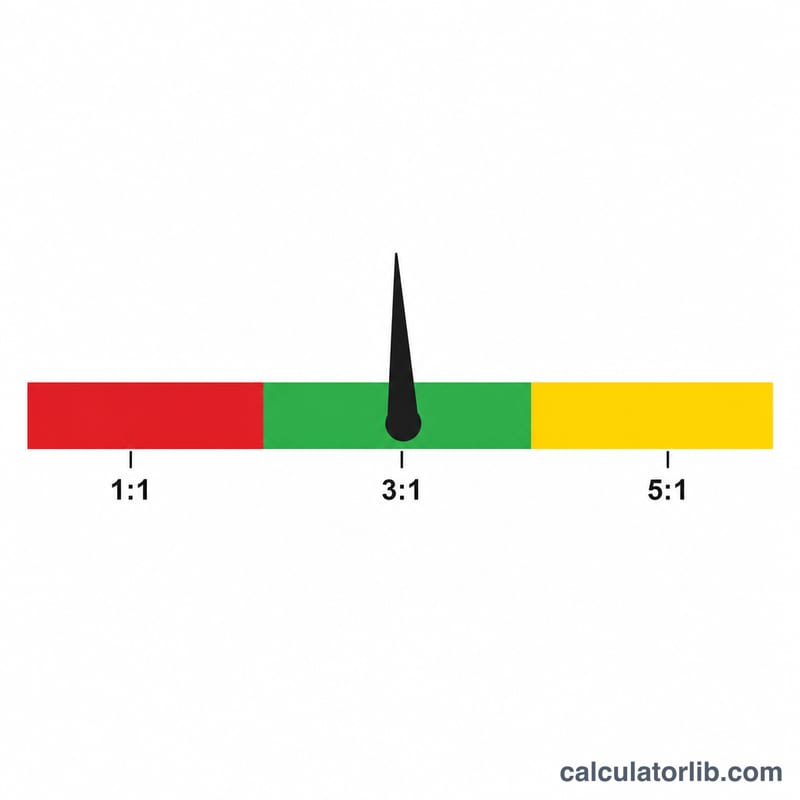
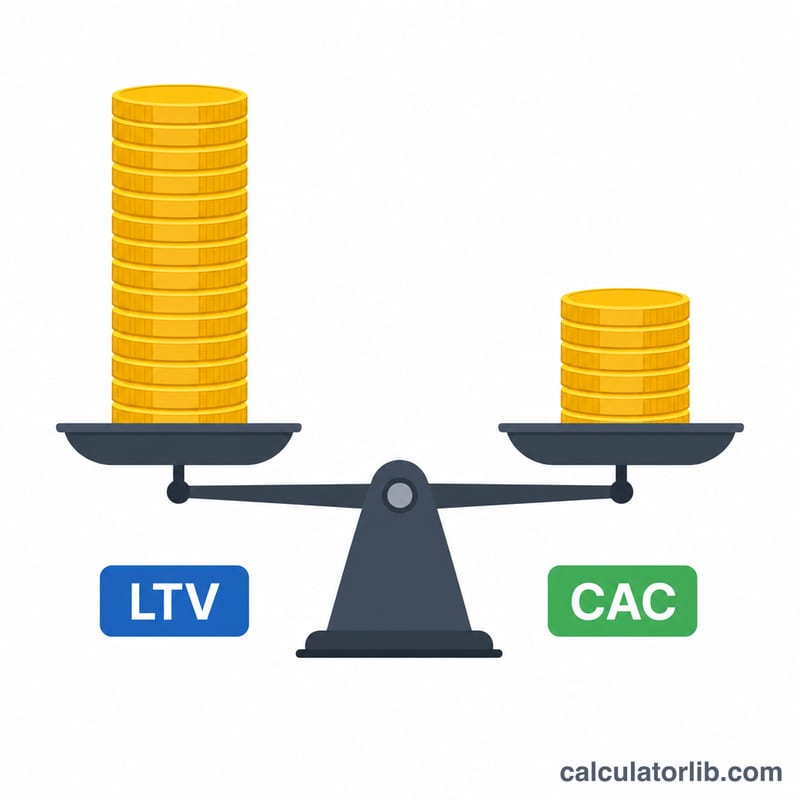
The LTV:CAC ratio compares the total profit you earn from an average customer over their lifetime (Customer Lifetime Value) to the cost of acquiring that customer (Customer Acquisition Cost). It is one of the most important metrics in SaaS and subscription businesses because it shows whether your growth engine is profitable and sustainable. A ratio of 3:1 is widely considered the sweet spot — every dollar spent on acquisition returns three dollars of lifetime value.
How to Use This Calculator
Enter your average Customer Lifetime Value and your average Customer Acquisition Cost. The calculator divides LTV by CAC to produce the ratio, reports CAC as a percentage of LTV, and benchmarks the result against industry targets. Use consistent figures — both should reflect the same customer cohort and time horizon.
The Formula Explained
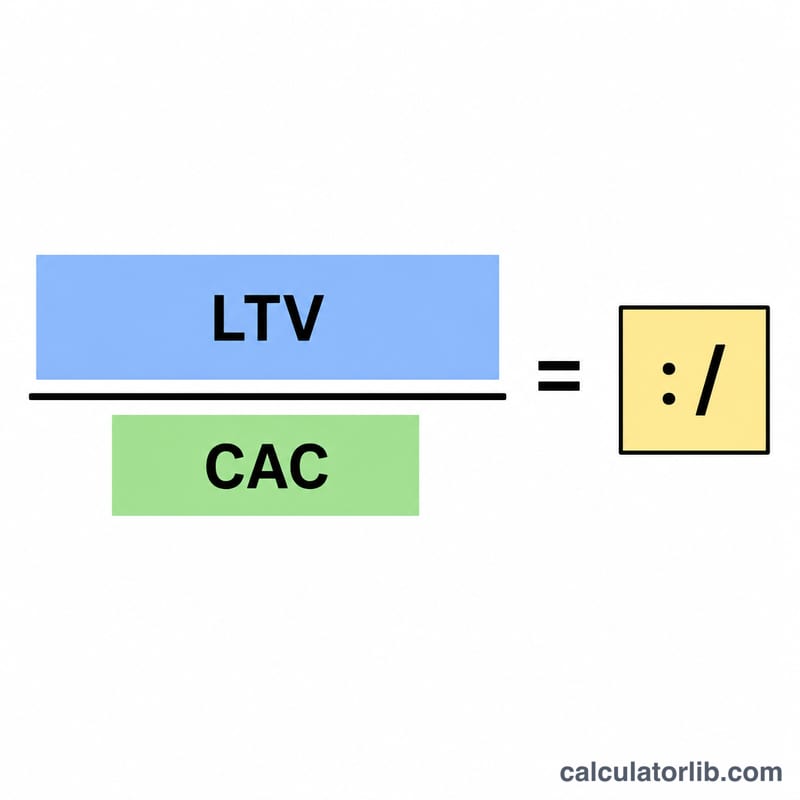
$$\text{LTV:CAC Ratio} = \frac{\text{LTV}}{\text{CAC}}$$ LTV is typically average revenue per account multiplied by gross margin and average customer lifespan. CAC is total sales and marketing spend divided by the number of new customers won in the same period. Dividing one by the other normalises spend efficiency into a single comparable number.
Worked Example
Suppose a customer is worth $3,000 over their lifetime and costs $1,000 to acquire. The ratio is $$3{,}000 \div 1{,}000 = 3.0$$ or 3:1 — a healthy, ideal result. CAC consumes $$1{,}000 \div 3{,}000 = 33.33\%$$ of lifetime value, leaving plenty of margin to fund operations and growth.
FAQ
What is a good LTV:CAC ratio? A ratio between 3:1 and 5:1 is generally ideal. Below 3:1 suggests you are spending too much to acquire customers; above 5:1 may mean you are underinvesting in growth.
Why is a ratio below 1 bad? A ratio under 1:1 means you spend more to acquire a customer than they ever return — the business loses money on every sale.
How is this different from CAC payback? The LTV:CAC ratio measures total return over a customer's life, while CAC payback measures how many months it takes to recoup acquisition cost. Both are useful together.