
What this calculator does
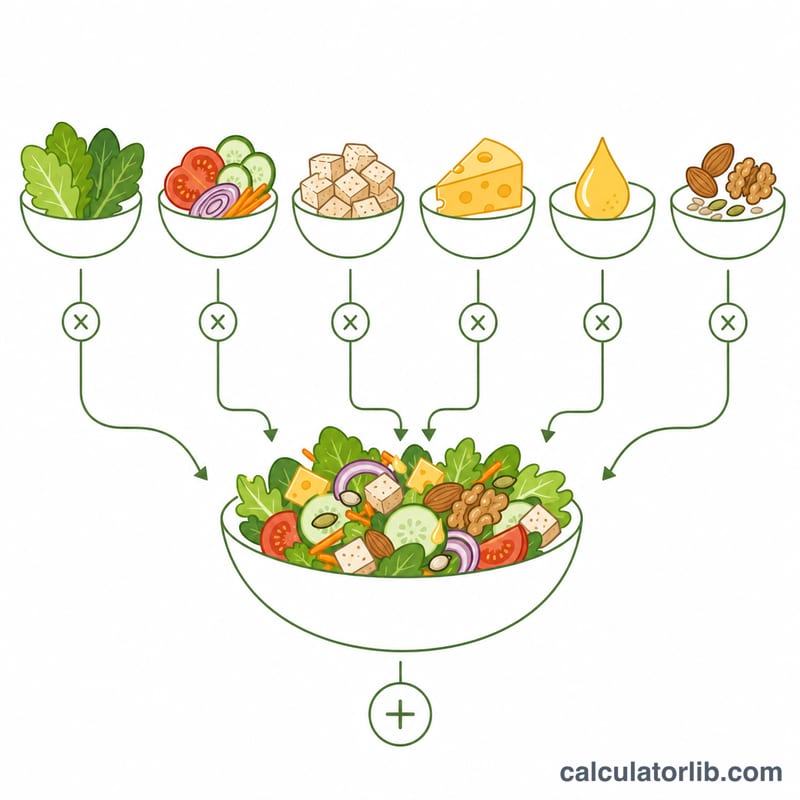
The Salad Calories Calculator estimates how many calories are in a homemade salad based on the weight of each ingredient group. Salads vary enormously — a bowl of greens may be under 50 kcal, while the same bowl with cheese, croutons and creamy dressing can top 600 kcal. By entering grams for six common component groups you get a realistic total plus a per-100 g calorie density.
How to use it
Weigh or estimate each component in grams: leafy greens, other vegetables, protein (chicken, egg, tofu), cheese, dressing, and crunchy extras (croutons, nuts, dried fruit). Enter each amount and the calculator multiplies it by a typical calories-per-gram value, then adds them up.
The formula explained
Each group uses an average energy density (kcal per gram): greens 0.15, other vegetables 0.25, protein 1.65, cheese 4.0, dressing 4.5, extras 5.0. Total calories = sum of grams × kcal/g for every group.
$$\text{Total kcal} = \sum_i \left( g_i \times \text{kcal/g}_i \right)$$
Calorie density = total ÷ total grams × 100, expressing energy per 100 g.
$$\text{Density} = \frac{\text{Total}}{\text{Total grams}} \times 100$$
Worked example
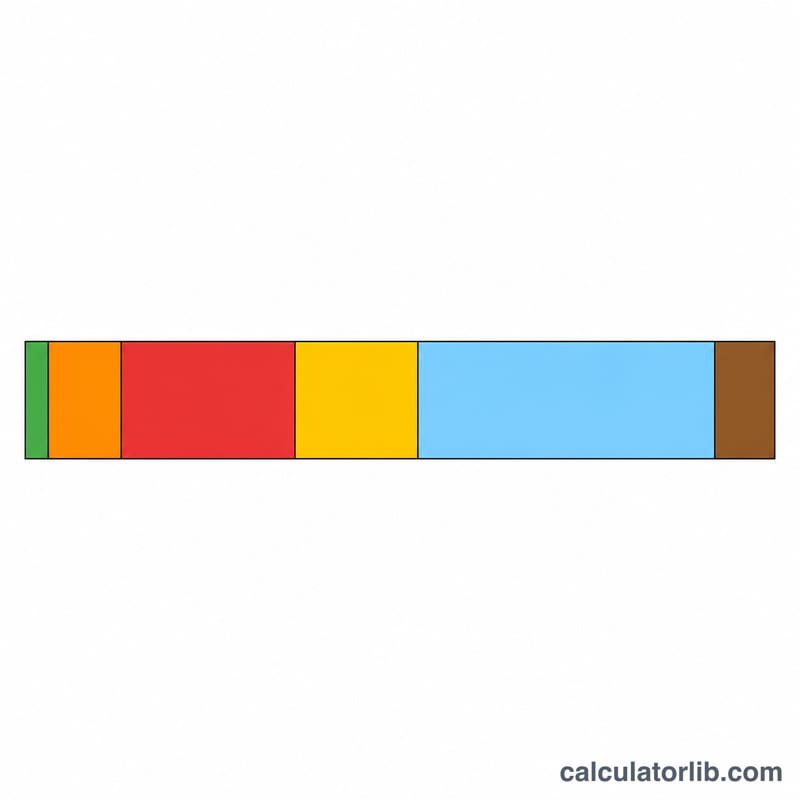
A typical chicken salad: 100 g greens (15 kcal), 80 g veggies (20), 100 g chicken (165), 20 g cheese (80), 30 g dressing (135), 15 g extras (75).
$$\text{Total} = 15 + 20 + 165 + 80 + 135 + 75 = 490 \text{ kcal}$$
across 345 g, a density of about 142 kcal per 100 g.
FAQ
Are these values exact? No — they are sensible averages. Check labels for your specific dressing or cheese for precise figures.
Why is dressing so high? Oil-based and creamy dressings are mostly fat, around 4.5 kcal per gram, so even a small drizzle adds up quickly.
How can I cut calories? Reduce dressing, cheese and croutons first — they carry the most calories per gram, while greens and veggies add bulk for very little energy.