
What this calculator does
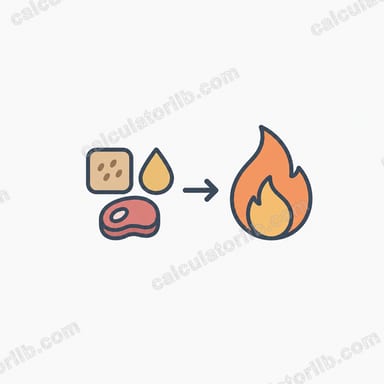
The Macros to Calories Calculator converts the grams of each macronutrient in a food or daily diet into energy measured in kilocalories (kcal). Enter how many grams of protein, carbohydrate, fat and (optionally) alcohol you consumed, and it returns the total calories plus the percentage each macro contributes. It is a universal tool based on the standard Atwater energy factors used on nutrition labels worldwide.
How to use it
Read the grams of each macronutrient from a nutrition label or food tracker and type them into the matching fields. Alcohol is optional — leave it at 0 if it does not apply. Press calculate to see total kcal and the macro split, which is handy for checking whether your intake matches a target ratio such as 40/30/30.
The formula explained
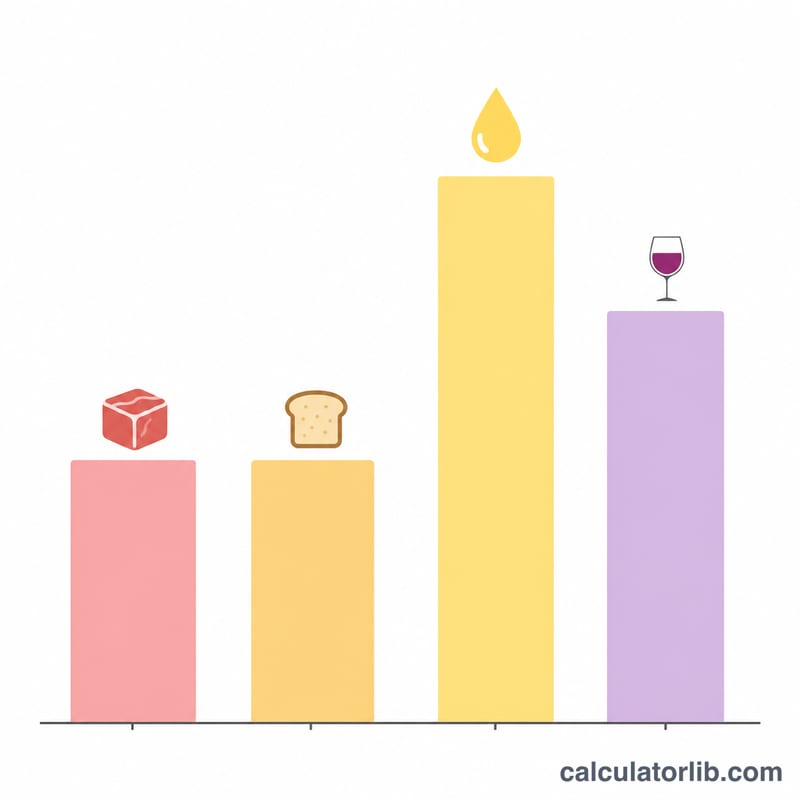
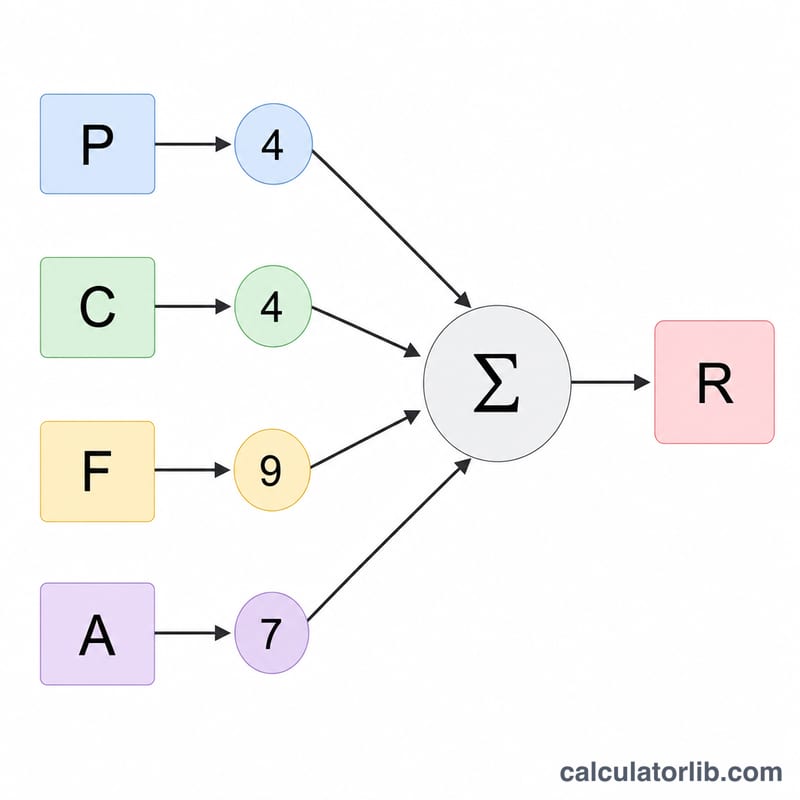
Energy is summed using fixed calories-per-gram constants: protein and carbohydrate each provide 4 kcal/g, fat provides 9 kcal/g, and ethanol (alcohol) provides 7 kcal/g. So the equation is $$\text{kcal} = 4\times\text{protein} + 4\times\text{carbs} + 9\times\text{fat} + 7\times\text{alcohol}$$ Each macro's percentage is its own calories divided by the total, times 100.
Worked example
A meal contains 30 g protein, 40 g carbohydrate and 10 g fat. Protein = \(4\times30 = 120\) kcal, carbs = \(4\times40 = 160\) kcal, fat = \(9\times10 = 90\) kcal. Total = $$120 + 160 + 90 = \textbf{370 kcal}$$ Fat contributes \(90/370 \approx 24.3\%\) of the energy even though it is only 12.5% of the grams — because fat is more than twice as energy-dense.
FAQ
Why is fat 9 calories per gram? Fat molecules store more chemical energy per unit mass than carbohydrate or protein, so each gram releases roughly 9 kcal when metabolized.
Should I count fiber? This tool uses total carbohydrate at 4 kcal/g. Some labels subtract or discount fiber; if you want net carbs, enter only the digestible carbohydrate grams.
Why include alcohol? Ethanol provides about 7 kcal/g and can be a significant energy source, so it is included to make totals accurate for drinks and mixed meals.