


What the calculator does now
Enter the price and size of two or three packs, each in its own unit (g, kg, oz, lb, mL, L, fl oz or pieces): the price per unit and the cheaper pack appear as you type, with how much less it costs. Pick what to compare per, such as per ounce or per 100 g.
Example: Item B is cheaper: $0.187 per oz against $0.218 for Item A, 14.2% less. The numbers you type stay in your browser.
What Is a Unit Price Calculator?
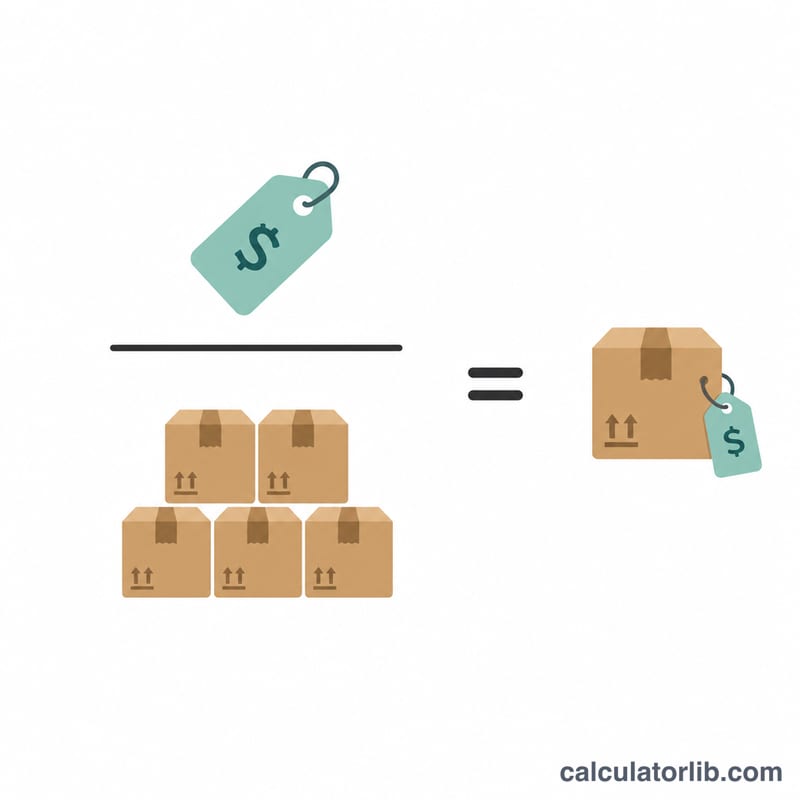
A unit price calculator tells you how much one single unit of a product costs. It divides the total price you pay by the quantity you receive, giving you a per-unit figure that makes it easy to compare products of different sizes or pack counts. Whether you're shopping for groceries, building materials, or bulk supplies, the unit price reveals which option is truly the better deal.
The Formula Explained
The math is simple division:
$$\text{Unit Price} = \frac{\text{Total Price (\$)}}{\text{Quantity (units)}}$$If a 4-pack of batteries costs $10, the unit price is \(\$10 \div 4 = \$2.50\) per battery. The "quantity" can be anything measurable — items, kilograms, liters, square feet — as long as you keep it consistent between products you compare.
Worked Example
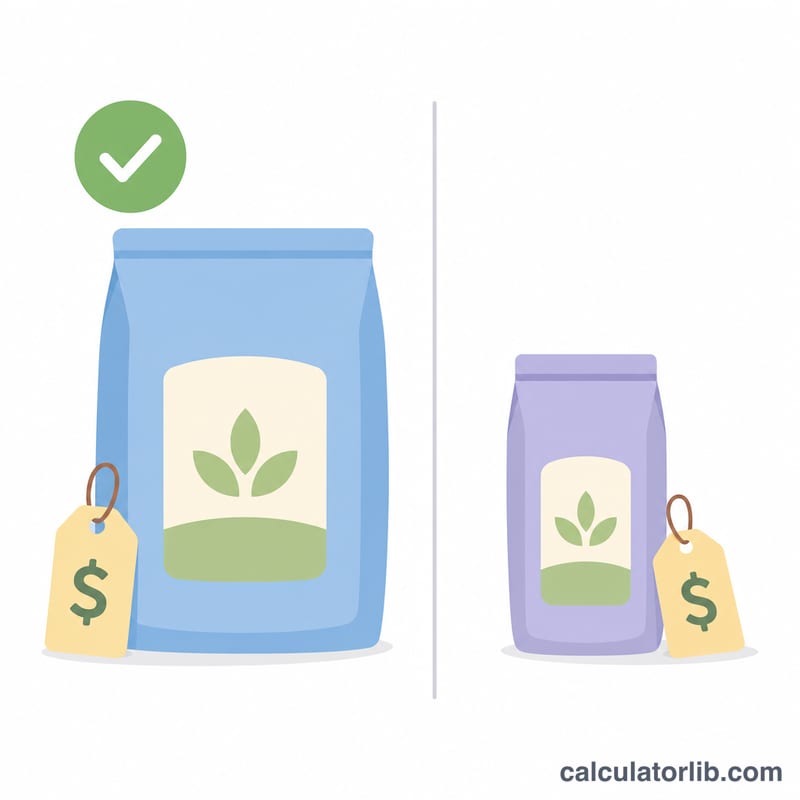
Suppose a 2-liter bottle of juice costs $4.50 and a 1.5-liter bottle costs $3.60. The big bottle: \(\$4.50 \div 2 = \$2.25\) per liter. The small bottle: \(\$3.60 \div 1.5 = \$2.40\) per liter. The 2-liter bottle is cheaper per liter, so it offers better value.
Unit Price Across Common Pack Sizes
The unit price is simply the total price divided by the quantity, expressed in whatever unit lets you compare two packages side by side:
$$\text{Unit price} = \frac{\text{Total price}}{\text{Quantity}}$$The table below pairs a small pack with a larger pack of the same product. All prices are illustrative retail examples (shown in US dollars) rather than surveyed averages — the point is the arithmetic, not the price level. Note the rice pair: the bigger bag costs more per kilogram, which is why bulk is worth checking rather than assuming.
| Product/Pack | Total Price | Quantity (with unit) | Unit Price | Best Value? |
|---|---|---|---|---|
| Ground coffee — small bag | $12.99 | 500 g (0.5 kg) | $25.98 per kg | No |
| Ground coffee — large bag | $22.99 | 1 kg | $22.99 per kg | Yes — about 11.5% less per kg |
| Milk — single jug | $3.29 | 1.89 L | $1.74 per L | No |
| Milk — large jug | $5.99 | 4 L | $1.50 per L | Yes — if you will use it before it spoils |
| Rice — standard bag | $5.49 | 2 kg | $2.75 per kg | Yes |
| Rice — “family size” bag | $14.99 | 5 kg | $3.00 per kg | No — larger pack costs more per kg |
Sample arithmetic for the two coffee rows:
$$\frac{\$12.99}{0.5\ \text{kg}} = \$25.98/\text{kg} \qquad \frac{\$22.99}{1\ \text{kg}} = \$22.99/\text{kg}$$Round sensibly for the price range: two decimals for items costing dollars per unit, three or four for cheap per-piece items (100 vitamin capsules at $14.00 is $0.140 each, while 250 capsules at $29.00 is $0.116 each — a difference that disappears if you round to two decimals). Also compare like with like: a larger pack is only a better deal if you actually consume it before it expires, and unit price ignores storage space, spoilage and the cash tied up in the purchase.
FAQ
Does a lower unit price always mean better value? Usually, but consider waste — buying more than you can use before it expires may cost more overall.
What units should I use? Any consistent measure: count, weight, or volume. Just compare like with like.
What if quantity is zero? Division by zero is undefined, so the calculator returns 0. Enter a quantity greater than zero for a valid result.