
What this calculator does
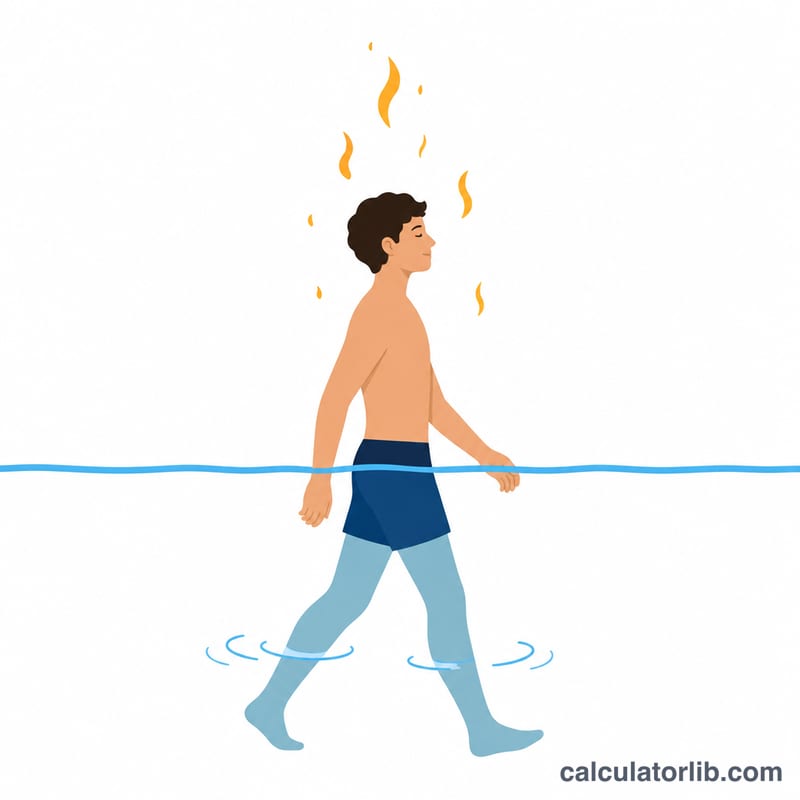
This tool estimates how many calories you burn during water-based exercise such as water walking, water jogging and water aerobics. It uses the internationally recognized MET (Metabolic Equivalent of Task) method, the same approach used in the Compendium of Physical Activities and in national physical-activity MET tables. It is universal and not specific to any one country.
How to use it
Pick your activity and intensity from the dropdown — this sets the MET value automatically. Enter your exercise duration in minutes and your body weight in kilograms, then read the estimated calories burned. Higher intensity (faster, harder effort, jogging) means a higher MET value and more calories.
The formula explained
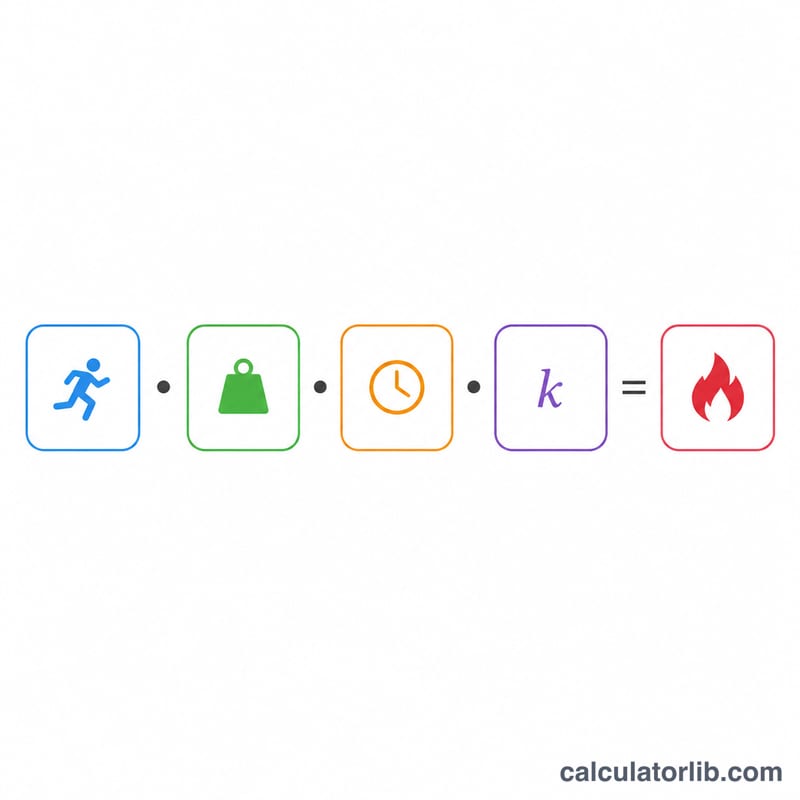
The calculation is:
$$\text{Calories (kcal)} = \text{METs} \times \text{weight(kg)} \times \frac{\text{minutes}}{60} \times 1.05$$
The MET value represents how many times more energy the activity uses compared with resting. Duration in minutes is converted to hours by dividing by 60. The constant 1.05 is the standard factor of about 1.05 kcal burned per kilogram of body weight per hour at 1 MET (your approximate resting energy expenditure).
Worked example
Water walking at light effort (2.5 METs) for 90 minutes at 60 kg: \(\text{timeHours} = 90 \div 60 = 1.5\).
$$\text{Calories} = 2.5 \times 60 \times 1.5 \times 1.05 = 236.25 \text{ kcal}$$
displayed as about 236 kcal.
FAQ
Why do I burn more in water than on land? Water adds resistance and helps regulate temperature, so MET values for aqua exercise can be surprisingly high — water jogging is rated near 9.8 METs.
Are these numbers exact? No. They are estimates. Actual calorie burn varies with water resistance, water temperature, technique, fitness level and individual metabolism.
Can I enter pounds? This version expects kilograms. To convert, multiply your weight in pounds by 0.45359237 to get kilograms.