
What is the CHA₂DS₂-VASc Score?
The CHA₂DS₂-VASc score is a clinical tool used to estimate the annual risk of stroke in patients with non-valvular atrial fibrillation (AFib). It helps clinicians decide whether oral anticoagulation therapy is warranted. The score expands on the older CHADS₂ score by adding vascular disease, an age category of 65–74, and female sex as risk factors.
How to Use It
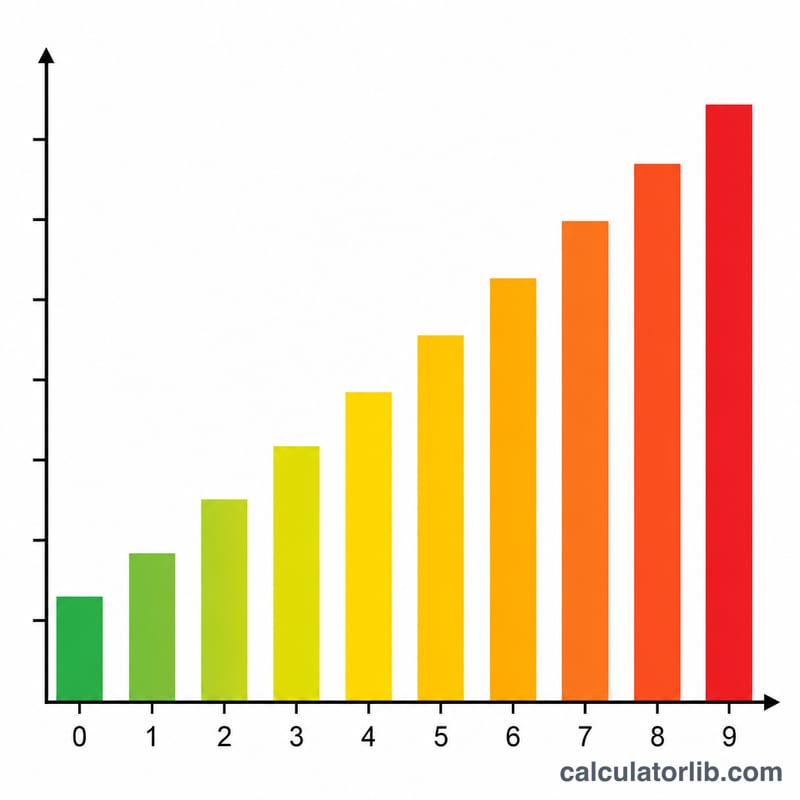
Answer each risk-factor question and enter the patient's age. The calculator automatically assigns 2 points for age ≥75, 1 point for age 65–74, and adds the remaining weighted factors. The resulting total (0–9) maps to an approximate adjusted annual stroke rate.
The Formula Explained
Each component carries a point value:
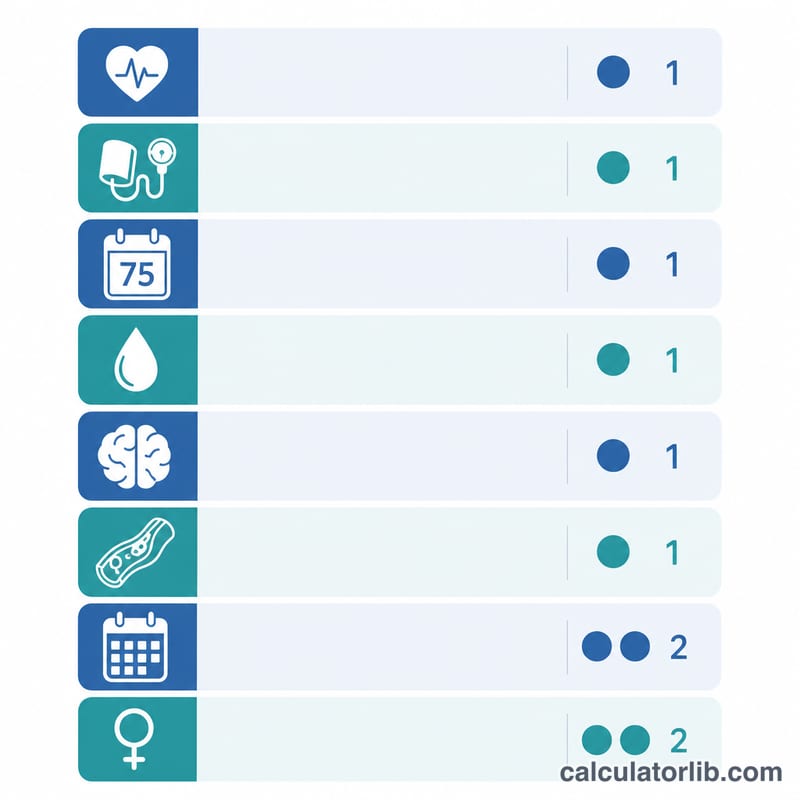
$$\text{Score} = \text{C} + \text{H} + \text{A}_{2} + \text{D} + \text{S}_{2} + \text{V} + \text{A} + \text{Sc}$$Congestive heart failure (1), Hypertension (1), Age ≥75 (2), Diabetes (1), prior Stroke/TIA/thromboembolism (2), Vascular disease (1), Age 65–74 (1), and Sex category female (1). The maximum score is 9 because the two age bands are mutually exclusive.
Worked Example
A 78-year-old woman with hypertension and diabetes but no prior stroke scores: Age ≥75 (2) + Hypertension (1) + Diabetes (1) + Female (1) = 5 points, corresponding to a roughly 7% estimated annual stroke risk and a clear indication to consider anticoagulation.
$$2 + 1 + 1 + 1 = 5 \text{ points}$$FAQ
What score means anticoagulation is recommended? Guidelines generally recommend oral anticoagulation for men with a score ≥2 and women with a score ≥3; a score of 0 (men) or 1 (women, sex point only) is low risk.
Why does female sex add a point? Female sex is a risk modifier; it increases risk mainly in the presence of other factors and is not counted as a sole indication.
Is this a diagnostic tool? No. It is a risk-stratification aid for non-valvular AFib and should be interpreted by a clinician alongside the full clinical picture.