
What is the Padua Prediction Score?
The Padua Prediction Score is a validated clinical tool used to estimate the risk of venous thromboembolism (VTE) — deep vein thrombosis and pulmonary embolism — in hospitalized medical (non-surgical) patients. By identifying patients at high risk, clinicians can decide whether pharmacologic thromboprophylaxis is warranted.
How to use it
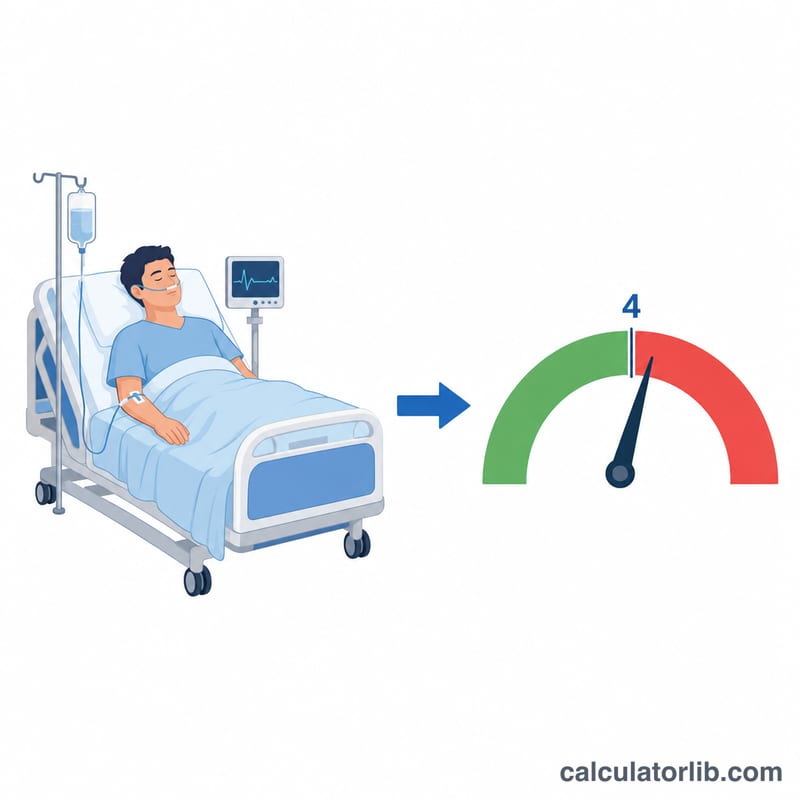
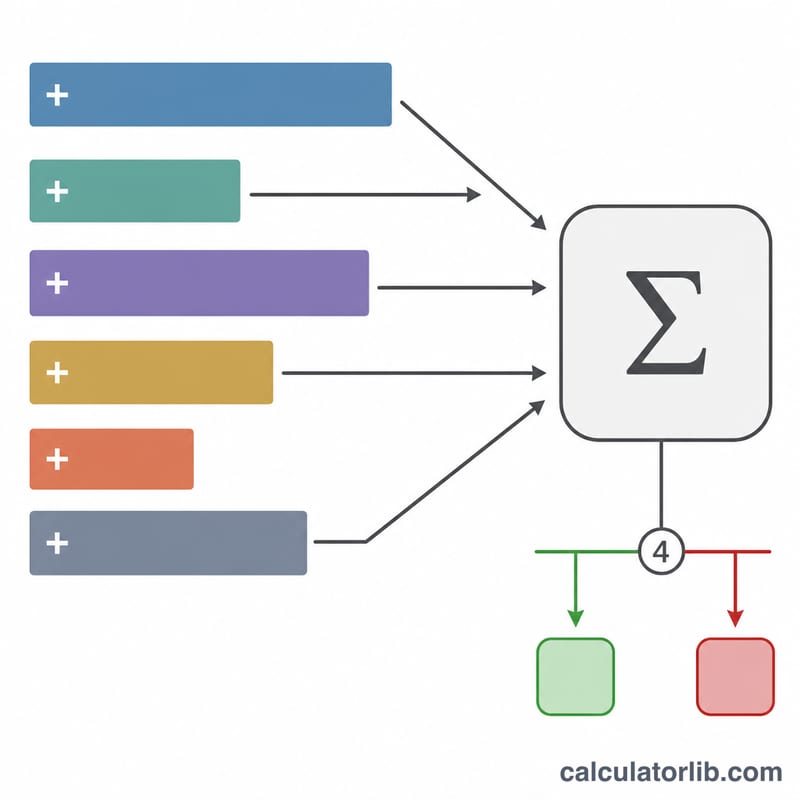
Check each risk factor that applies to your patient. The calculator sums the weighted points automatically. A total of 4 or more points classifies the patient as high risk, at which point guideline-based prophylaxis (e.g., low-molecular-weight heparin) is generally recommended in the absence of bleeding contraindications.
The formula explained
Each factor carries a fixed weight: active cancer, previous VTE, reduced mobility, and known thrombophilia each add 3 points; recent trauma or surgery adds 2 points; and age ≥70, heart/respiratory failure, acute MI or ischemic stroke, acute infection or rheumatologic disorder, obesity (BMI ≥30), and ongoing hormonal treatment each add 1 point. The total ranges from 0 to 20.
$$\text{Score} = \sum w_i x_i, \quad \text{High risk if Score} \ge 4$$
$$\text{Score} = 3c + 3v + 3m + 3t + 2s + a + h + i + f + o + r$$
$$\text{High risk} \iff \text{Score} \ge 4$$
Worked example
A 72-year-old patient with active cancer who is bedridden scores \(3\) (cancer) \(+\ 3\) (reduced mobility) \(+\ 1\) (age ≥70) \(=\) 7 points. Since \(7 \ge 4\), the patient is high risk and thromboprophylaxis should be considered.
FAQ
What score indicates high risk? A Padua score of 4 or more indicates high VTE risk.
Does it apply to surgical patients? No — the Padua score is validated for hospitalized medical patients. Surgical patients should use a model such as the Caprini score.
Is this a substitute for clinical judgment? No. It is a decision-support aid and must be combined with assessment of bleeding risk and overall clinical context.