
What Is Non-HDL Cholesterol?
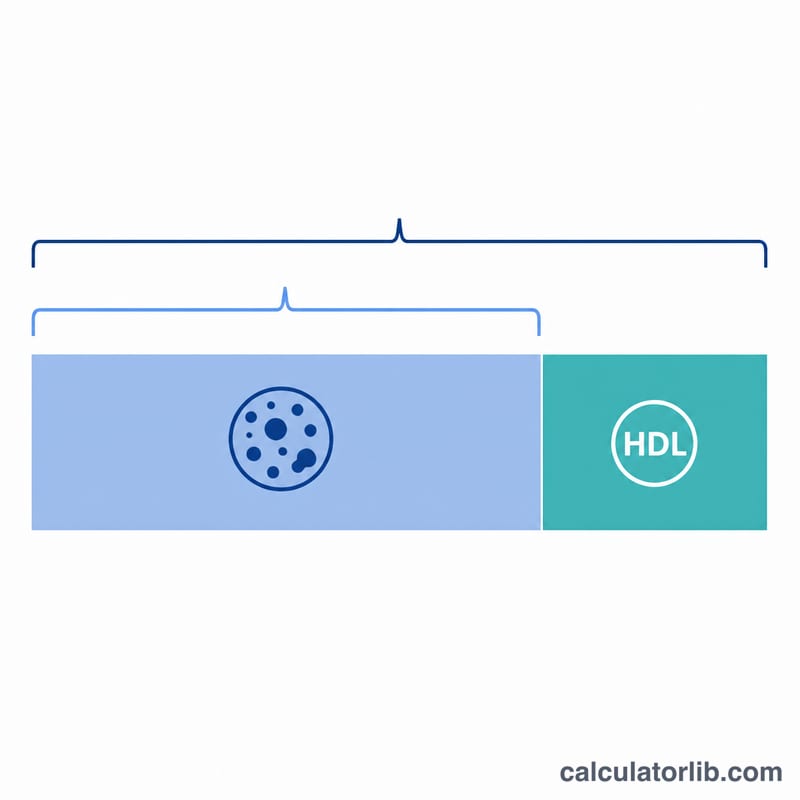
Non-HDL cholesterol represents all the "bad" cholesterol in your blood — that is, every cholesterol-carrying particle except high-density lipoprotein (HDL). Because it captures LDL, VLDL, IDL, and remnant lipoproteins in a single number, many clinicians consider non-HDL cholesterol a stronger predictor of cardiovascular risk than LDL alone, especially in people with high triglycerides or diabetes. Best of all, it requires no fasting and no special lab test — just your standard lipid panel.
How to Use This Calculator
Enter your total cholesterol and your HDL cholesterol, both in mg/dL, exactly as they appear on your lab report. The calculator subtracts HDL from total cholesterol and shows your non-HDL value along with a general risk category. Use the result to discuss your numbers with a healthcare professional — it is for educational purposes and not a diagnosis.
The Formula Explained
The math is refreshingly simple:
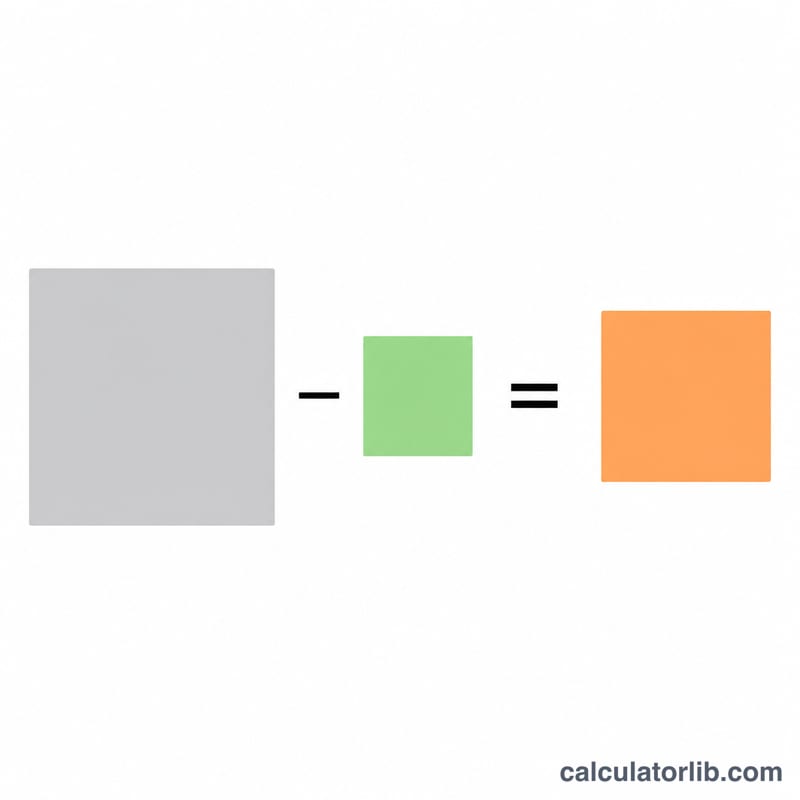
$$\text{Non-HDL} = \text{Total Cholesterol} - \text{HDL}$$
Total cholesterol is the sum of all lipoprotein cholesterol. HDL is the protective fraction that helps clear cholesterol from arteries. Removing HDL leaves only the particles that contribute to plaque build-up. Because it does not rely on the Friedewald estimate of LDL, it stays accurate even when triglycerides are elevated.
Worked Example
Suppose your total cholesterol is 200 mg/dL and your HDL is 50 mg/dL. Then $$\text{Non-HDL} = 200 - 50 = 150 \text{ mg/dL},$$ which falls in the "Above optimal" range. Lowering total cholesterol or raising HDL would both reduce this number.
FAQ
What is a good non-HDL level? Generally under 130 mg/dL is considered optimal for most adults, though personal targets depend on your overall cardiovascular risk.
Do I need to fast for this? No. Both total cholesterol and HDL are stable whether or not you have fasted, so non-HDL can be calculated from a non-fasting sample.
How is it different from LDL? LDL is just one particle type, while non-HDL adds VLDL and other remnant cholesterol, giving a fuller picture of atherogenic risk.