

What This Calculator Does
Applies to the United States (2026 tax year). This Paycheck Withholding Calculator estimates how much federal income tax should be withheld from each of your paychecks, similar to a simplified IRS Form W-4 estimator. It annualizes your pay, subtracts the standard deduction, applies the 2026 federal tax brackets, and divides the resulting annual tax across your pay periods. It does not include Social Security, Medicare (FICA), or state and local taxes.
How to Use It
Enter your gross pay for a single paycheck, choose your pay frequency (weekly, bi-weekly, semi-monthly, or monthly), and pick your filing status. Add any pre-tax deductions per paycheck (like 401(k) or health premiums) and any extra withholding you've requested on Step 4(c) of your W-4. The tool returns your estimated per-paycheck federal withholding plus a breakdown of annualized income and effective tax rate.
The Formula Explained
First we annualize taxable income: (gross − pre-tax) × pay periods − standard deduction. The 2026 standard deduction is $16,100 (single), $32,200 (married filing jointly), or $24,150 (head of household). We then apply the progressive 2026 brackets (10% to 37%) to get annual tax, and finally divide by your number of pay periods, adding any extra withholding.
$$\begin{gathered} W = \frac{\operatorname{Tax}(T)}{f} + \text{Extra} \\[1.5em] \text{where}\quad \left\{ \begin{aligned} f &= \text{Pay Frequency} \\ T &= \max\!\big(0,\; (\text{Gross Pay} - \text{Pre-Tax})\cdot f - 16100\big) \end{aligned} \right. \end{gathered}$$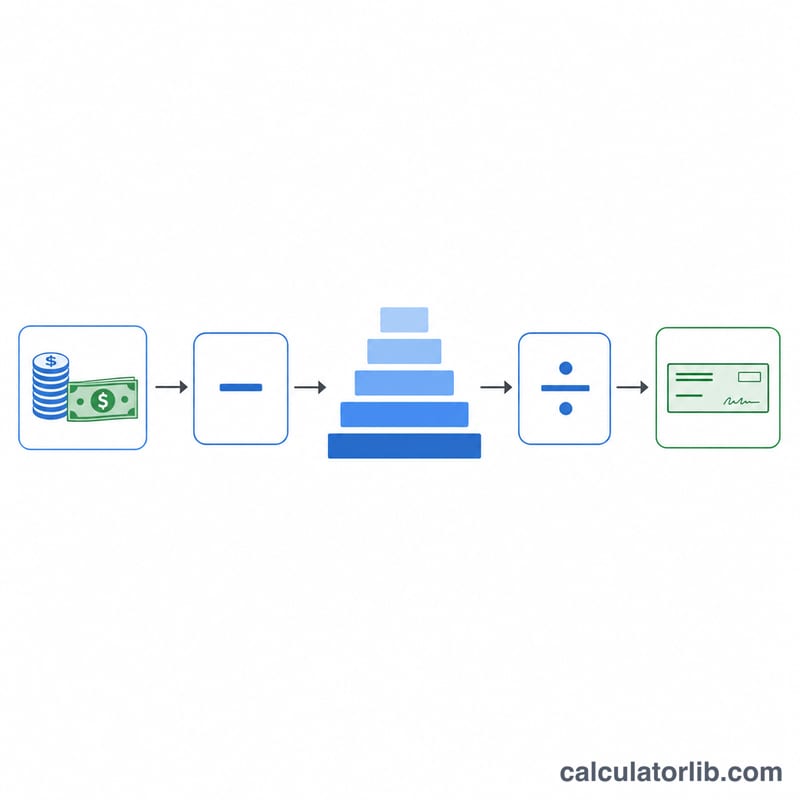
Worked Example
Suppose you earn $2,000 bi-weekly (26 periods), filing single, with no pre-tax deductions or extra withholding. Annual gross = $52,000. Taxable = \(\$52{,}000 - \$16{,}100 = \$35{,}900\). Tax = 10% of $12,400 ($1,240) + 12% of $23,500 ($2,820) = $4,060. Per paycheck:
$$\frac{\$4{,}060}{26} \approx \mathbf{\$156.15}$$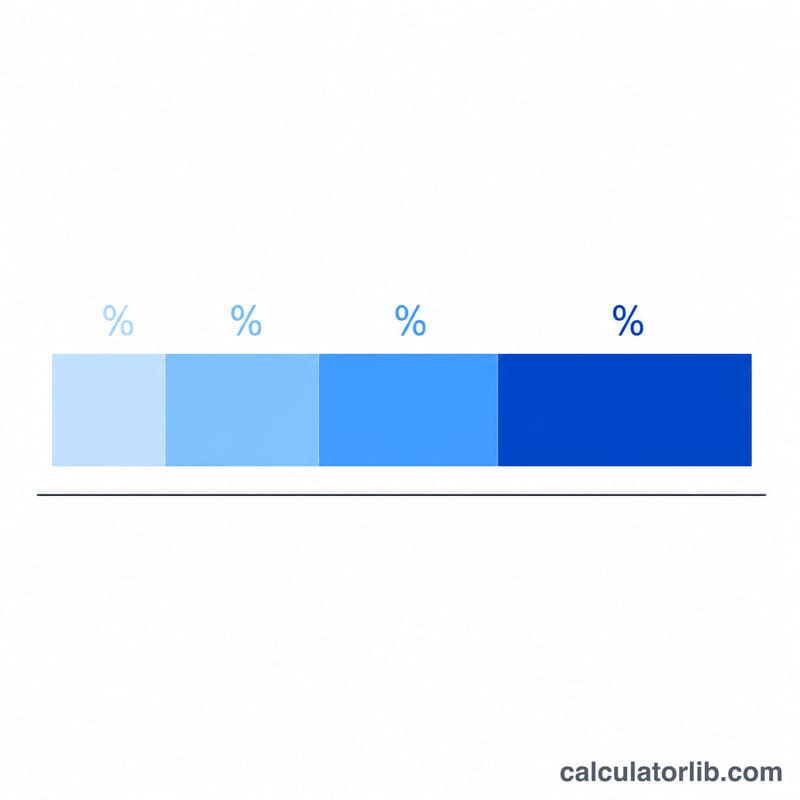
FAQ
Does this include Social Security and Medicare? No. FICA (7.65%) and state taxes are separate; this estimates federal income tax withholding only.
Is this exact? It's an estimate. Actual IRS percentage-method withholding uses adjusted wage tables and W-4 details. Use it for planning, not filing.
How do I reduce my withholding? Increase pre-tax deductions, or adjust dependents/deductions on your W-4. Adding extra withholding increases it.