
What Is the Rent-to-Income Ratio?
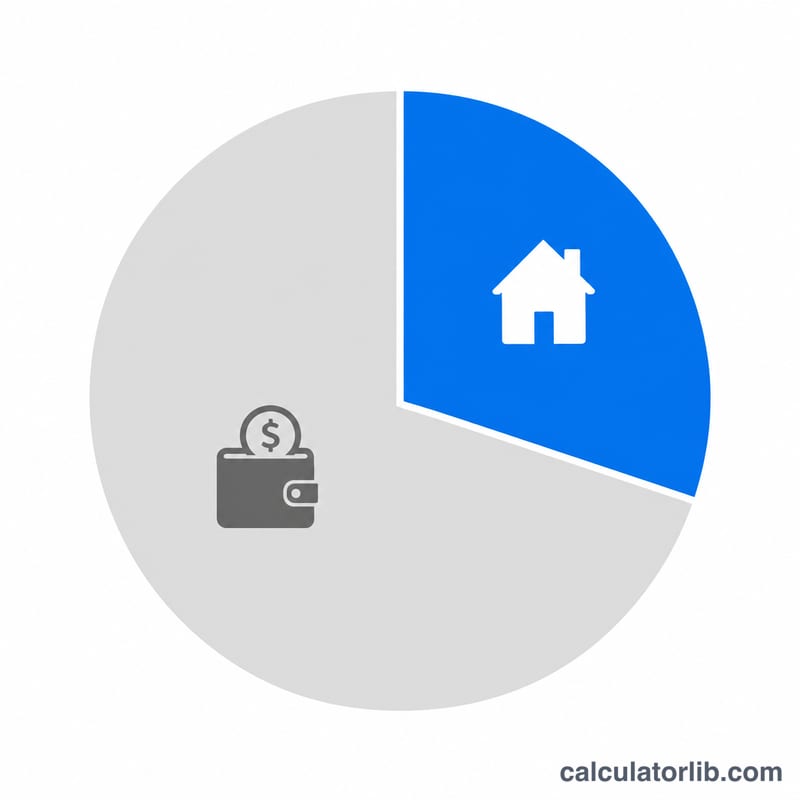
The rent-to-income ratio measures how much of your gross (pre-tax) monthly income goes toward rent. It is one of the most common metrics landlords, property managers, and renters use to judge whether a home is affordable. A lower percentage means more of your money is left for savings, food, transportation, and other living costs.
How to Use This Calculator
Enter your monthly rent and your gross monthly income (income before taxes and deductions). The calculator divides rent by income, multiplies by 100, and shows the resulting percentage, an affordability assessment, and how much income is left after paying rent.
The Formula Explained
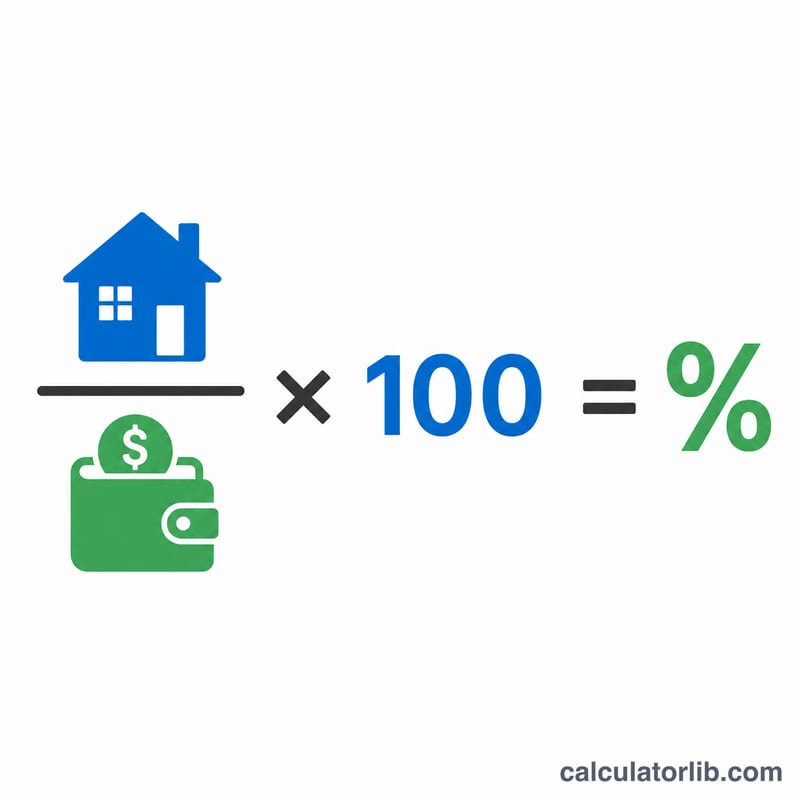
The math is simple: $$\text{Percent} = \left(\frac{\text{Monthly Rent}}{\text{Monthly Income}}\right) \times 100$$ The result tells you the proportion of earnings committed to housing. Many landlords require this ratio to stay at or below 30%, the threshold often called the "30% rule."
Worked Example
Suppose your rent is $1,500 and your gross monthly income is $5,000. The ratio is $$\left(\frac{1{,}500}{5{,}000}\right) \times 100 = 30\%$$ That sits exactly at the affordability threshold, leaving $3,500 for everything else.
FAQ
Should I use gross or net income? Most landlords use gross (pre-tax) income, so this calculator assumes gross. You can enter net income for a more conservative view.
What is a good rent-to-income ratio? 30% or below is widely considered affordable. Between 30% and 40% is stretched, and above 40% you may be cost-burdened.
Does this include utilities? No — it only counts base rent. Add average utility costs to your rent figure if you want a fuller housing-cost picture.