
What this calculator does
This tool estimates how many calories (kilocalories) you burn during strength training, also called resistance or weight training. It uses the internationally recognized MET (Metabolic Equivalent of Task) method, where one MET is roughly the energy used at rest. The two intensity tiers and their MET values are drawn from Japan's Ministry of Health, Labour and Welfare "Physical Activity Standards for Health Promotion 2013," but the MET concept and the formula are universal, so this calculator works for anyone, anywhere.
How to use it
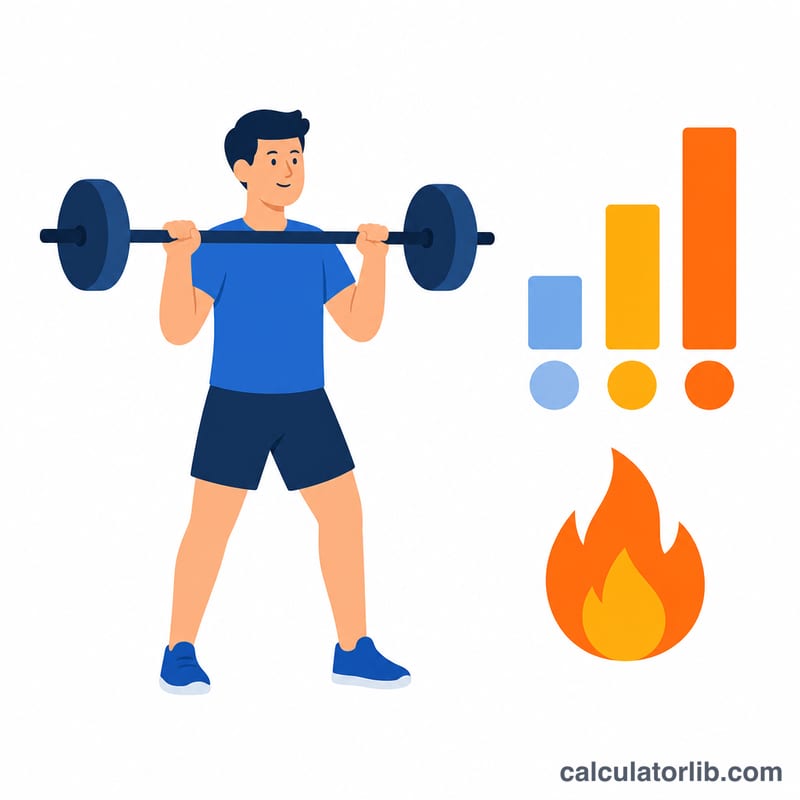
Pick your training intensity: light bodyweight-style work (3.5 METs) or high-intensity weight training such as powerlifting or bodybuilding (6 METs). Enter the actual time you spent actively training in minutes, then your body weight in kilograms. Press calculate to see your estimated calorie burn and the MET intensity used. Important: enter only active training time. Rest periods between sets burn far fewer calories (about 1 MET) and should be excluded or estimated separately.
The formula explained
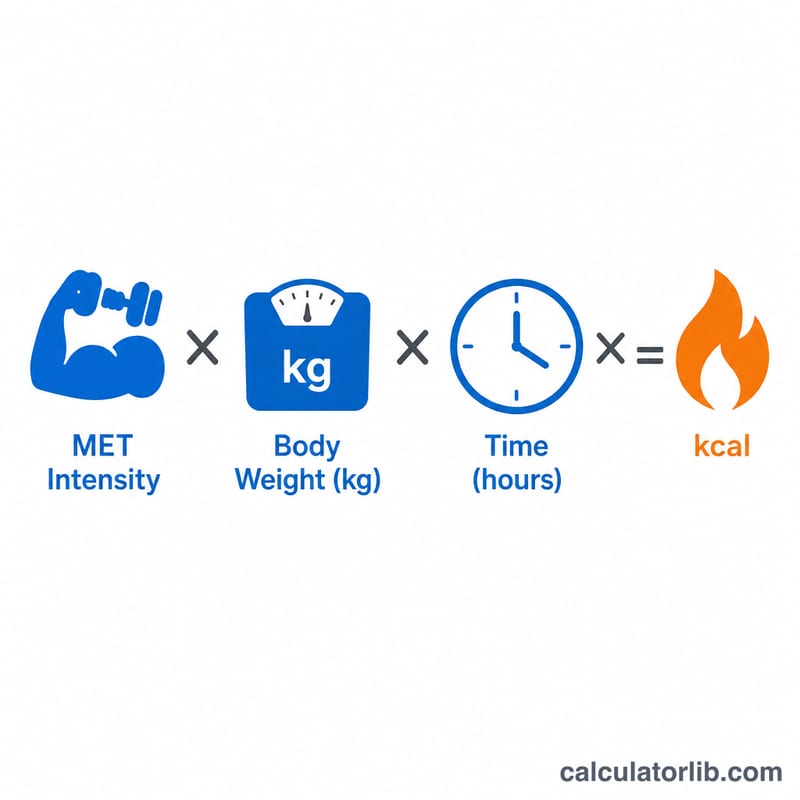
The energy expenditure is calculated as:
$$\text{kcal} = \text{MET} \times \text{body weight (kg)} \times \text{time (hours)} \times 1.05$$
Time is converted from minutes to hours by dividing by 60. The 1.05 coefficient converts MET-kilogram-hours into kilocalories and follows the Japanese standard convention; the simplified international form sometimes omits it. A heavier body and longer, more intense training session both increase the total burn.
Worked example
Suppose you do 90 minutes of light bodyweight training (3.5 METs) and weigh 60 kg. Hours = \(90 / 60 = 1.5\). $$\text{Calories} = 3.5 \times 60 \times 1.5 \times 1.05 = 330.75 \text{ kcal}$$ So you would burn about 331 kcal.
FAQ
Why are there only two intensity options? The source standard defines just two strength-training tiers. A mid-intensity machine-training option is not separately listed, so choose the closest match.
Should I include rest between sets? No. Only count active lifting time. Resting burns roughly 1 MET and should be excluded for an accurate estimate.
How accurate is this? It is an estimate. Actual burn varies with the exercises performed, the load lifted, the muscle groups involved and individual metabolism.