
What this calculator does
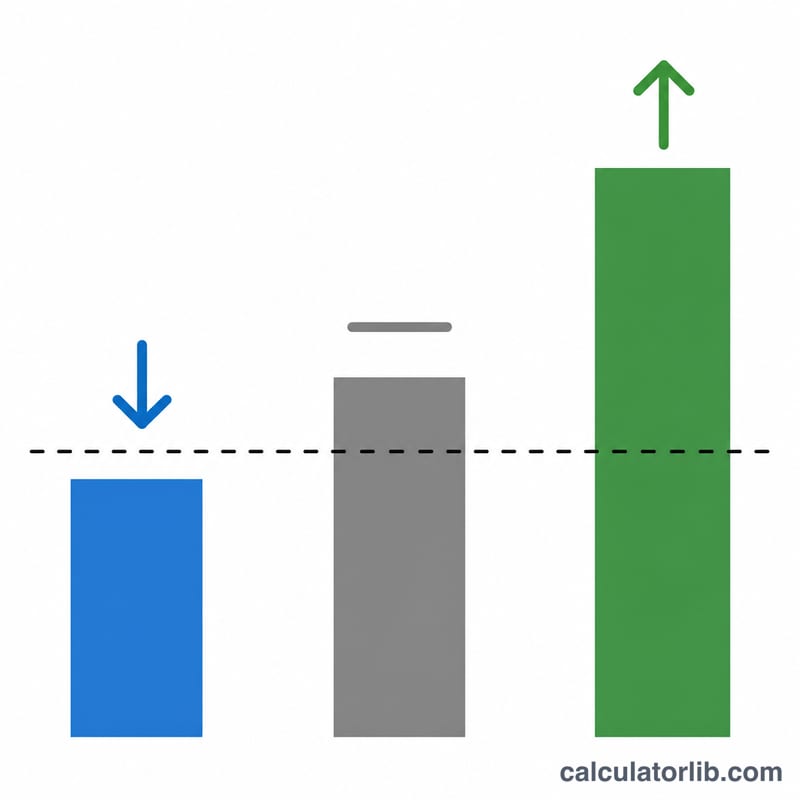
The Bulking & Cutting Calorie Calculator turns your maintenance calories (TDEE — Total Daily Energy Expenditure) into a daily calorie target for your chosen goal. Eating in a surplus drives muscle gain (a bulk), while eating in a deficit drives fat loss (a cut). This tool gives you a sensible, evidence-based range plus a midpoint to aim for.
How to use it
Enter your TDEE in calories per day. If you don't know it, estimate it first with a BMR and activity-level calculator. Then pick a goal: Cut, Maintain, or Bulk. The calculator shows your target intake and the recommended low–high range so you can adjust based on weekly weight trends.
The formula explained
A lean bulk uses a modest surplus of 10–20% above maintenance: \(\text{Bulk} = \text{TDEE} \times 1.10 \text{ to } 1.20\). A moderate cut uses a 15–25% deficit: \(\text{Cut} = \text{TDEE} \times 0.75 \text{ to } 0.85\). Maintenance simply equals your TDEE. Larger surpluses add fat faster; deeper deficits risk muscle loss and fatigue, so these ranges balance results with sustainability. The displayed target is the midpoint of each range.
$$\text{Target} = \frac{1.10 + 1.20}{2} \times \text{TDEE} = 1.15 \times \text{TDEE}$$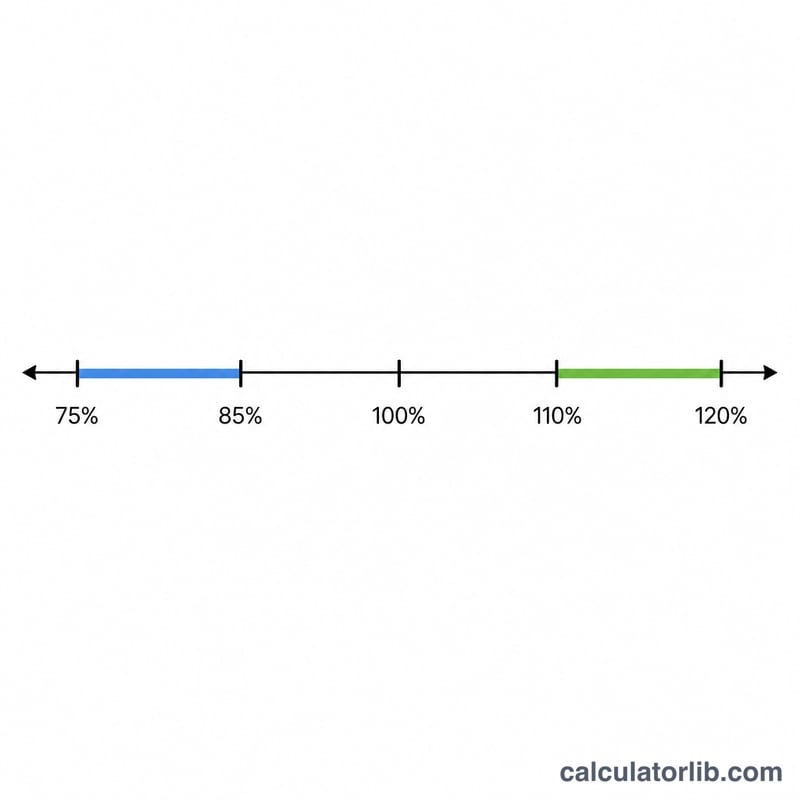
Worked example
Suppose your TDEE is 2,500 kcal/day and you want to bulk. Low = \(2{,}500 \times 1.10 = 2{,}750\) kcal; high = \(2{,}500 \times 1.20 = 3{,}000\) kcal; target (midpoint) = 2,875 kcal/day. For a cut at the same TDEE: low = 1,875, high = 2,125, target = 2,000 kcal/day.
FAQ
How fast will I gain or lose? Roughly 7,700 kcal ≈ 1 kg of body mass. A 375 kcal daily surplus is about 0.35 kg/week — typical for a lean bulk.
Should I start at the low or high end? Beginners and those prioritizing leanness should start near the conservative end and only increase if progress stalls.
How often should I update? Recalculate every few weeks, since your TDEE shifts as your body weight changes.