
What is the Waist-to-Height Ratio?
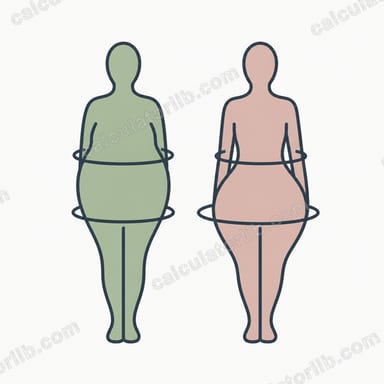
The waist-to-height ratio (WHtR) is a simple measure of central body fat. It compares your waist circumference to your height, with both measured in the same units. Because abdominal fat is closely linked to cardiovascular and metabolic risk, WHtR is widely regarded as a quick, low-cost screening tool — often more predictive than BMI alone. This calculator works for everyone and is unit-independent: as long as waist and height use the same units, the ratio is the same.
How to use this calculator
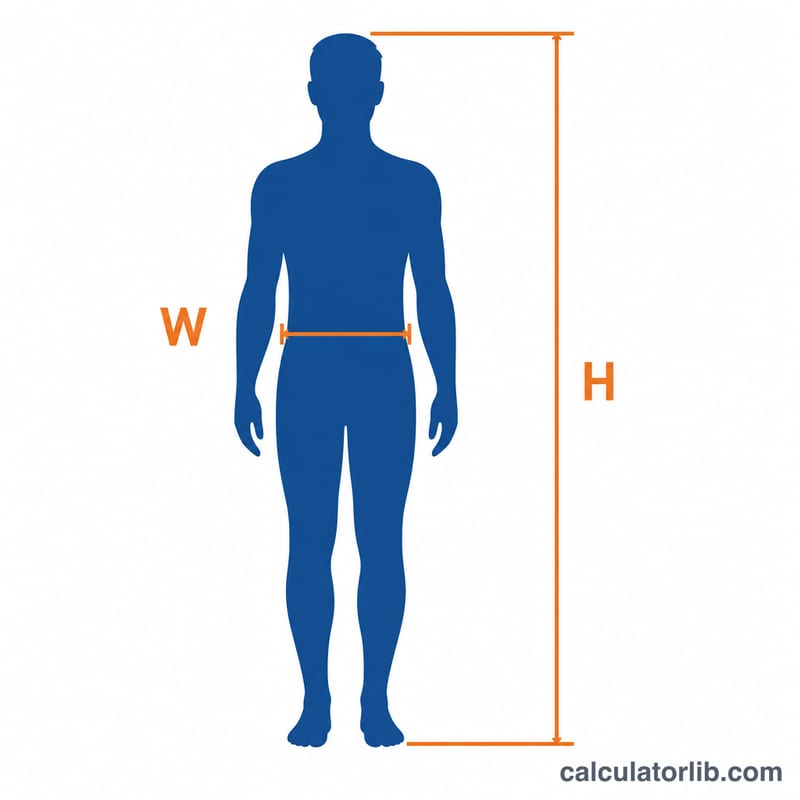
Choose your units (centimeters or inches), then enter your waist circumference and your height. Measure your waist at the level of your navel, after a normal exhale, keeping the tape snug but not compressing the skin. The calculator divides waist by height to give your ratio and shows the equivalent percentage and a general risk category.
The formula explained
The math is straightforward: $$\text{WHtR} = \frac{\text{Waist circumference}}{\text{Height}}$$ Since both values are in the same units, they cancel out and you get a unitless ratio. A common rule of thumb is "keep your waist to less than half your height," meaning a healthy WHtR is below \(0.5\).
Worked example
Suppose your waist is 80 cm and your height is 160 cm. Then $$\text{WHtR} = 80 \div 160 = 0.50,$$ or 50% of your height. This sits right at the upper edge of the healthy range, suggesting it may be worth keeping an eye on your waistline.
FAQ
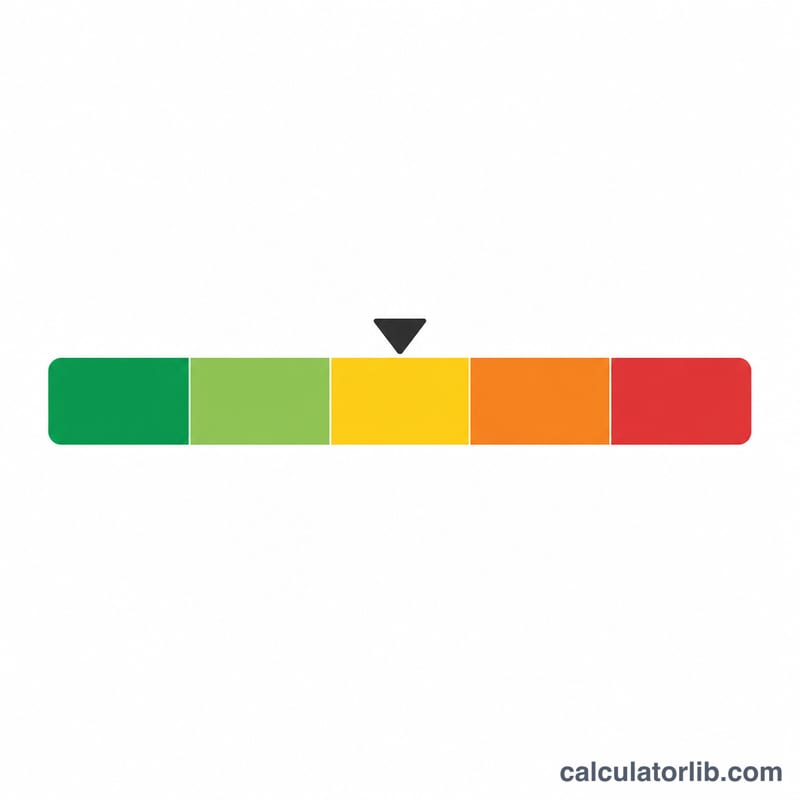
What is a healthy WHtR? For most adults, a ratio below \(0.5\) is considered healthy. Values from \(0.5\) to \(0.6\) indicate increased risk, and \(0.6\) or above suggests high risk.
Does it matter which units I use? No. Because both measurements use the same units, the ratio is identical whether you measure in centimeters or inches.
Is WHtR better than BMI? WHtR captures central fat that BMI misses, so many researchers consider it a better screening indicator of cardiometabolic risk, though neither is a diagnosis. Consult a clinician for medical advice.