
What This Calculator Does
This tool estimates how many calories you burn while walking or hiking. It uses the widely accepted MET (Metabolic Equivalent of Task) method, which relates oxygen consumption to body weight and activity intensity. Whether you take a gentle stroll or a steep, pack-laden hike, you can get a reasonable energy-expenditure estimate in seconds. The formula is universal and unit-based on kilograms and minutes, so it applies anywhere.
How to Use It
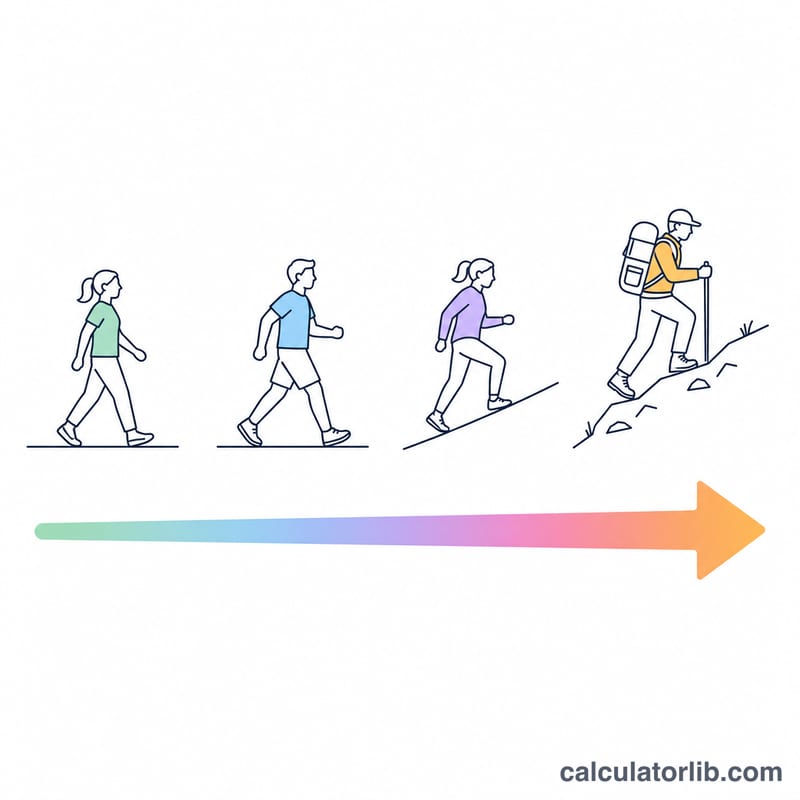
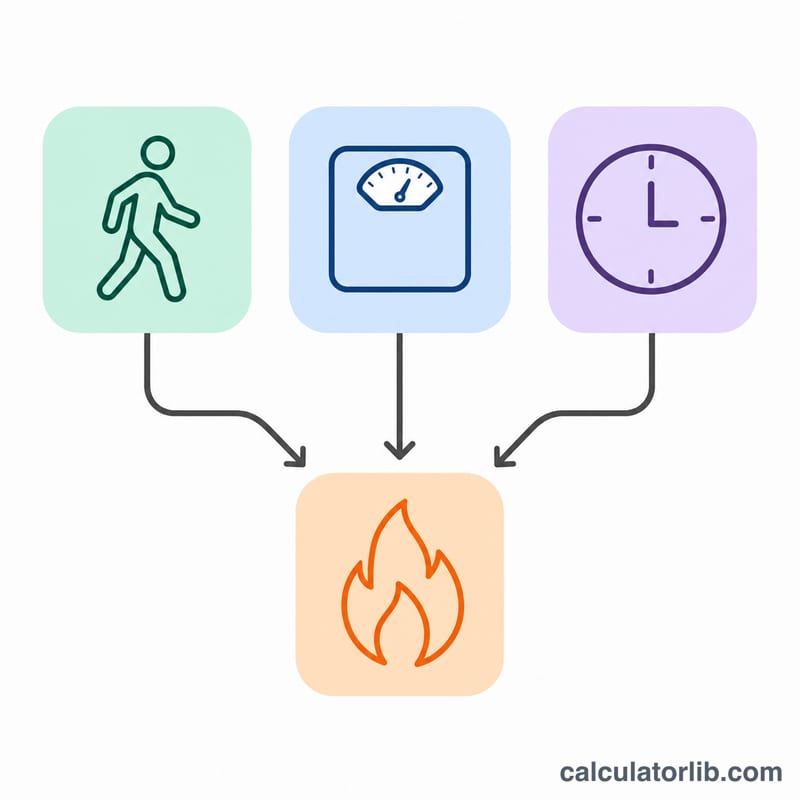
Enter your body weight in kilograms, the duration of your activity in minutes, and select the intensity that best matches your pace or terrain. Slow walking on the flat sits around 2.8 METs, a moderate 3 mph walk is about 3.5 METs, and hiking with a heavy pack uphill can reach 7.3 METs. The calculator returns total calories for the session plus a per-minute and per-hour rate so you can compare efforts.
The Formula Explained
The core equation is $$\text{Calories} = \frac{\text{MET} \times 3.5 \times \text{Weight (kg)}}{200} \times \text{Duration (min)}$$ The constant 3.5 ml/kg/min is the resting oxygen uptake (1 MET), and dividing by 200 converts oxygen consumption into kilocalories. Multiplying by the MET value scales for intensity, while weight and time scale for the size of the effort. Heavier people and longer durations burn more, and steeper or faster activity raises the MET multiplier.
Worked Example
A 70 kg person walks at a moderate 3 mph (3.5 METs) for 30 minutes: $$\text{Calories} = 3.5 \times 3.5 \times 70 \div 200 \times 30 = 128.625 \text{ kcal}$$ That's about 4.29 kcal per minute, or roughly 257 kcal per hour at that pace.
FAQ
Is this estimate exact? No. MET-based figures are population averages; individual metabolism, fitness, terrain, and gear can shift the real number by 10–20%.
What if I weigh myself in pounds? Divide pounds by 2.205 to get kilograms before entering your weight.
Does this account for incline? Indirectly — choose a higher-MET hiking option for steep or uphill terrain to reflect the extra effort.