
What Is Sales Win Rate?
Sales win rate is the percentage of sales opportunities your team closes successfully out of all the deals it pursued. It is one of the most important metrics in any sales organization because it directly reflects the efficiency of your sales process, the quality of your leads, and the effectiveness of your reps. A higher win rate means you are converting more of your pipeline into revenue without needing to chase more leads.
How to Use This Calculator
Enter the number of deals won (opportunities that were closed-won) and the total deals (all opportunities that reached a decision — won plus lost) for the period you want to measure. Click calculate to see your win rate percentage, your loss rate, and a clear breakdown of the deal counts. You can run it per rep, per quarter, per product line, or for the whole team.
The Formula Explained
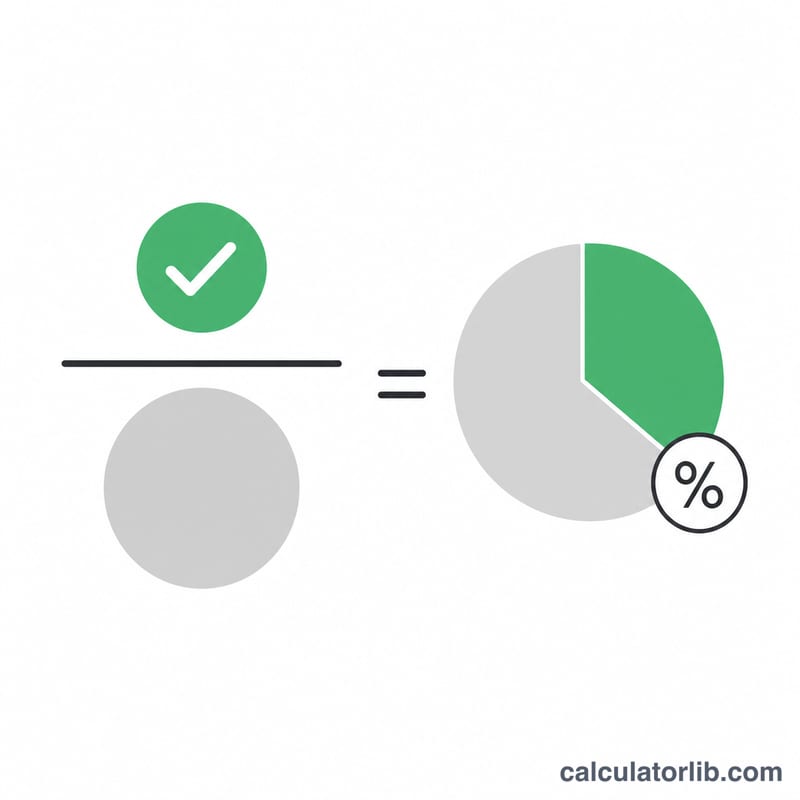
The calculation is simple: divide deals won by total deals, then multiply by 100 to express it as a percentage.
$$\text{Win Rate (\%)} = \frac{\text{Deals Won}}{\text{Total Deals}} \times 100$$
Only count opportunities that have actually closed — including open deals still in the pipeline would understate your true win rate. The loss rate is simply 100% minus the win rate.
Worked Example
Suppose a rep closed 30 deals out of 100 total opportunities in Q1. $$\text{Win Rate} = \frac{30}{100} \times 100 = \textbf{30\%}$$ That means 70 deals were lost, for a loss rate of 70%. If a colleague won 18 of 40 deals, their win rate would be \(\frac{18}{40} \times 100 = 45\%\) — higher conversion despite chasing fewer deals.
FAQ
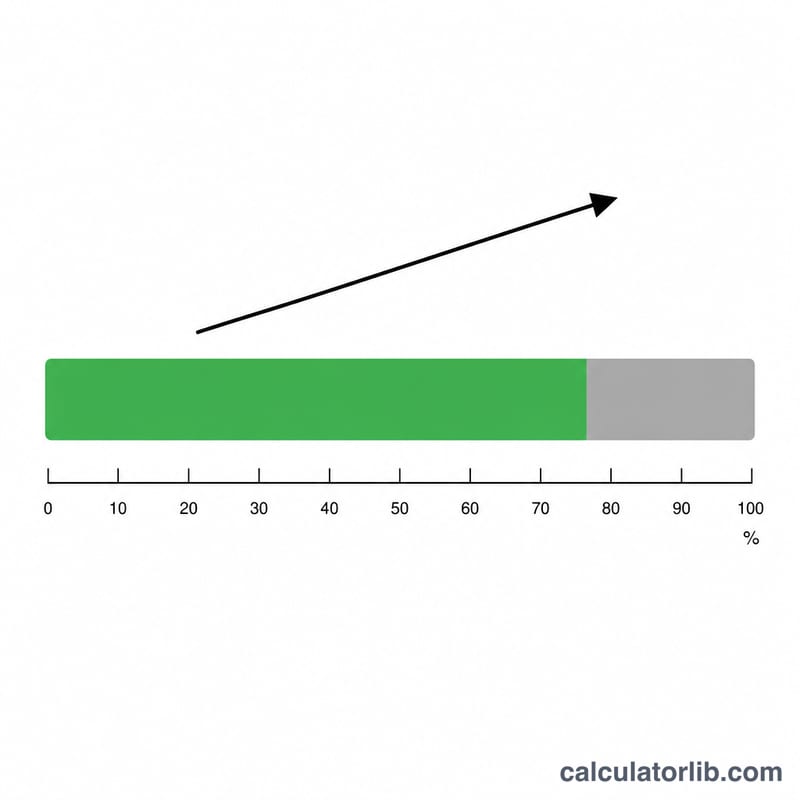
What is a good sales win rate? It varies widely by industry, but many B2B teams see win rates between 15% and 40%. Compare against your own historical average to judge improvement.
Should I include open deals? No. Use only closed deals (won + lost) so the rate reflects actual outcomes, not pipeline that may still convert.
How can I improve my win rate? Qualify leads more strictly, shorten the sales cycle, address objections earlier, and focus reps on the deals most likely to close.