
What Is the Diameter of a Circle?
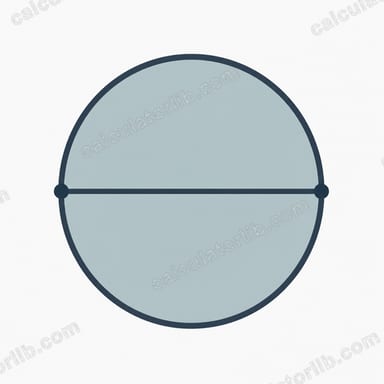
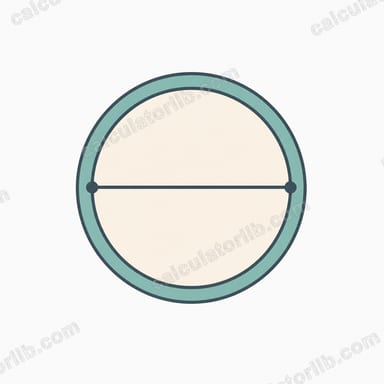
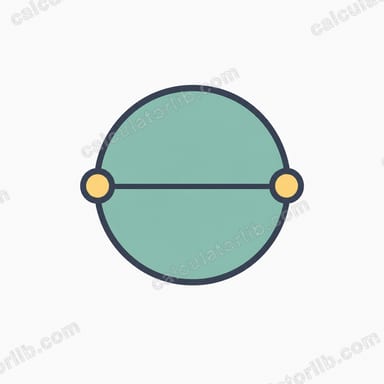
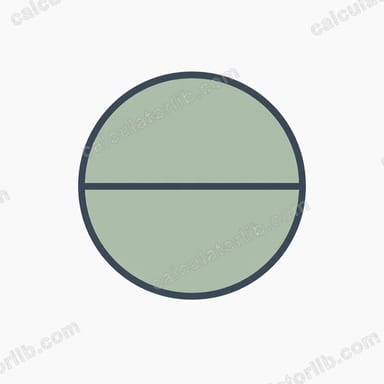
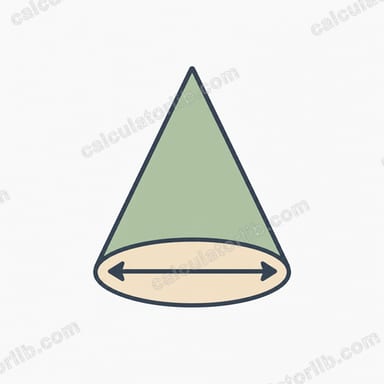
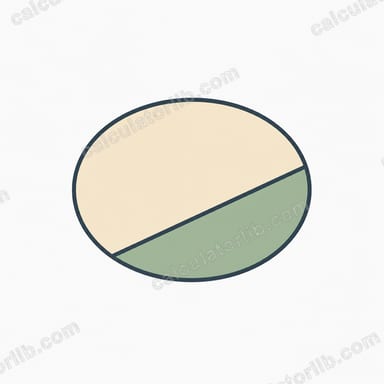
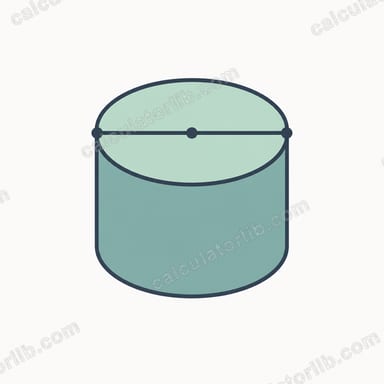
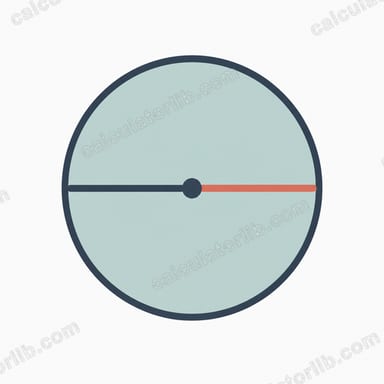
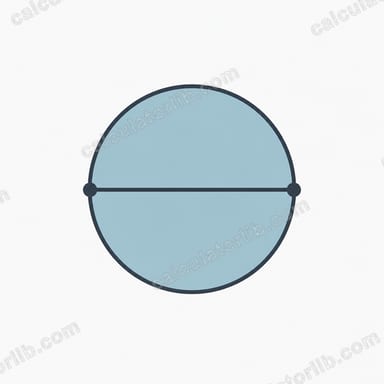
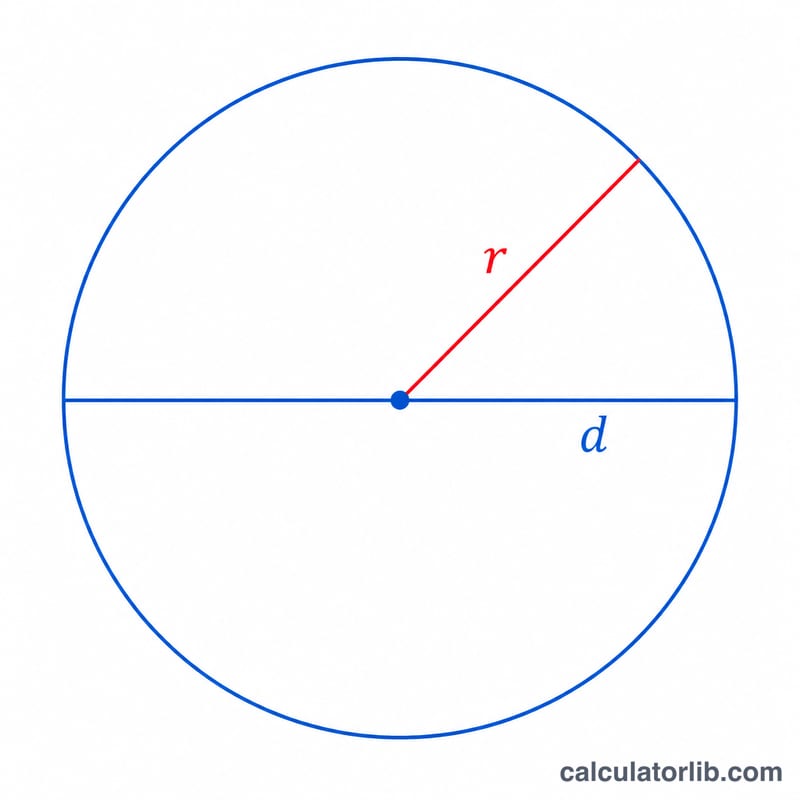
The diameter is the straight-line distance across a circle passing through its center — the longest chord you can draw. It equals exactly twice the radius. This calculator finds the diameter from whichever measurement you already know: the radius, the circumference (distance around), or the area (space inside).
How to Use This Calculator
Pick the value you know from the dropdown — radius, circumference, or area — then type that number into the value box. The calculator instantly returns the diameter along with the matching radius, circumference, and area so you have a full picture of the circle in any units (cm, in, m, etc.).
The Formula Explained
The relationships all stem from the constant \(\pi\) (≈ 3.14159):
- From radius: $$d = 2r$$
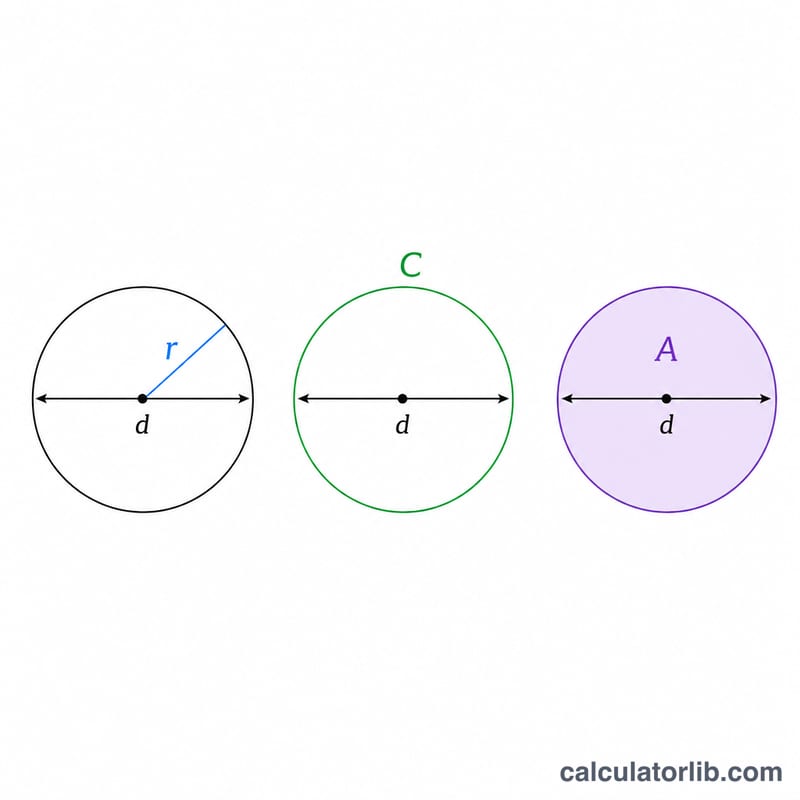
- From circumference: since \(C = \pi d\), we rearrange to $$d = \frac{C}{\pi}$$
- From area: since \(A = \pi r^2\) and \(r = d/2\), solving gives $$d = 2 \times \sqrt{\frac{A}{\pi}}$$
Worked Example
Suppose a circle has a circumference of 31.4159 cm. Dividing by \(\pi\) gives $$d = \frac{31.4159}{3.14159} \approx 10 \text{ cm}$$ The radius is therefore 5 cm and the area is \(\pi \times 5^2 \approx 78.54 \text{ cm}^2\). Likewise, a radius of 5 directly gives a diameter of \(2 \times 5 = 10\).
FAQ
Is the diameter always twice the radius? Yes — for any circle the diameter is exactly \(2r\), by definition.
What units does this use? The calculator is unit-agnostic. Whatever units you enter (cm, m, in) the diameter comes out in the same units; area is in those units squared.
How do I get diameter from area? Take the area, divide by \(\pi\), take the square root, then multiply by 2: \(d = 2\sqrt{A/\pi}\).