
What Is a Deferred Fixed Annuity?
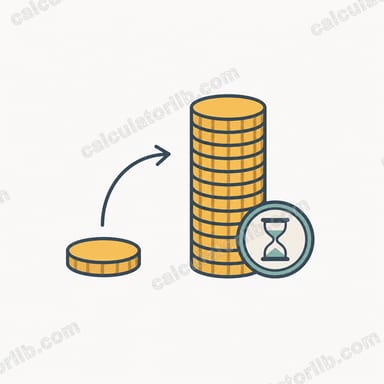
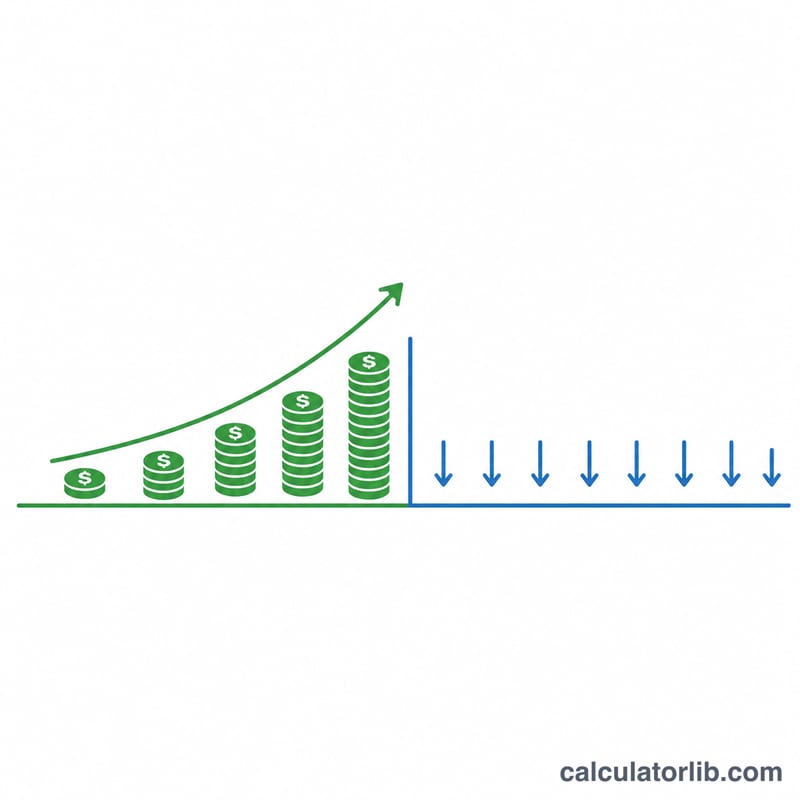
A deferred fixed annuity is an insurance contract that grows your money at a guaranteed fixed interest rate during an accumulation phase before payouts begin. Because the rate is fixed and interest compounds tax-deferred, the value at the end of the deferral period can be projected precisely. This calculator models that accumulation phase: it shows how a single lump-sum premium grows to a future value, and how much of that growth is interest.
How to Use This Calculator
Enter three values: the initial premium (the lump sum you deposit), the annual interest rate guaranteed by the contract, and the number of accumulation years before the annuity is annuitized or surrendered. The calculator returns the projected future value, your original principal, and the total interest earned.
The Formula Explained
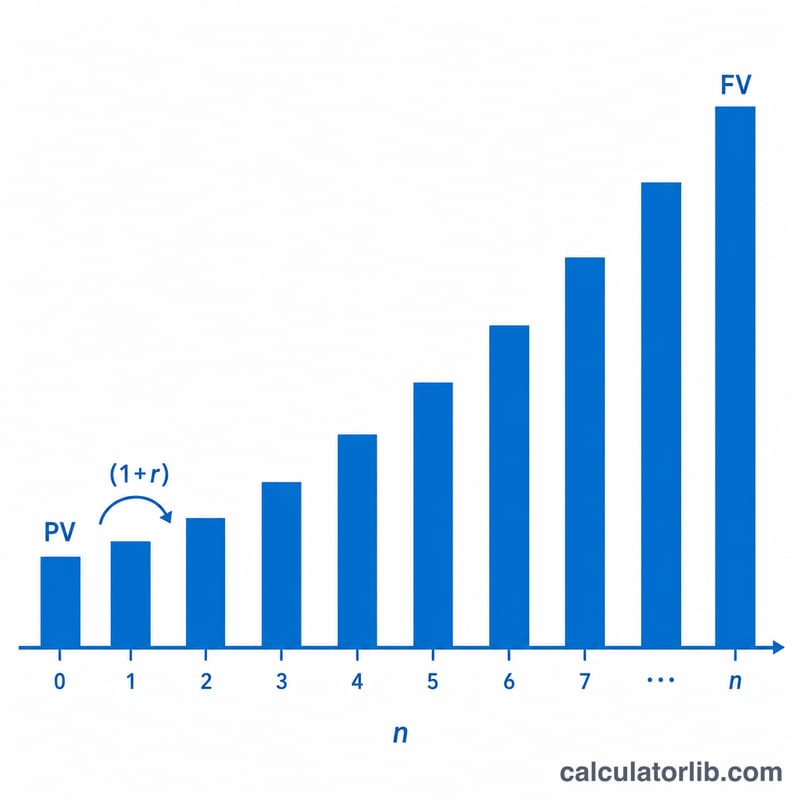
The accumulation phase uses standard compound-interest growth: $$\text{FV} = \text{PV} \times (1 + r)^n$$ where PV is your premium, r is the annual rate expressed as a decimal, and n is the number of years. Interest compounds once per year in this model. Total interest is simply \(\text{FV} - \text{PV}\).
Worked Example
Suppose you place $100,000 into a deferred fixed annuity earning a guaranteed 4% per year for 10 years. The future value is $$100{,}000 \times (1.04)^{10} = 100{,}000 \times 1.480244 \approx \$148{,}024.43$$ Of that, $48,024.43 is interest earned and $100,000 is your original premium.
FAQ
Does this include taxes? No. Deferred annuities grow tax-deferred, but withdrawals are generally taxed as ordinary income. This tool shows the gross accumulated value only.
Is the rate guaranteed? Many deferred fixed annuities guarantee a rate for an initial term, after which the insurer may reset it. This calculator assumes the rate you enter applies for the entire period.
Does it model the payout phase? No. This covers only the accumulation (growth) phase. The income-payout phase depends on payout option, age, and annuity factors.