
What this calculator does
This tool estimates how physically dependent on nicotine a smoker is. It uses the classic 8-item Fagerstrom Tolerance Questionnaire (FTQ), first published by Karl-Olov Fagerstrom in Addictive Behaviors (1978). You answer eight quick questions about your smoking habits, and the calculator adds up the points for each answer to produce a single dependence score from 0 to 11. It is a universal screening instrument and is not tied to any country.
How to use it
Pick the one option that best matches you for each of the eight questions, then read off your total. The numbers in parentheses are the points each answer contributes. A higher total means stronger physical dependence and a likely harder time quitting without support. If you leave a question alone, the default (highest-dependence) answer is used.
The formula explained
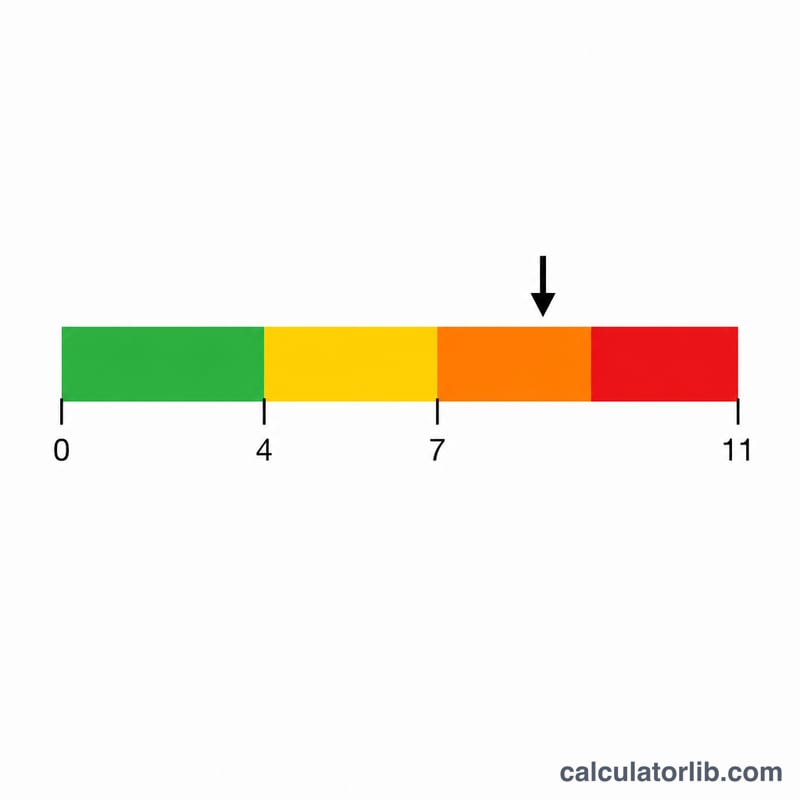
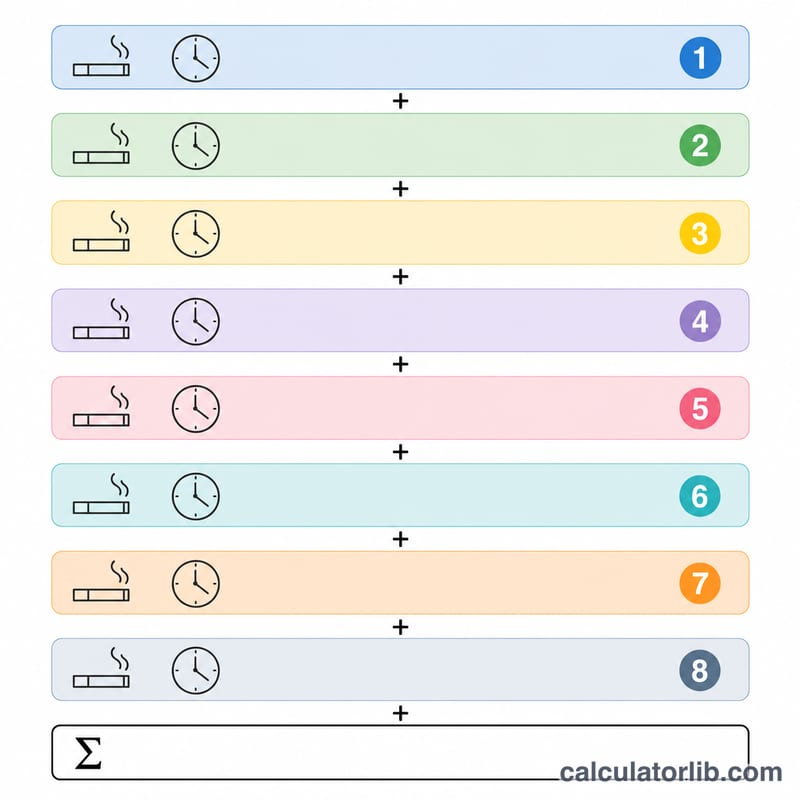
The score is purely additive: $$\text{Total} = \text{Q1} + \text{Q2} + \text{Q3} + \text{Q4} + \text{Q5} + \text{Q6} + \text{Q7} + \text{Q8}$$. The minimum possible score is 0 and the maximum is 11 (\(1+1+1+2+1+2+1+2\)). The result is then placed into one of three bands: Low (0-3) means quitting is physically easier but psychological dependence is strong; Moderate (4-6) means cravings will persist after stopping and a strong will is needed; High (7-11) means quitting takes the most effort, though withdrawal symptoms are temporary.
Worked example
A heavy smoker selects: first cigarette within 30 minutes (1), most hates to give up the morning cigarette (1), smokes most in the morning (1), uses 1.3 mg-or-more cigarettes (2), cannot refrain in no-smoking areas (1), smokes 26+ per day (2), smokes when ill (1), and always inhales (2). The total is $$1+1+1+2+1+2+1+2 = 11$$ which falls in the High band.
FAQ
Is this the same as the modern FTND test? No. This is the older 8-item FTQ. The modern 6-item Fagerstrom Test for Nicotine Dependence (FTND) dropped the nicotine-content and morning-vs-afternoon items. Scores between the two are not directly comparable.
What does my score mean medically? It is a rough indicator of physical dependence to guide quitting strategy, not a diagnosis. A high score suggests nicotine-replacement therapy or professional support may help.
Should I see a doctor? If you want to quit, yes - this result is informational only and not a substitute for professional medical advice.