
What the Inverse Normal Calculator Does
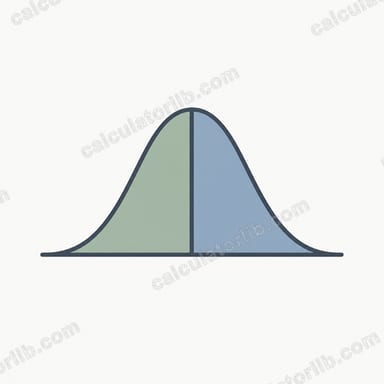
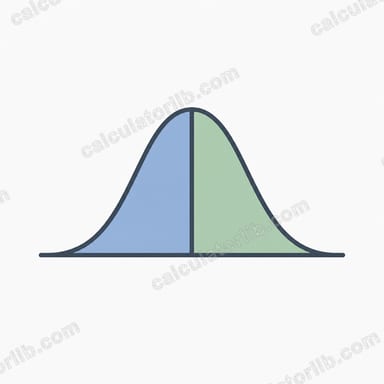
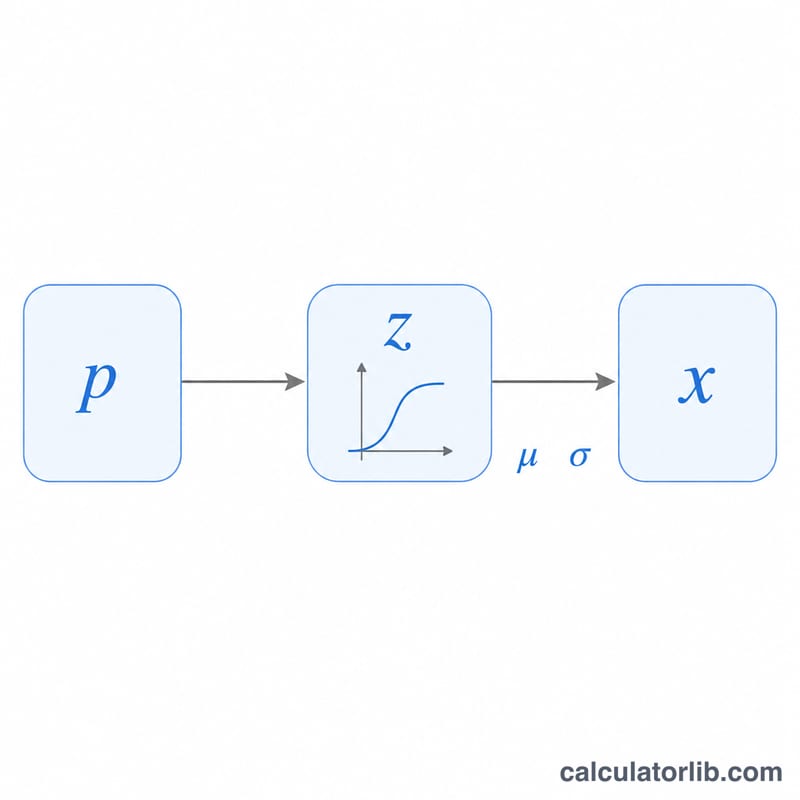
This calculator answers a common statistics question in reverse: instead of asking "what is the probability of a value below x?", it asks "what value sits below a given probability?". You supply a cumulative probability and the parameters of a normal distribution, and the tool returns the corresponding data value (the inverse normal), its percentile, and the matching z-score. It is widely used in coursework, quality control, finance (value-at-risk), and standardized testing.
The Three Inputs
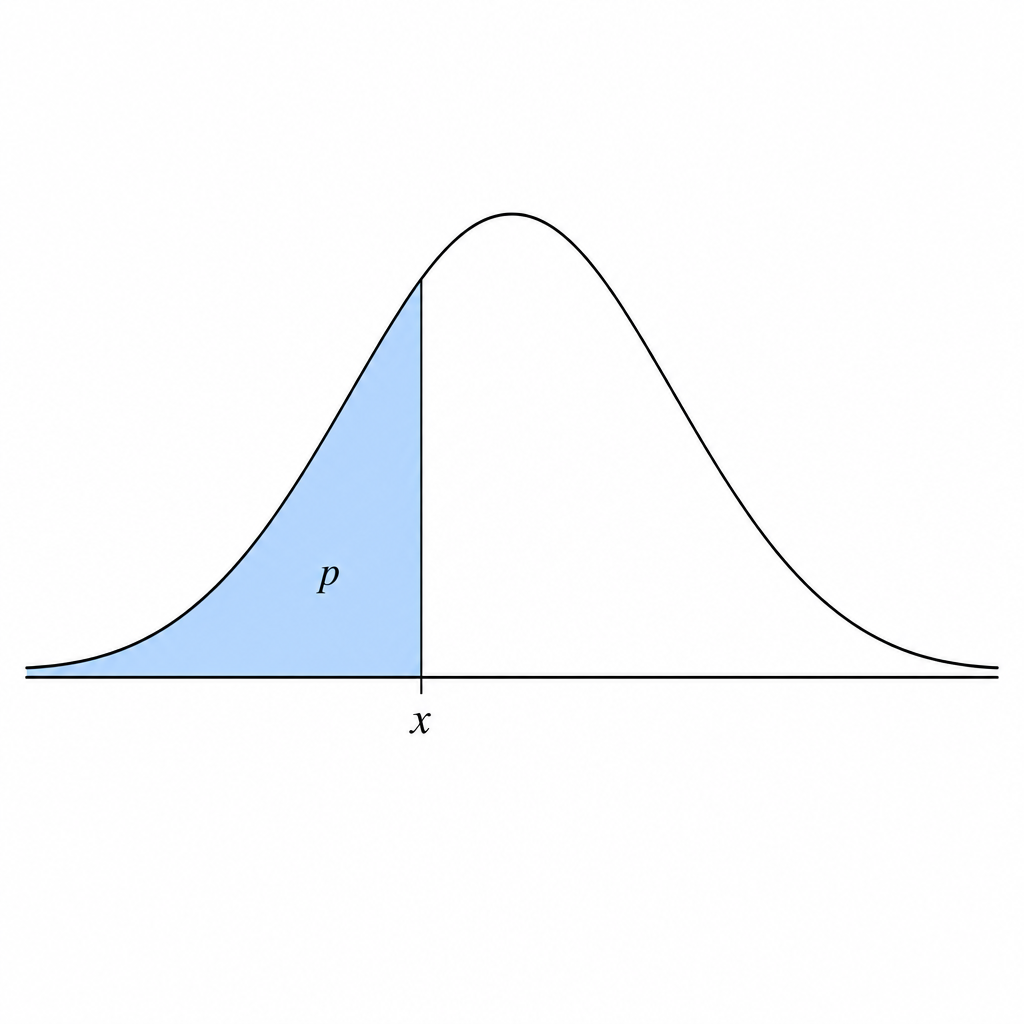
- Probability (0 to 1): the cumulative area to the left of the value you want. For example, 0.95 means "the value below which 95% of the distribution falls." It must be strictly between 0 and 1.
- Mean (μ): the center of your normal distribution.
- Standard Deviation (σ): the spread of the distribution. It must be greater than 0.
The Formula
The tool computes the inverse cumulative distribution function (the quantile function) of a normal distribution with your μ and σ:
- Inverse normal value: x = Φ⁻¹(p; μ, σ) — the value where the cumulative probability equals p.
- Percentile: probability × 100.
- Z-score: z = (x − μ) / σ — how many standard deviations x lies from the mean.
Behind the scenes it uses the standard normal inverse, then scales and shifts: x = μ + σ · z, where z corresponds to probability p.
Worked Example
Suppose exam scores are normally distributed with a mean (μ) of 70 and standard deviation (σ) of 8, and you want the 90th percentile. Enter probability = 0.90, mean = 70, stdDev = 8.
- The standard normal z-score for 0.90 is about 1.2816.
- Inverse normal value: 70 + 8 × 1.2816 ≈ 80.25.
- Percentile: 0.90 × 100 = 90%.
- Z-score: (80.25 − 70) / 8 ≈ 1.28.
So a score of about 80.25 places a student at the 90th percentile.
FAQ
Why must probability be strictly between 0 and 1? A normal distribution extends infinitely in both directions, so probabilities of exactly 0 or 1 correspond to ±infinity. The calculator only accepts values inside that open interval.
What if I leave the mean and standard deviation as the standard values? If you enter mean = 0 and standard deviation = 1, the inverse normal value equals the z-score directly, giving you the classic standard normal quantile.
What does a negative result mean? If your probability is below 0.5, the value falls left of the mean, producing a negative z-score and a value smaller than μ. That is expected, not an error.