
What the Stride Length Calculator Does
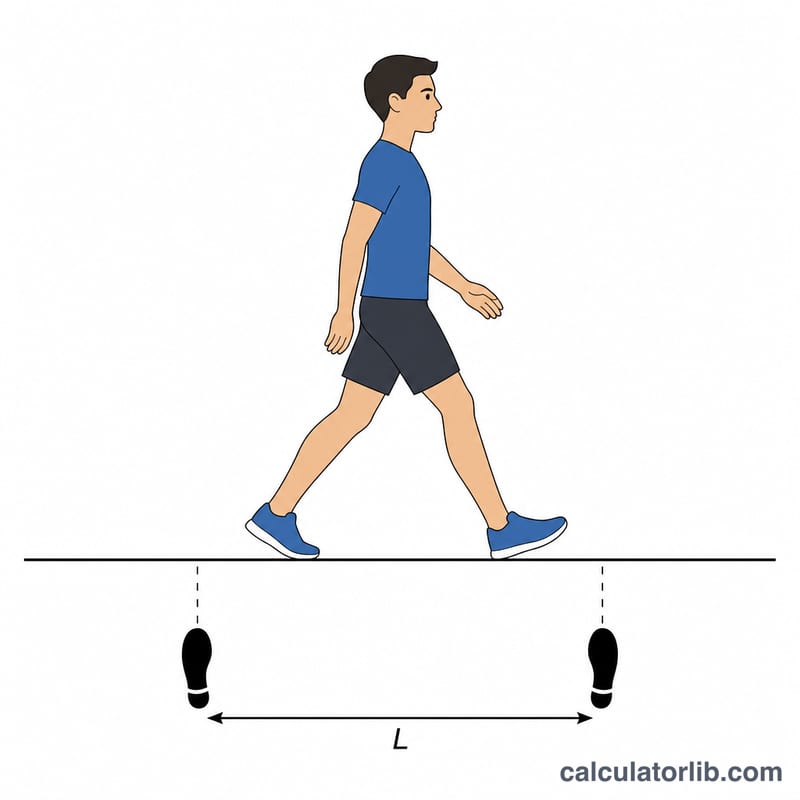
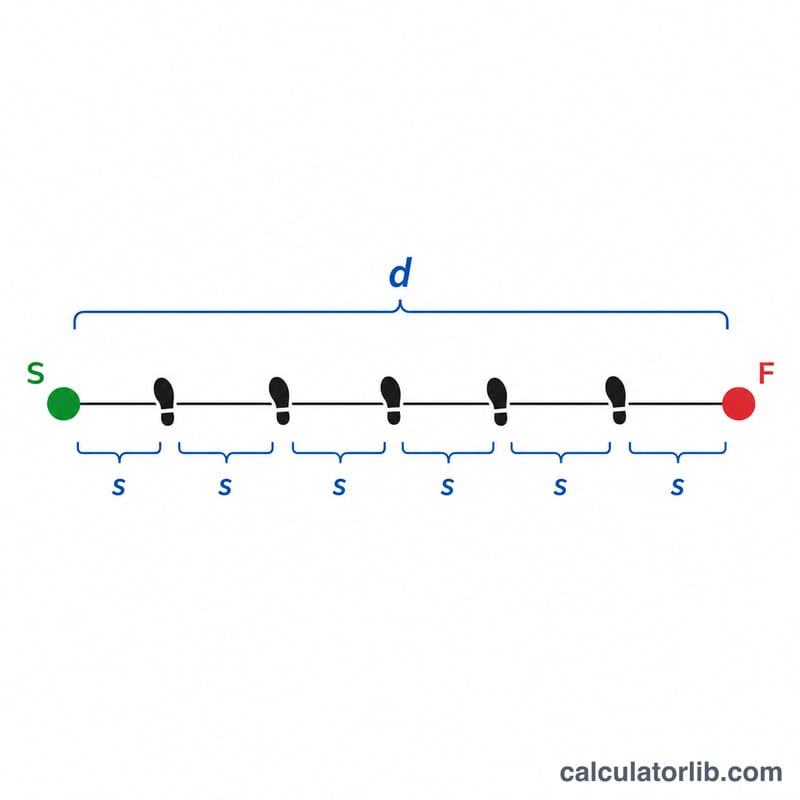
Your stride length is the distance you cover with a single step. Knowing it helps you calibrate fitness trackers, plan running pace, and convert step counts into real distances. This calculator measures your actual stride length from a short test walk or run, then compares it to a height-based guideline so you can see whether your stride is typical, short, or long.
The Three Inputs
- Height (cm) – your standing height, used to estimate a recommended stride and a stride-to-height ratio.
- Number of Steps – how many steps you took during the test (count them as you walk or run a measured distance).
- Distance Covered (meters) – the length of the path you walked or ran, in meters.
The Formula
The core calculation is simple division:
- Stride length (m) = Distance ÷ Steps
- Stride length (cm) = Stride length (m) × 100
- Recommended stride (cm) = Height × 0.4 (a general guideline)
- Stride-to-height ratio (%) = (Stride cm ÷ Height) × 100
- Steps per kilometre = 1000 ÷ Stride length (m)
Worked Example
Suppose you are 170 cm tall and you walked a measured 30-meter path in 40 steps:
- Stride length = 30 ÷ 40 = 0.75 m (75 cm)
- Recommended stride = 170 × 0.4 = 68 cm
- Stride-to-height ratio = (75 ÷ 170) × 100 ≈ 44.1%
- Steps per kilometre = 1000 ÷ 0.75 ≈ 1,333 steps
Here your measured 75 cm stride is a touch longer than the 68 cm guideline, which is common for a brisk walk or jog.
Frequently Asked Questions
How accurate is the test? Accuracy improves with distance. Counting steps over 30–50 meters gives a far better average than just a few paces, because it smooths out the variation between individual steps.
Why is my stride longer than the recommended value? The 0.4 × height rule is a rough walking guideline. Running, walking fast, or having long legs all push your real stride above it — that's normal.
What's the difference between stride and step length? In everyday use they are often the same single-step distance, which is what this tool measures. Some sports definitions count a "stride" as two steps (left then right), so check the context when comparing figures.