
What this calculator does
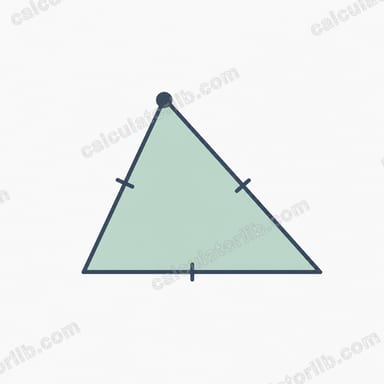
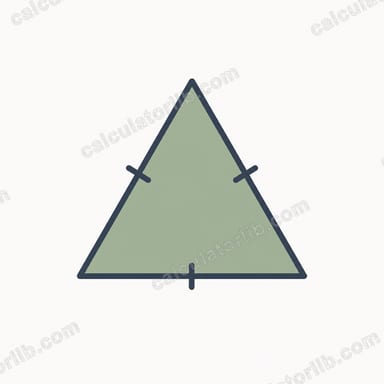
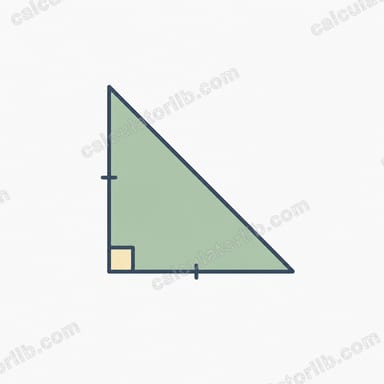
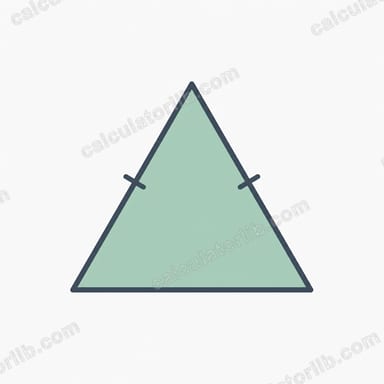
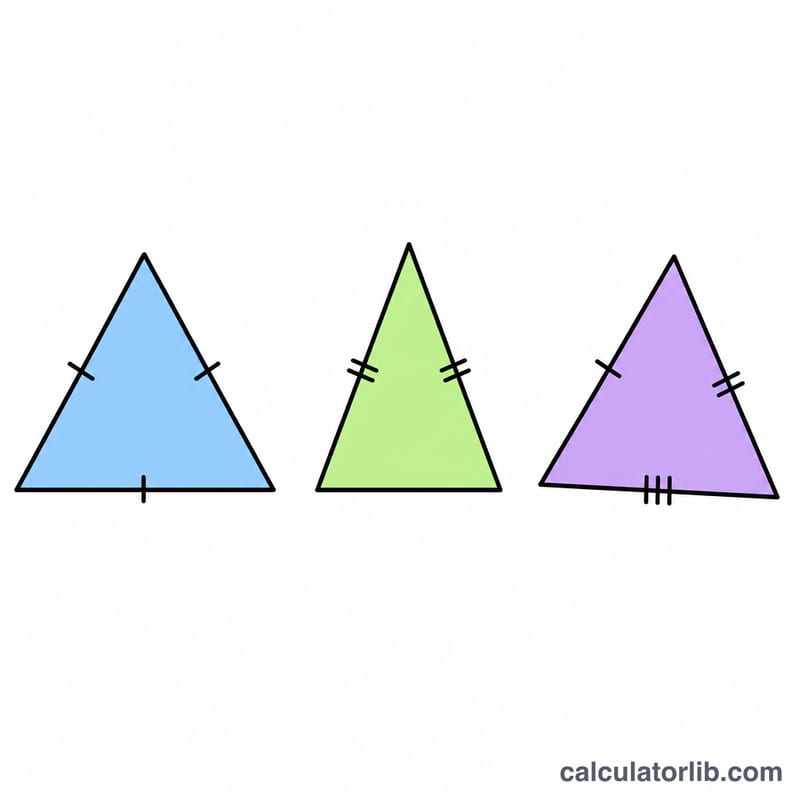
This tool classifies a triangle by the lengths of its three sides. Enter side a, b, and c, and it tells you whether the triangle is equilateral (all three sides equal), isosceles (exactly two sides equal), or scalene (no two sides equal). It also confirms the lengths can actually form a triangle.
How to use it
Type the three measured side lengths into the boxes. Any consistent unit works (cm, inches, metres) as long as you use the same unit for all three. Press calculate and read the triangle type. The result table also shows how many pairs of sides are equal and a numeric type code (3 = equilateral, 2 = isosceles, 1 = scalene, 0 = invalid).
The formula explained
Classification is purely a comparison of side lengths.
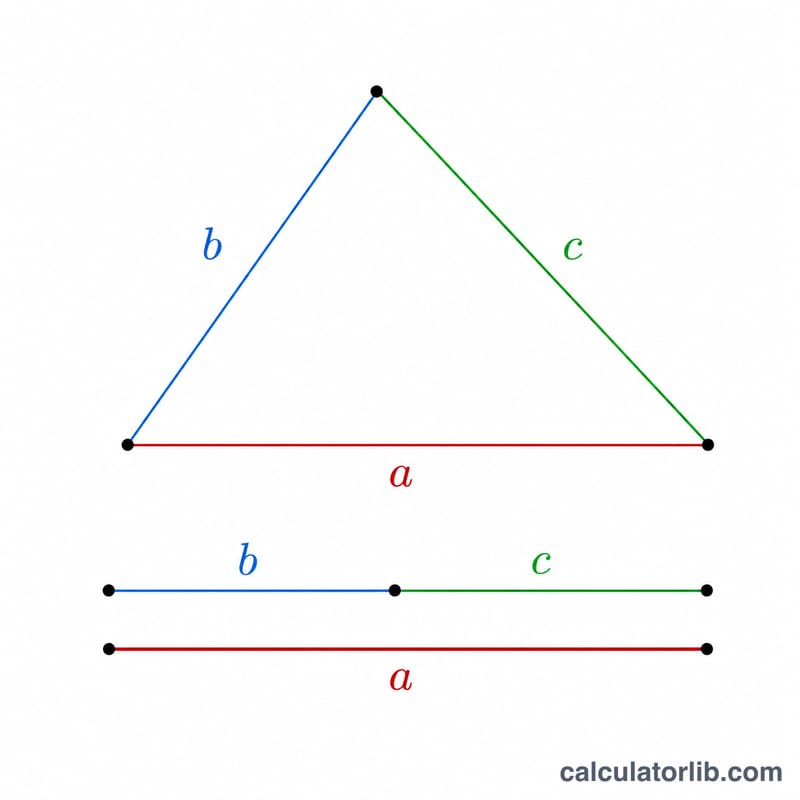
$$\text{Type} = \begin{cases} \text{Equilateral}, & a = b = c \\[0.5em] \text{Isosceles}, & \text{exactly two of } a,\, b,\, c \text{ equal} \\[0.5em] \text{Scalene}, & \text{all of } a,\, b,\, c \text{ different} \end{cases}$$If \(a = b = c\) the triangle is equilateral. If exactly two of the three sides match, it is isosceles. If all three differ, it is scalene. Before classifying, the calculator applies the triangle inequality: every side must be less than the sum of the other two (\(a + b > c\), \(b + c > a\), \(a + c > b\)) and all sides must be positive. If that fails, the shape cannot exist and it is reported as "Not a valid triangle".
Worked example
Suppose \(a = 5\), \(b = 5\), \(c = 8\). The triangle inequality holds (\(5 + 5 > 8\)). Sides \(a\) and \(b\) are equal but \(c\) is different, so exactly two sides match — this is an isosceles triangle. Change \(c\) to 5 and all three sides match, making it equilateral. Change them to 3, 4, 5 and none match, giving a scalene triangle.
FAQ
Is an equilateral triangle also isosceles? In the strict definition used here, equilateral and isosceles are reported separately: all-three-equal is labelled equilateral. Some textbooks treat equilateral as a special isosceles case.
Why does it say "not a valid triangle"? If a side is zero/negative or one side is longer than or equal to the sum of the other two, the lengths cannot close into a triangle.
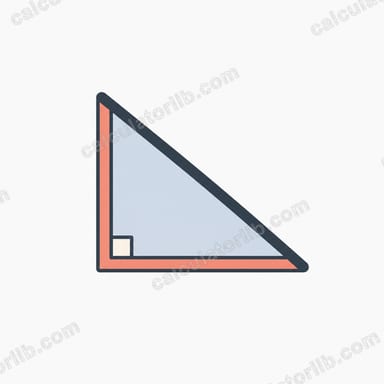
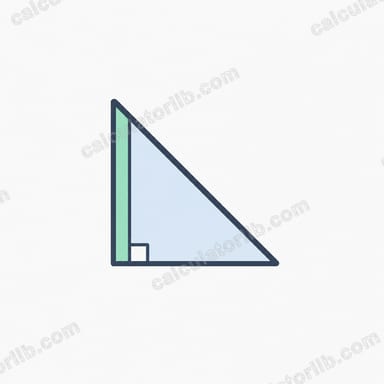
Does this consider angles? No. This classifies by sides only. Angle-based classes (acute, right, obtuse) need a separate calculation.