

What Are Liquidity Ratios?
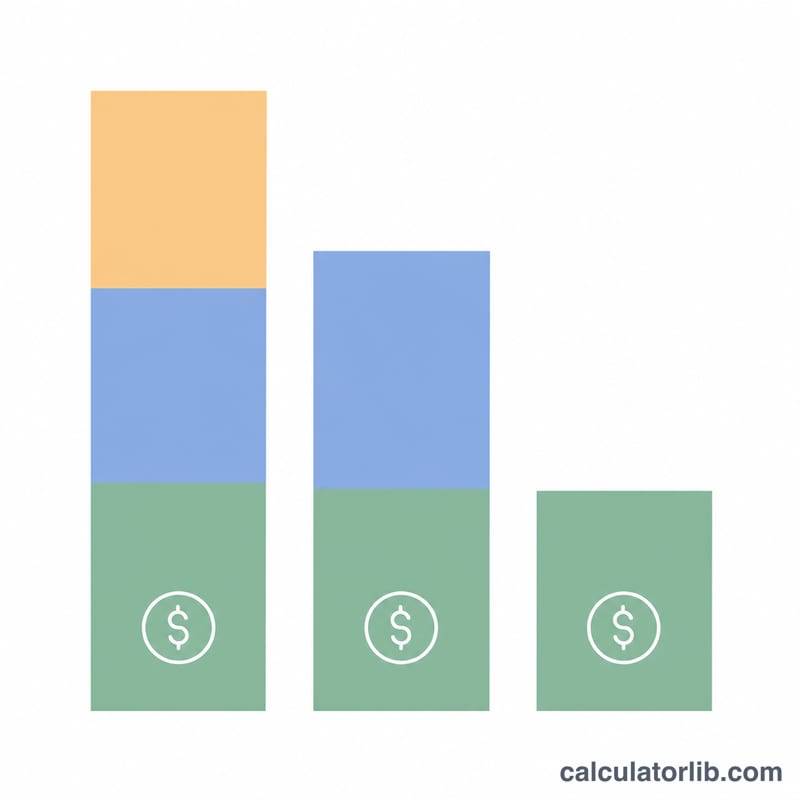
Liquidity ratios measure a company's ability to pay its short-term obligations using its short-term assets. They are key tools for creditors, investors and managers assessing financial health. This calculator computes the three most common liquidity measures: the current ratio, the quick ratio (acid-test) and the cash ratio.
How to Use This Calculator
Enter the figures straight from the balance sheet: total current assets, the portion that is inventory, total current liabilities, and your cash and cash equivalents. The calculator instantly returns all three ratios. A higher ratio generally signals stronger liquidity, though an excessively high value may suggest idle assets.
The Formulas Explained
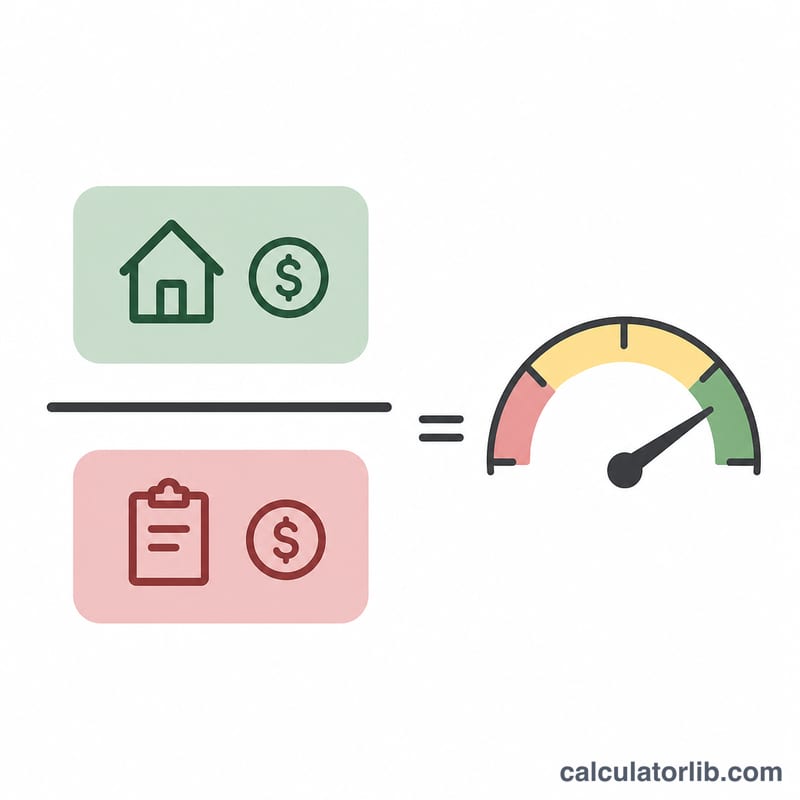
The current ratio divides all current assets by current liabilities — a value above 1.0 means assets exceed near-term debts.
$$\text{Current Ratio} = \dfrac{\text{Current Assets}}{\text{Current Liabilities}}$$The quick ratio strips out inventory (the least liquid current asset) for a stricter test:
$$\text{Quick Ratio} = \dfrac{\text{Current Assets} - \text{Inventory}}{\text{Current Liabilities}}$$The cash ratio is the most conservative, using only cash and equivalents over current liabilities.
Worked Example
Suppose a firm has $150,000 in current assets, $50,000 of which is inventory, $100,000 in current liabilities and $30,000 in cash.
$$\text{Current Ratio} = 150{,}000 \div 100{,}000 = \mathbf{1.5}$$$$\text{Quick Ratio} = (150{,}000 - 50{,}000) \div 100{,}000 = \mathbf{1.0}$$$$\text{Cash Ratio} = 30{,}000 \div 100{,}000 = \mathbf{0.3}$$The firm comfortably covers short-term debts even excluding inventory.
FAQ
What is a good current ratio? A ratio between 1.5 and 3.0 is often considered healthy, but ideal levels vary by industry.
Why exclude inventory in the quick ratio? Inventory can be slow or difficult to convert to cash, so the quick ratio offers a more cautious liquidity picture.
Can a ratio be too high? Yes — a very high ratio may mean the company is holding too much cash or unused assets that could be invested for better returns.