
What is the Morse Fall Scale?
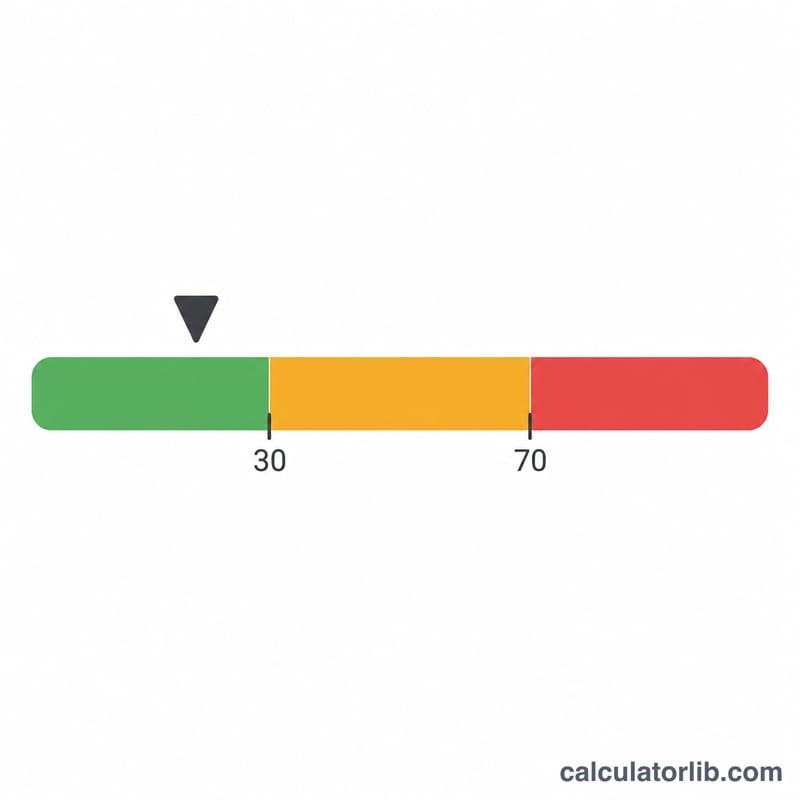
The Morse Fall Scale (MFS) is a widely used, evidence-based tool that nurses and clinicians apply to rapidly assess a patient's likelihood of falling in hospital and other care settings. Developed by Janice Morse, it scores six independent risk factors and produces a single total between 0 and 125. A higher score indicates a higher fall risk and triggers correspondingly intensive fall-prevention measures.
How to use this calculator
Select the option that best describes the patient for each of the six items: history of falling, presence of a secondary medical diagnosis, the ambulatory aid being used, whether an IV or heparin lock is in place, the gait quality, and the patient's mental status (their awareness of their own mobility limitations). The calculator adds the weighted points and returns the total score with an interpreted risk level.
The formula explained
The total is simply the sum of all six selected weights:
$$\text{MFS} = \text{Fall History} + \text{Secondary Dx} + \text{Ambulatory Aid} + \text{IV / Heparin Lock} + \text{Gait} + \text{Mental Status}$$Fall history (0 or 25), Secondary diagnosis (0 or 15), Ambulatory aid (0, 15, or 30), IV/Heparin lock (0 or 20), Gait (0, 10, or 20), and Mental status (0 or 15). Each item carries its own clinical weight reflecting how strongly it predicts a fall.
Worked example
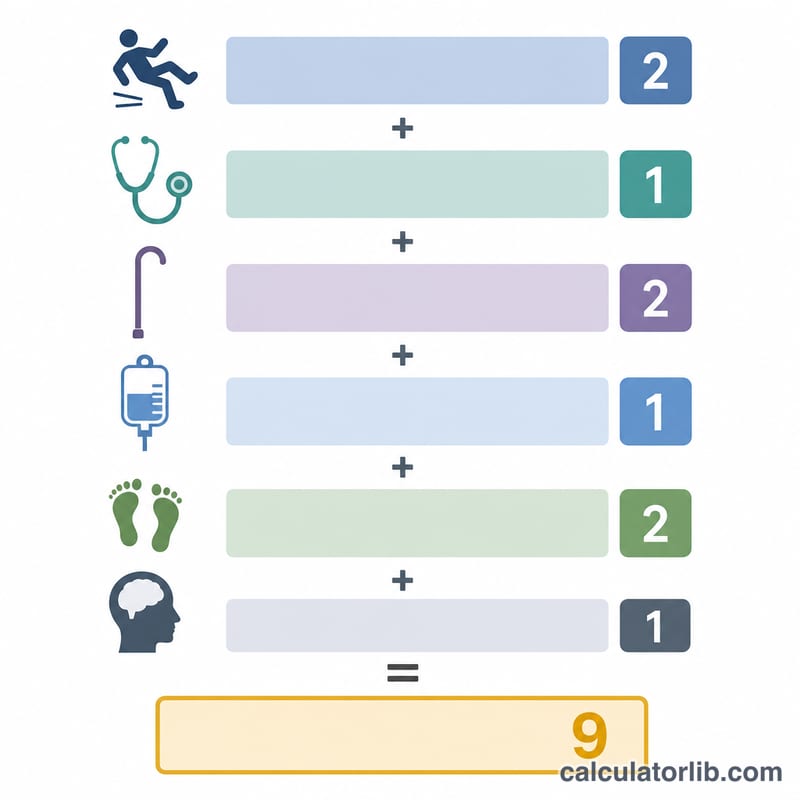
Consider a patient who has fallen recently (25), has more than one diagnosis (15), uses a cane (15), has no IV (0), has a weak gait (10), and overestimates their ability (15). Total =
$$25 + 15 + 15 + 0 + 10 + 15 = \mathbf{80}$$which is classified as High Risk.
FAQ
What scores mean high risk? Thresholds vary by facility, but a common scheme is 0–24 low risk, 25–44 moderate risk, and 45 or higher high risk.
How often should the MFS be repeated? Typically on admission, after a fall, after a change in condition, on transfer, and at scheduled intervals per facility policy.
Is this a diagnosis? No. The MFS is a screening aid. It supports clinical judgement and should never replace a full nursing assessment or local protocol.