
What Is the Income Replacement Ratio?
The retirement income replacement ratio measures what percentage of your pre-retirement earnings your projected retirement income will replace. It is one of the most widely used benchmarks for judging whether your savings, pensions, and other income sources will support your lifestyle once you stop working. Financial planners often suggest aiming for 70%–85%, because some expenses (commuting, payroll taxes, retirement savings) typically fall after you retire.
How to Use This Calculator
Enter your current (pre-retirement) annual income and your projected total annual income in retirement—including Social Security or state pension, workplace pensions, annuities, and withdrawals from savings. The calculator divides projected retirement income by pre-retirement income and multiplies by 100 to give your replacement ratio, then shows the gap to full (100%) replacement.
The Formula Explained
$$\text{Replacement Ratio} = \frac{\text{Projected Retirement Income}}{\text{Pre-Retirement Income}} \times 100$$ A ratio of 80% means you will have 80 cents of income for every dollar you earned while working. The income gap \((100\% - \text{ratio})\) highlights how much more income you might need to fully maintain your working-years standard of living.
Worked Example
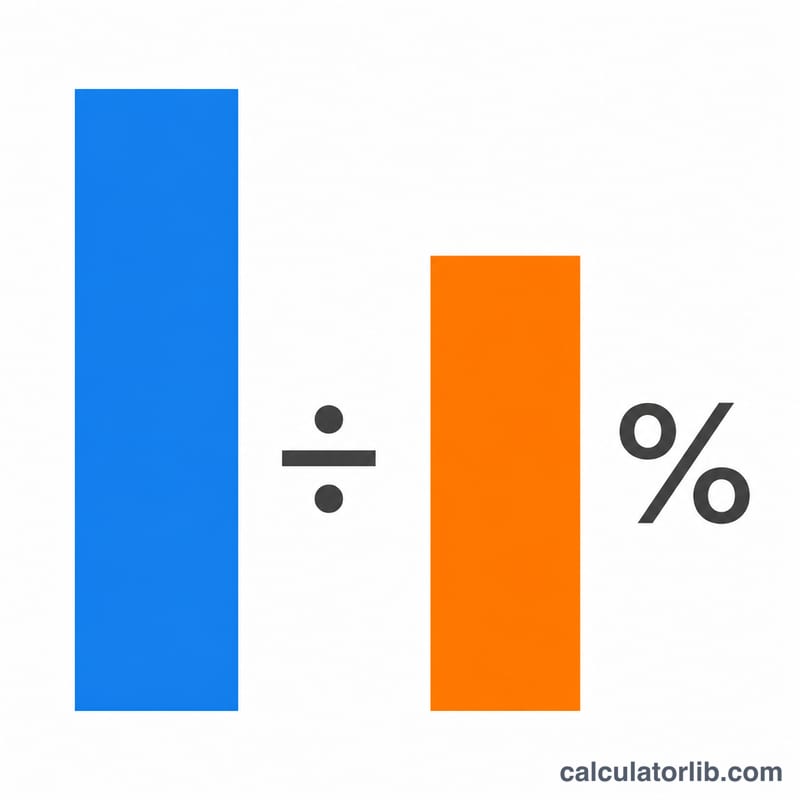
Suppose your pre-retirement income is $80,000 and your projected retirement income is $60,000. The ratio is $$60{,}000 \div 80{,}000 \times 100 = 75\%.$$ That leaves an income gap of 25%, which is within the commonly recommended range and may still be comfortable depending on your expenses.
FAQ
What ratio should I target? Many advisors suggest 70%–85%, but the right figure depends on your expected spending, debts, and lifestyle.
Should I include taxes? For a clean comparison, use either gross figures for both inputs or net (after-tax) figures for both—just be consistent.
Can the ratio exceed 100%? Yes. If your retirement income is higher than your working income, the ratio will be above 100%, indicating a surplus.