
What Is Sampling Error?
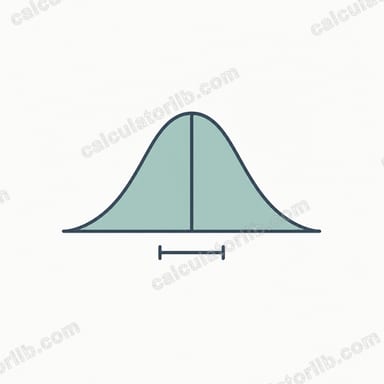
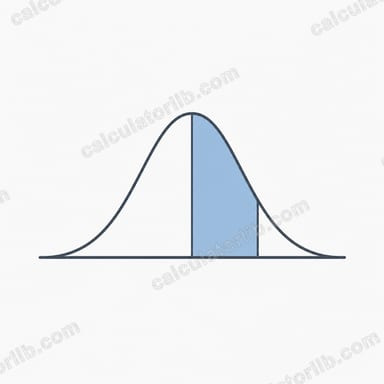
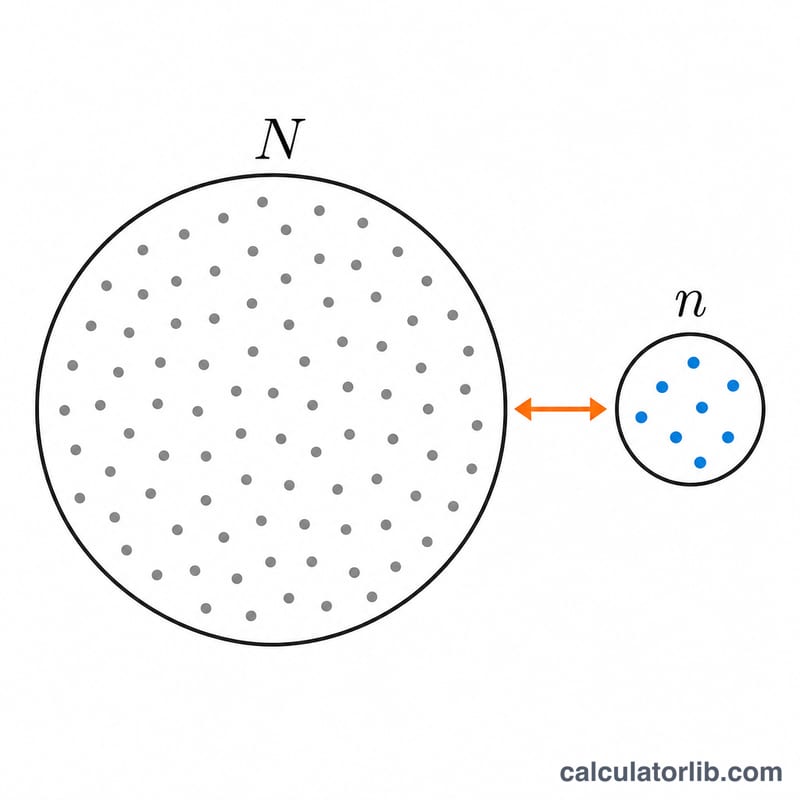
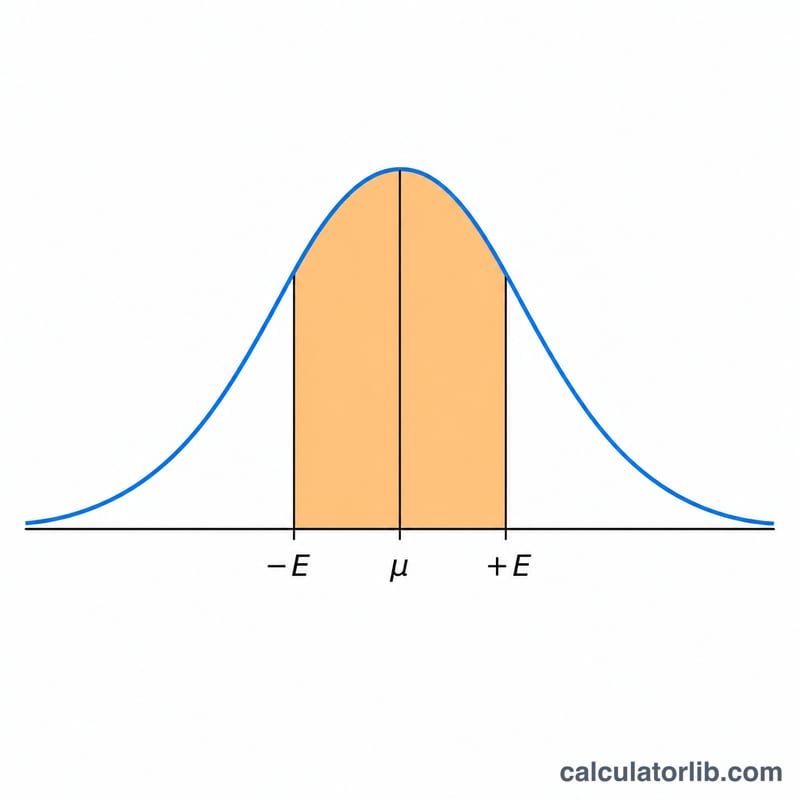
Sampling error is the difference between a sample statistic (like a sample mean) and the true population value, arising simply because you measured a subset rather than the whole population. This calculator expresses that uncertainty as a margin of error using the formula \(E = z \times s / \sqrt{n}\), where z is the Z-score for your confidence level, s is the standard deviation, and n is the sample size.
How to Use It
Pick a confidence level (90%, 95%, or 99%), which sets the Z-score. Enter the standard deviation of your data and the number of observations in your sample. The calculator returns the standard error (\(s/\sqrt{n}\)) and the full margin of error (\(z \times s/\sqrt{n}\)). A larger sample size shrinks the error; more variability (higher s) increases it.
The Formula Explained
First, the standard error of the mean is $$SE = s / \sqrt{n}$$ — it describes how much sample means typically vary around the true mean. Multiplying by the Z-score scales this to a confidence interval half-width. Common Z-scores are 1.645 (90%), 1.96 (95%), and 2.576 (99%).
Worked Example
Suppose s = 15, n = 100, at 95% confidence (z = 1.96). The standard error is $$15 / \sqrt{100} = 15 / 10 = 1.5$$ The sampling error is $$1.96 \times 1.5 = 2.94$$ So the estimate is accurate to within about ±2.94 at 95% confidence.
FAQ
How can I reduce sampling error? Increase the sample size n — because of the square root, quadrupling n halves the error.
What Z-score should I use? Use 1.96 for the standard 95% confidence level; choose 90% or 99% if your application requires a different confidence.
Is sampling error the same as bias? No. Sampling error is random and shrinks with larger samples; bias is systematic and is not fixed by sample size.