
What This Calculator Does
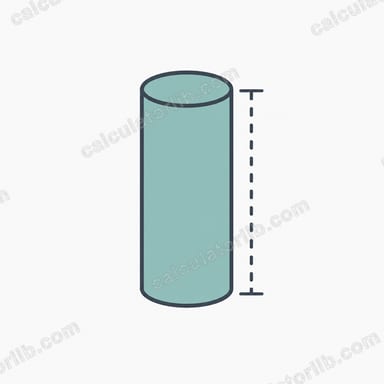
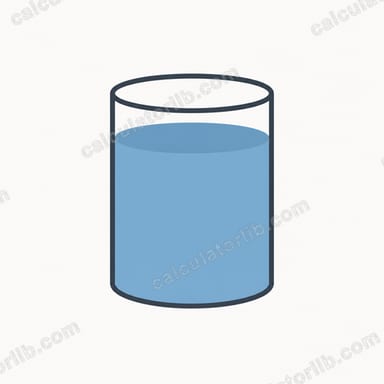
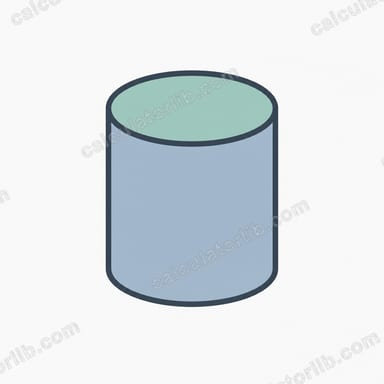
This tool calculates the volume of a cylinder and converts it directly into US gallons. Enter the diameter and height (or length) of the cylinder in feet, and it returns the capacity in gallons along with the volume in cubic feet. It is ideal for sizing water tanks, fuel drums, pipes, silos, and pools with a circular cross-section.
How to Use It
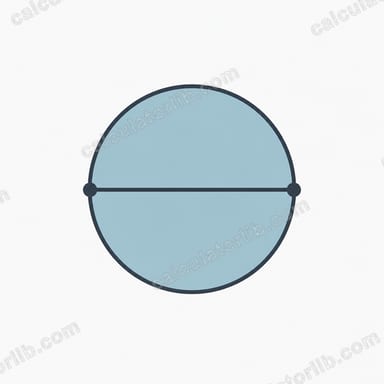
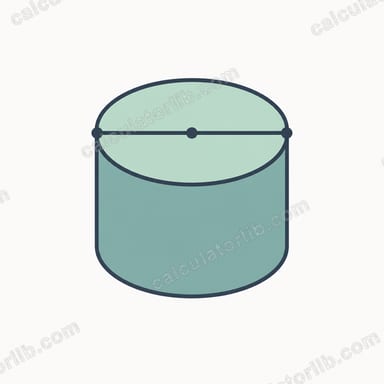
Measure the cylinder's inside diameter and its height (for a vertical tank) or length (for a horizontal one), both in feet. Type both values into the form and read the result. The calculator halves the diameter to get the radius, computes the geometric volume, then multiplies by 7.48052 — the number of US gallons in one cubic foot.
The Formula Explained
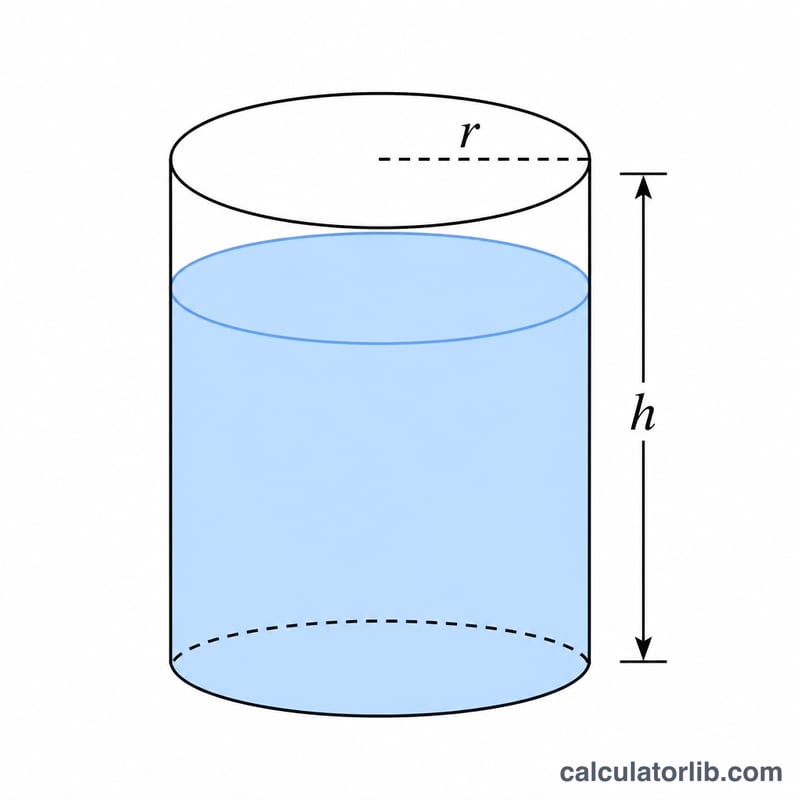
The volume of a cylinder is the area of its circular base (\(\pi r^2\)) multiplied by its height (\(h\)). Because measurements are in feet, the raw volume is in cubic feet. One US cubic foot holds exactly 7.48052 US liquid gallons, so:
$$\text{Gallons} = \pi \times r^2 \times h \times 7.48052$$
If you measure in inches or another unit, convert to feet first (divide inches by 12).
Worked Example
Consider a vertical tank with a diameter of 4 ft and a height of 6 ft. The radius is 2 ft, so the volume is $$\pi \times 2^2 \times 6 = 75.398 \text{ cubic feet}.$$ Multiplying by 7.48052 gives about 564.0 US gallons.
FAQ
Are these US or imperial gallons? The result is in US liquid gallons. One imperial (UK) gallon is about 1.201 US gallons, so divide the result by 1.201 for imperial gallons.
What if I only know the radius? Multiply the radius by 2 to get the diameter and enter that.
Can I use it for a horizontal tank? Yes — for a completely full horizontal cylinder, total capacity is the same. Use the length as the "height" value. Partial-fill volumes require a different formula.