
What Is the Inverse Square Law for Light?
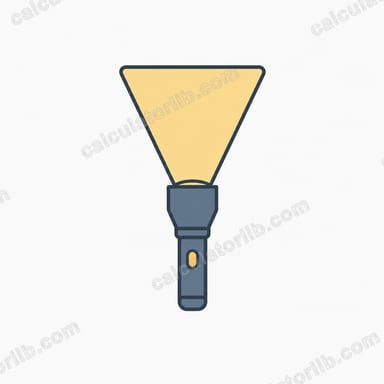
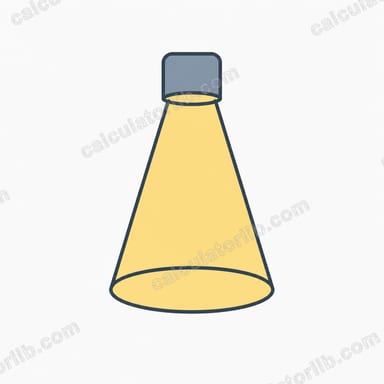
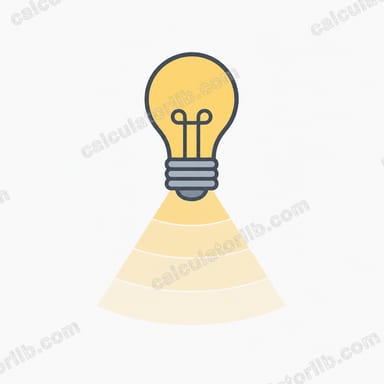
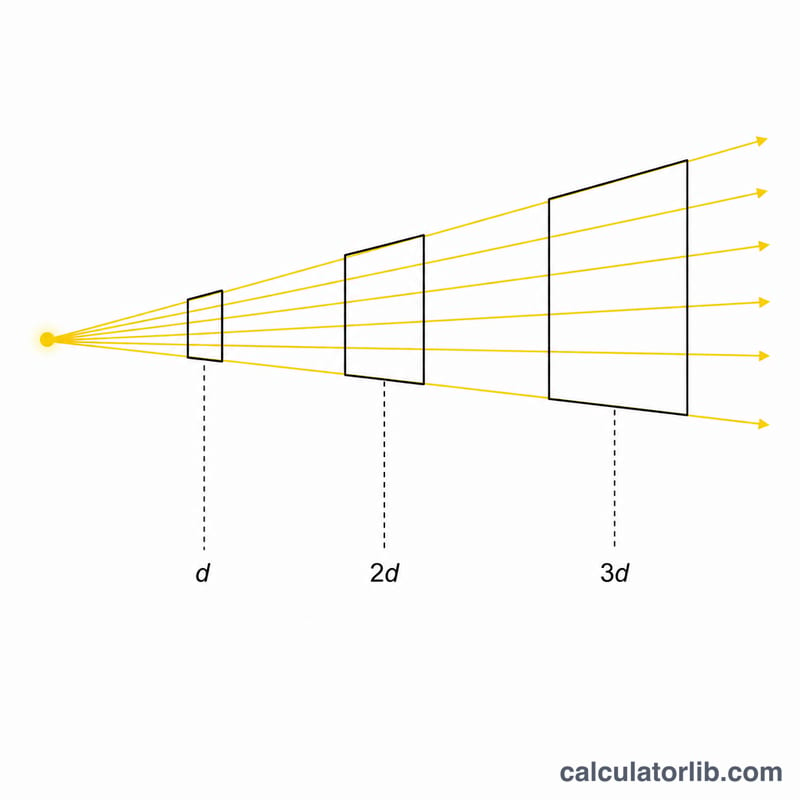
The inverse square law states that the intensity of light (illuminance) from a point source is inversely proportional to the square of the distance from that source. Double the distance and the light spreads over four times the area, so the intensity drops to one quarter. This universal physics principle applies to photography lighting, stage and studio setups, solar panels, radiation, and sound.
How to Use This Calculator
Enter the known light intensity E₁ (in lux) measured at distance d₁ (in meters), then enter the new distance d₂ where you want to know the intensity. The calculator instantly returns E₂, the intensity at the new distance, using the inverse square law.
The Formula Explained
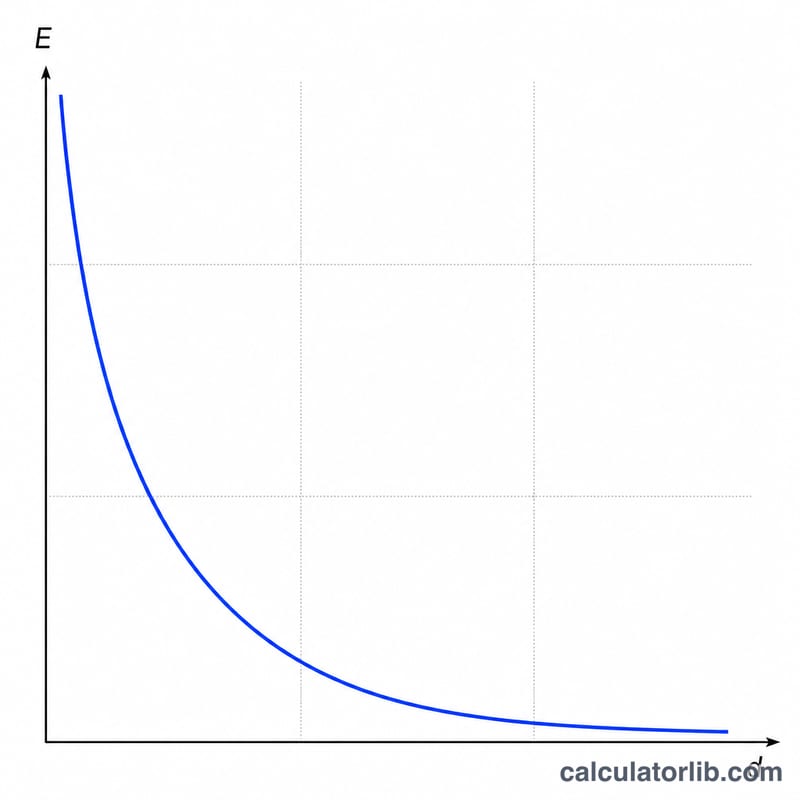
The relationship is $$E_2 = \text{E}_1\ (\text{lux}) \times \left(\frac{\text{d}_1\ (\text{m})}{\text{d}_2\ (\text{m})}\right)^{2}$$ Here E₁ is the original intensity, d₁ the original distance, and d₂ the new distance. Because the distance term is squared, small changes in distance cause large changes in intensity. Moving a light three times farther away reduces brightness to one-ninth.
Worked Example
Suppose a lamp produces 1000 lux at 1 meter. What is the intensity at 2 meters? $$E_2 = 1000 \times \left(\frac{1}{2}\right)^{2} = 1000 \times 0.25 = \mathbf{250\ \text{lux}}$$ The intensity is one quarter of the original, exactly as the law predicts.
FAQ
Does this work for any unit of intensity? Yes — as long as E₁ and the result use the same unit (lux, W/m², candela-based values), the ratio is dimensionless.
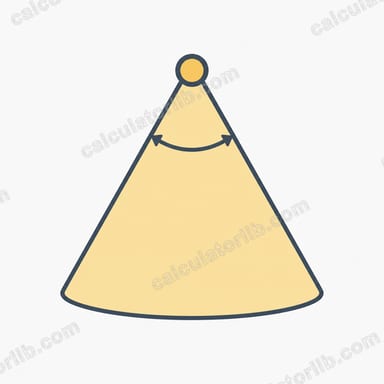
Why does the distance get squared? Light from a point source spreads over the surface of an expanding sphere whose area grows as the square of its radius, so intensity per unit area drops by the square.
Does it apply to lasers or large light panels? The law is exact for point sources. For collimated lasers or extended panels the falloff is gentler near the source, but it approaches inverse-square behavior at larger distances.