
What This Calculator Does
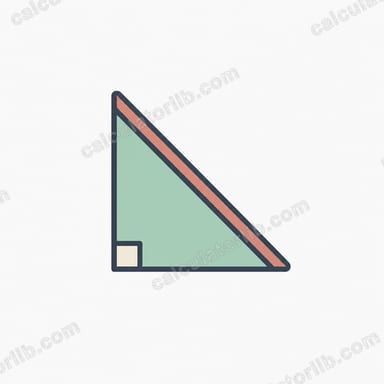
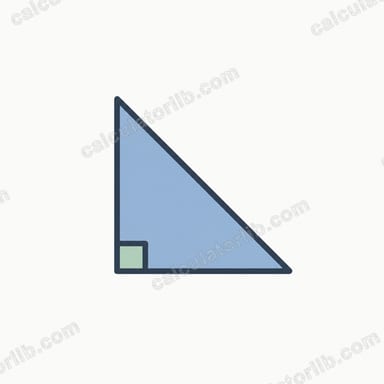
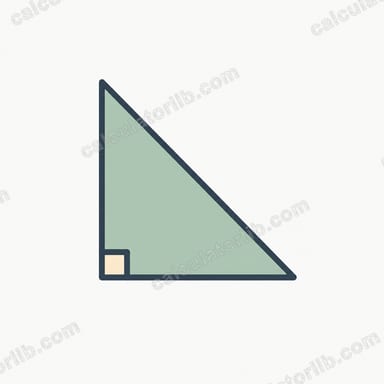
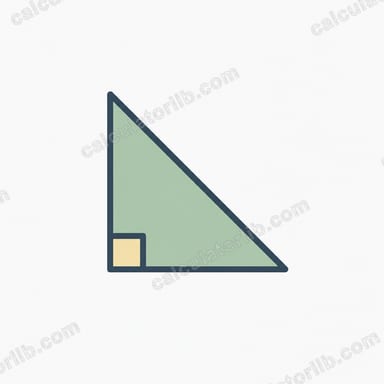
The Missing Side of a Right Triangle Calculator finds the unknown side of any right triangle when you know the other two sides. It applies the Pythagorean theorem, one of the most fundamental relationships in geometry, to instantly compute either the hypotenuse or a missing leg.
How to Use It
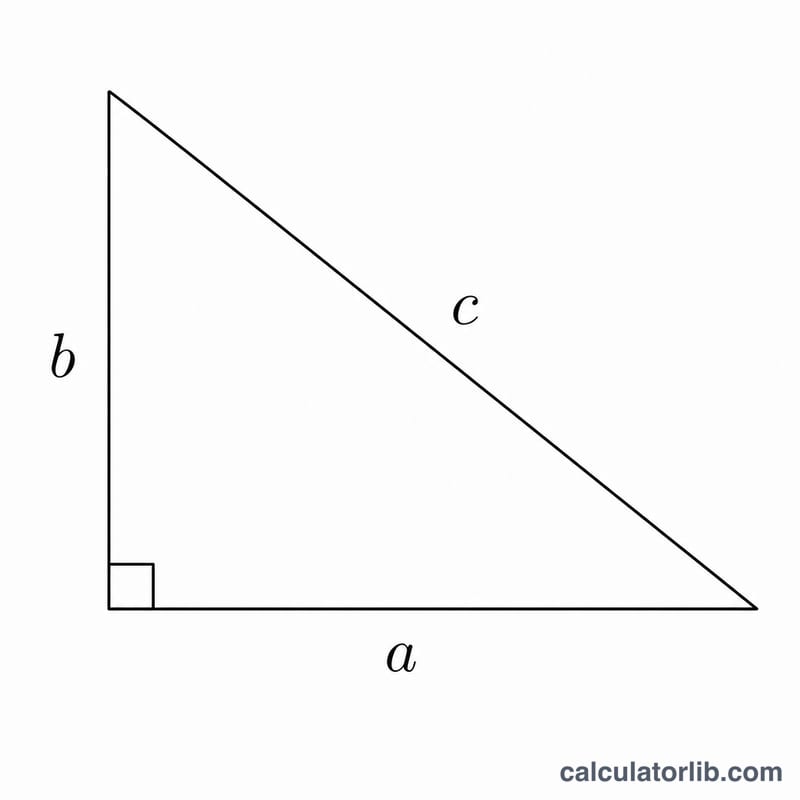
First choose what you are solving for. To find the hypotenuse (c), select that option and enter the lengths of the two legs (a and b). To find a missing leg, select "A leg" and enter the hypotenuse first, followed by the known leg. The calculator returns the missing side and the full perimeter of the triangle.
The Formula Explained
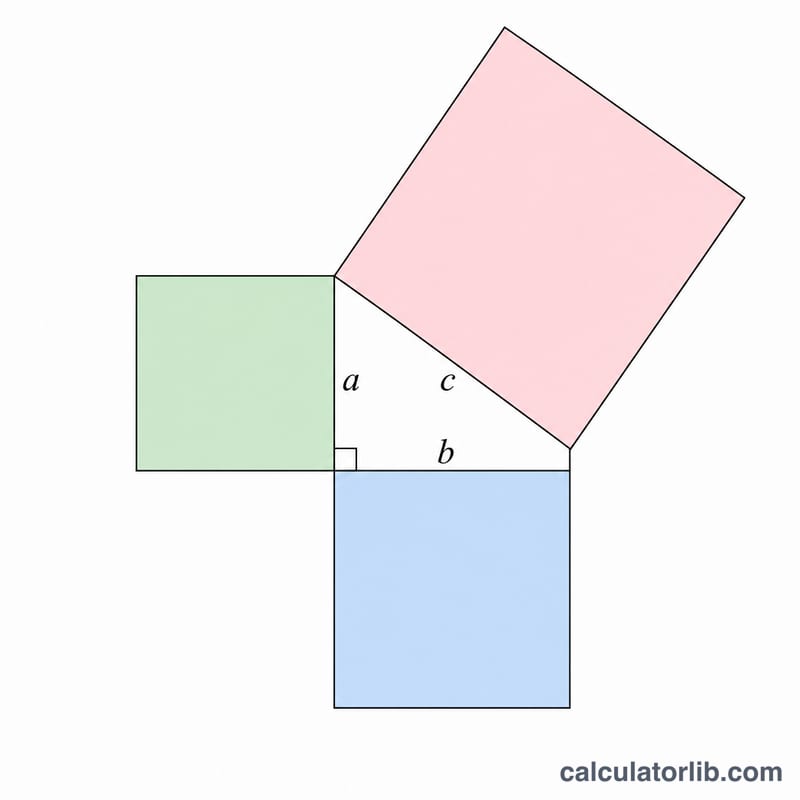
The Pythagorean theorem states that in a right triangle the square of the hypotenuse equals the sum of the squares of the two legs: \(a^{2} + b^{2} = c^{2}\). Rearranging gives two useful forms. To find the hypotenuse: $$c = \sqrt{a^{2} + b^{2}}$$ To find a missing leg: $$a = \sqrt{c^{2} - b^{2}}$$ Note that the hypotenuse is always the longest side, so when solving for a leg the hypotenuse you enter must be larger than the known leg.
Worked Example
Suppose a triangle has legs of 3 and 4 units. The hypotenuse is $$c = \sqrt{3^{2} + 4^{2}} = \sqrt{9 + 16} = \sqrt{25} = 5$$ This is the famous 3-4-5 right triangle. Its perimeter is \(3 + 4 + 5 = 12\) units.
FAQ
Can I use any units? Yes — the result comes out in the same unit you entered (cm, m, inches, etc.), as long as both inputs use the same unit.
Why do I get zero when solving for a leg? If the hypotenuse you entered is not larger than the known leg, no valid triangle exists, so the result defaults to zero. Make sure the hypotenuse is the longest side.
Does this work for non-right triangles? No. The Pythagorean theorem only applies to right triangles. For other triangles use the law of cosines.