

What This Calculator Does
This calculator applies to New York State, USA. Under both the federal Fair Labor Standards Act (FLSA) and New York labor law, most non-exempt employees must be paid 1.5 times their regular hourly rate for every hour worked over 40 in a workweek. This tool figures your weekly gross pay, splitting it into regular pay and overtime pay. It assumes a standard 40-hour weekly overtime threshold and does not account for taxes, exemptions, tipped-wage rules, or residential-employee thresholds.
How to Use It
Enter your hourly rate in dollars and the total hours you worked in the week. The calculator automatically counts the first 40 hours as regular time and any hours beyond that as overtime at the time-and-a-half rate.
The Formula Explained
Overtime hours equal your total hours minus 40 (never less than zero). Regular hours are whatever is left, up to a maximum of 40. Multiply regular hours by your rate, multiply overtime hours by 1.5 × your rate, then add the two together for your gross weekly pay.
$$\text{Total Pay} = r \times \min(h, 40) + r \times 1.5 \times \max(h - 40, 0)$$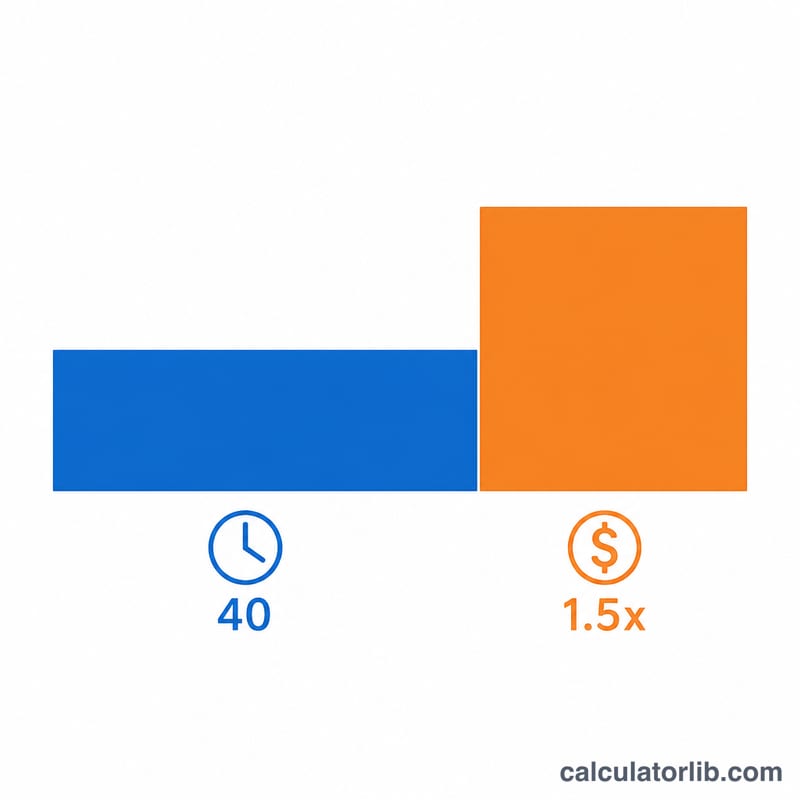
Worked Example
Suppose you earn $20.00/hour and work 50 hours in a week. Regular pay = \(\$20 \times 40 = \$800\). Overtime pay = \(\$20 \times 1.5 \times 10 = \$30 \times 10 = \$300\). Total weekly pay = \(\$800 + \$300\) = $1,100.
$$\$20 \times 40 + \$20 \times 1.5 \times 10 = \$800 + \$300 = \$1{,}100$$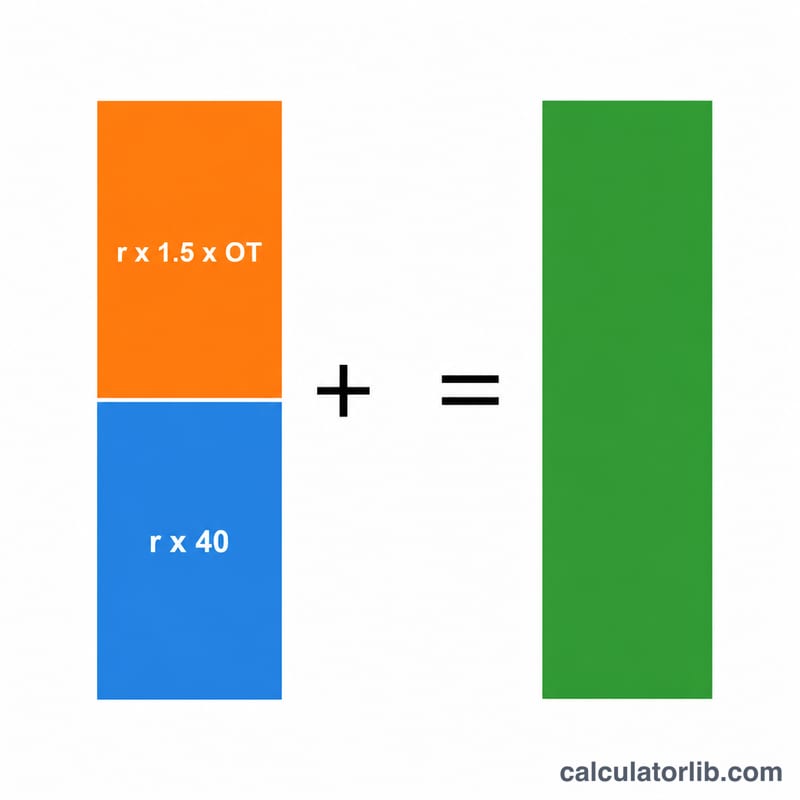
FAQ
Is overtime in New York based on a 40-hour week? Yes. For most workers, overtime kicks in after 40 hours in a single workweek, not per day.
Does this include taxes? No. The result is gross pay before federal, state, and local payroll taxes are withheld.
Are all employees eligible for overtime? No. Certain salaried executive, administrative, and professional employees are exempt. Check your job classification or consult the New York Department of Labor.