
What is the Mifflin-St Jeor BMR Calculator?
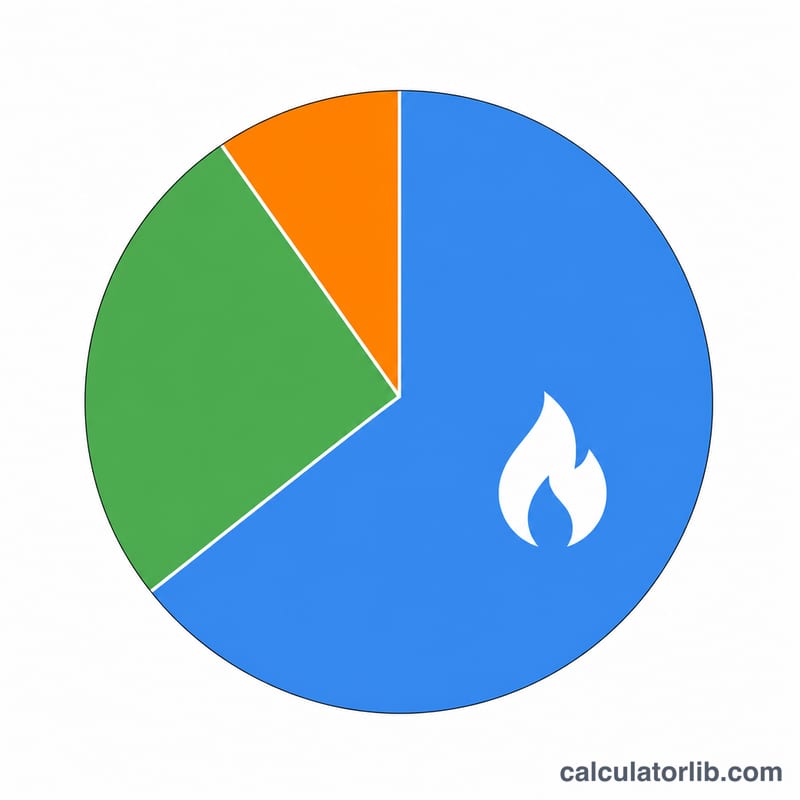
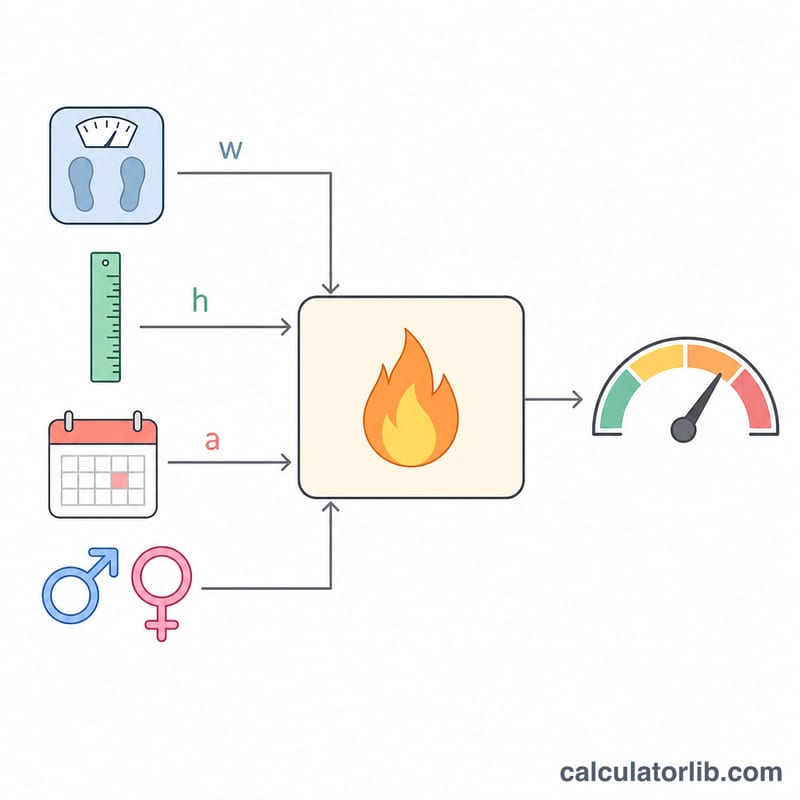
Your Basal Metabolic Rate (BMR), also called Resting Metabolic Rate (RMR), is the number of calories your body burns at complete rest to keep vital functions running — breathing, circulation, cell production and body temperature. This calculator uses the Mifflin-St Jeor equation, widely regarded as one of the most accurate predictive formulas for healthy adults, to estimate that figure from your weight, height, age and gender. This tool is universal and uses metric units (kilograms and centimetres).
How to use it
Select your gender, then enter your body weight in kilograms, your height in centimetres, and your age in years. The calculator instantly returns your estimated resting energy expenditure in calories per day. To estimate total daily calorie needs, multiply your BMR by an activity factor (for example 1.2 for sedentary, 1.55 for moderate exercise, 1.725 for very active).
The formula explained
The Mifflin-St Jeor equation is: $$\text{BMR} = 10 \cdot \text{weight (kg)} + 6.25 \cdot \text{height (cm)} - 5 \cdot \text{age (years)} + s$$ where \(s = +5\) for men and \(s = -161\) for women. The constant differs by gender to reflect average body composition differences.
Worked example
A 30-year-old man weighing 80 kg at 180 cm: $$\text{BMR} = 10 \times 80 + 6.25 \times 180 - 5 \times 30 + 5 = 800 + 1125 - 150 + 5 = 1780 \text{ calories/day}$$ 1780 calories/day. The same profile as a woman would be \(1780 - 5 - 161 = 1614\) calories/day.
FAQ
Is BMR the same as daily calorie needs? No. BMR is calories burned at rest; your actual needs are higher once you add daily activity and exercise.
Why use Mifflin-St Jeor over Harris-Benedict? Studies have found Mifflin-St Jeor to be more accurate for modern populations, especially for overweight individuals.
Can I lose weight by eating below my BMR? Eating below BMR for long periods is generally not recommended; create a deficit from your total daily energy expenditure instead, and consult a professional.