

What Is Safety Stock?
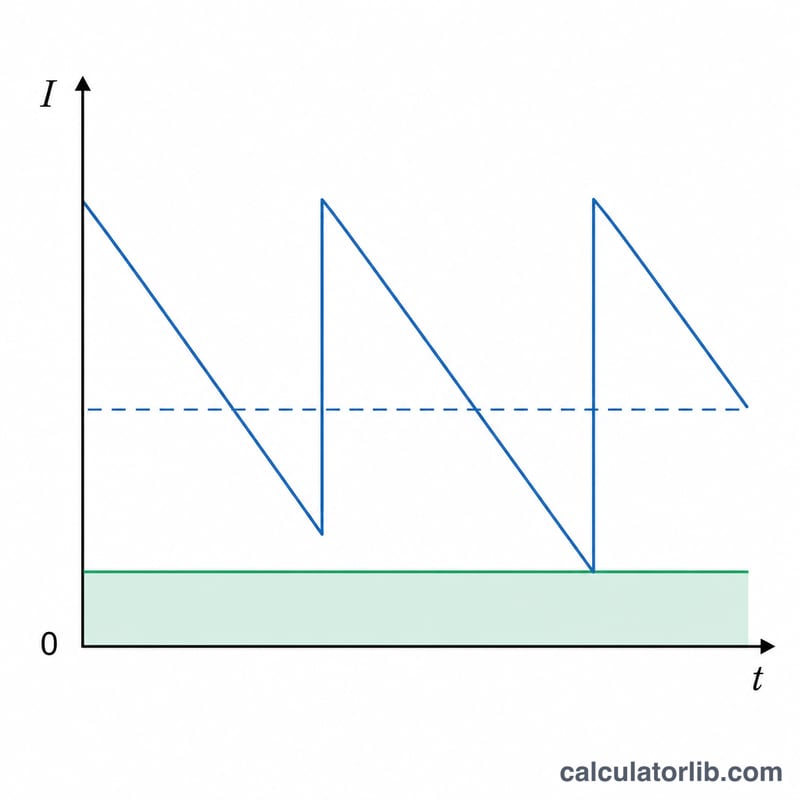
Safety stock is the extra inventory a business holds to guard against uncertainty in demand and supplier lead time. It acts as a buffer so that unexpected spikes in customer orders or delays from suppliers do not cause a stockout. Carrying the right amount of safety stock balances the cost of holding inventory against the cost (and lost sales) of running out.
How to Use This Calculator
Enter four values: your maximum and average daily usage (units sold or consumed per day) and your maximum and average lead time (days between placing and receiving an order). The calculator multiplies worst-case usage by worst-case lead time, subtracts your typical demand during a normal lead time, and returns the recommended safety stock plus your reorder point.
The Formula Explained
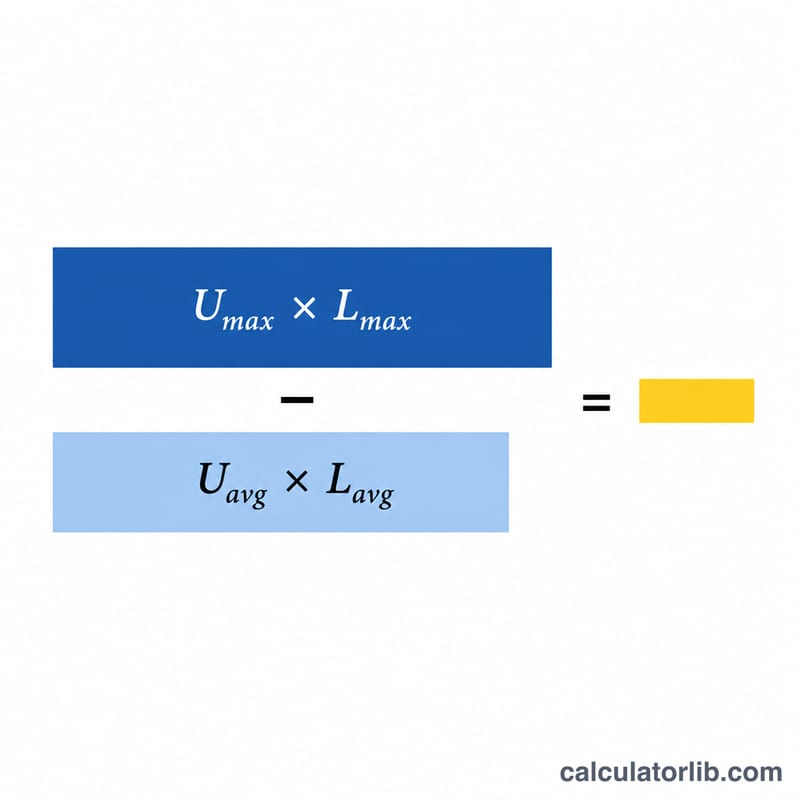
This tool uses the popular "max minus average" method:
$$\text{Safety Stock} = \left(\text{Max Daily Usage} \times \text{Max Lead Time}\right) - \left(\text{Avg Daily Usage} \times \text{Avg Lead Time}\right)$$
The first term represents the largest amount of stock you could possibly consume while waiting for a delayed shipment. The second term is the inventory you would normally use during an average lead time. The gap between them is the protective buffer. The reorder point adds your average lead-time demand back to the safety stock, telling you exactly when to reorder.
Worked Example
Suppose your shop sells up to 120 units a day (averaging 100), and your supplier delivers in as long as 14 days (averaging 10). Safety stock $$= (120 \times 14) - (100 \times 10) = 1{,}680 - 1{,}000 = \textbf{680 units}$$. Your reorder point \(= 1{,}000 + 680 = 1{,}680\) units, so you should place a new order whenever inventory falls to 1,680.
FAQ
Is more safety stock always better? No. Too much ties up cash and warehouse space and risks obsolescence. The goal is just enough to cover realistic worst-case scenarios.
What if the result is negative? A negative value means your "max" inputs are not larger than your averages; the calculator floors safety stock at zero.
How often should I recalculate? Review safety stock whenever demand patterns, supplier reliability, or service-level targets change—typically every quarter.