
什么是临界角?
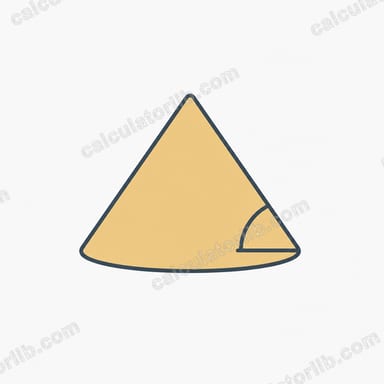
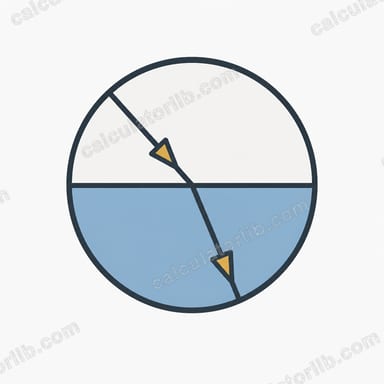
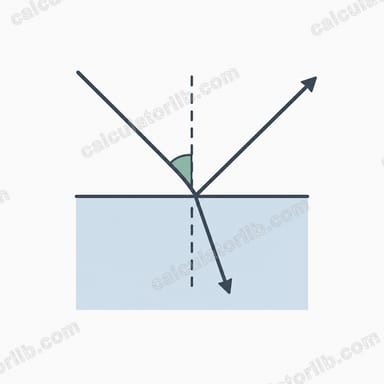
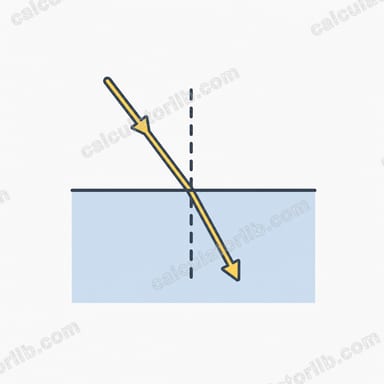
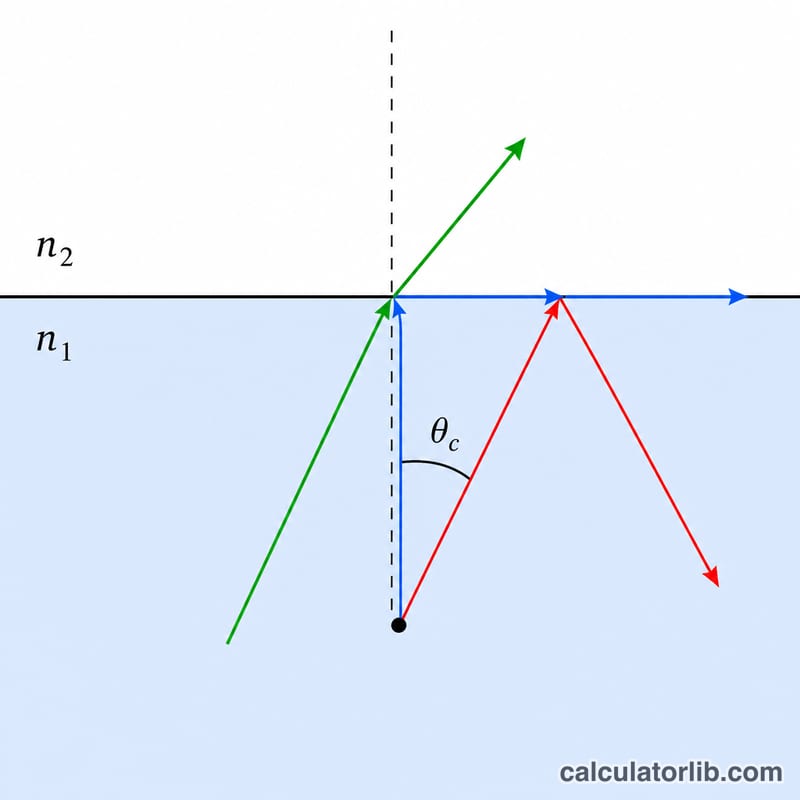
当光从光密介质(折射率较大,\(n_1\))射向光疏介质(折射率较小,\(n_2\))时,折射光线会偏离法线。随着入射角不断增大,折射光线偏折得越来越厉害,直到沿着两种介质的分界面掠射而过。此时对应的入射角,就是临界角(\(\theta_c\))。一旦入射角超过临界角,光线便无法折射出去,而是全部被反射回原介质,这种现象称为全反射(TIR,total internal reflection)。正是全反射,让光纤能够把光信号传输到很远的地方,也让钻石显得格外闪耀。
如何使用本计算器
先填入光线当前所在的光密介质的折射率(\(n_1\)),再填入光线试图进入的光疏介质的折射率(\(n_2\)),点击计算即可得到以度和弧度表示的临界角。需要注意的是,只有当 \(n_1 > n_2\) 时计算器才会给出结果,因为否则在物理上根本不存在临界角。
公式解析
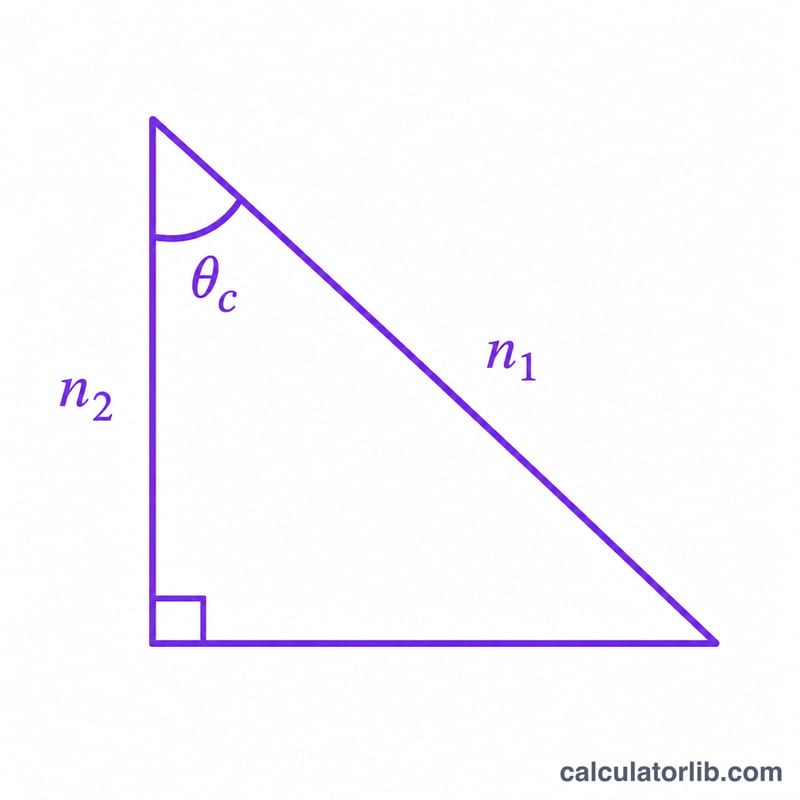
临界角可以直接由折射定律(斯涅尔定律)推导出来:\(n_1 \cdot \sin(\theta_c) = n_2 \cdot \sin(90°)\)。由于 \(\sin(90°) = 1\),整理后得到 \(\sin(\theta_c) = n_2/n_1\),于是 $$\theta_c = \arcsin\!\left(\frac{n_2}{n_1}\right)$$ 只有当比值 \(n_2/n_1\) 小于或等于 1 时,反正弦函数才有意义——这恰好对应着 \(n_1 > n_2\) 的条件。
计算实例
光在玻璃内部(\(n_1 = 1.5\))射向空气(\(n_2 = 1.0\))。比值为 \(1.0/1.5 = 0.6667\),所以 $$\theta_c = \arcsin(0.6667) \approx 41.81°$$ 任何与法线夹角超过约 41.8° 射向玻璃—空气界面的光线,都会发生全反射。
常见问题
为什么我的计算没有结果?只有当光从光密介质射向光疏介质时,才存在临界角。如果 \(n_2\) 大于或等于 \(n_1\),光线总会折射出去,也就不会发生全反射。
钻石在空气中的临界角是多少?取 \(n_1 \approx 2.42\)、\(n_2 = 1.0\),则 \(\theta_c = \arcsin(1/2.42) \approx 24.4°\)。正因为临界角如此之小,钻石才能把大量光线“锁”在内部反复反射,从而光彩夺目。
波长会有影响吗?会有一点。折射率会随波长而变化(即色散现象),因此在需要精确计算时,应使用对应具体光色的折射率。