
What Is the Perimeter of a Right Triangle?
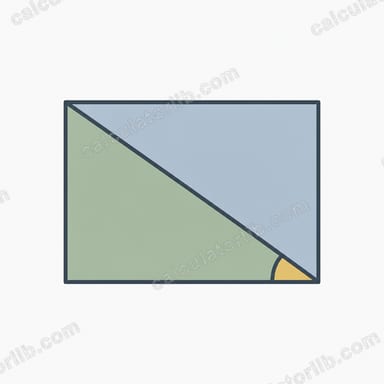
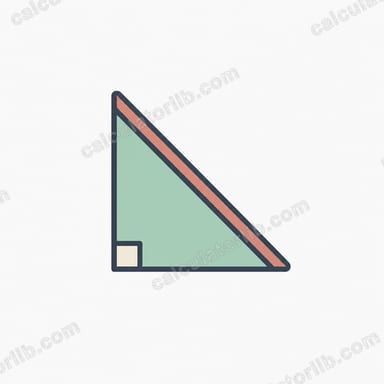
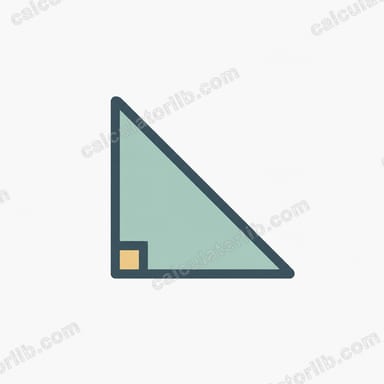
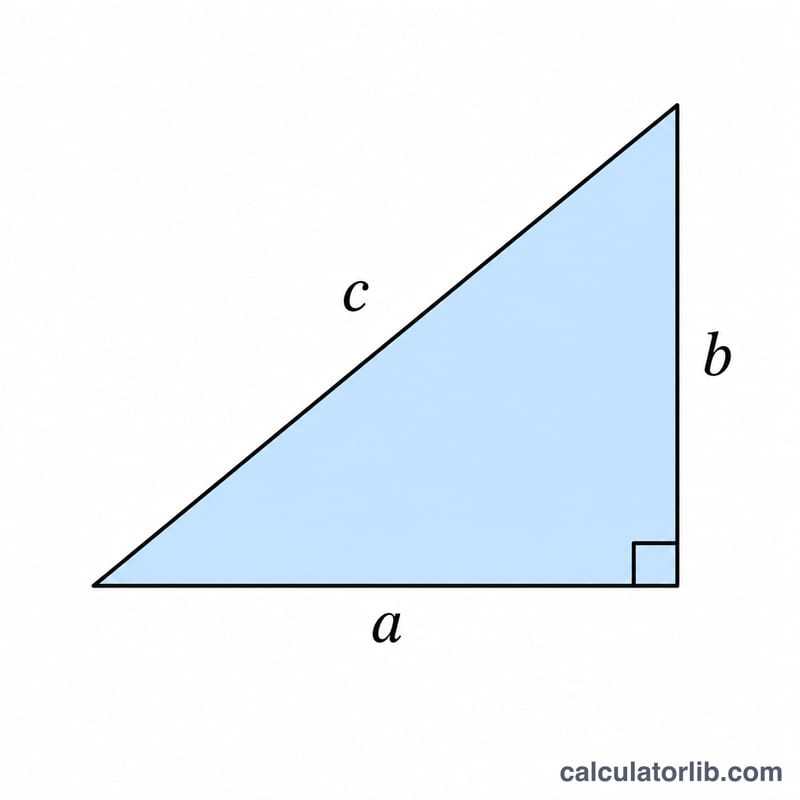
A right triangle has one 90° angle. The two sides that form that angle are called the legs (a and b), and the side opposite the right angle is the hypotenuse (c). The perimeter is simply the distance all the way around the triangle — the sum of all three sides. Because a right triangle obeys the Pythagorean theorem, you only need the two legs to find everything.
How to Use This Calculator
Enter the length of leg a and leg b in any consistent unit (cm, m, inches, etc.). The calculator first computes the hypotenuse using the Pythagorean theorem, then adds all three sides together to give the perimeter. Your answer comes out in the same unit you entered.
The Formula Explained
The perimeter formula is $$P = a + b + \sqrt{a^{2} + b^{2}}$$ The term \(\sqrt{a^{2} + b^{2}}\) is the hypotenuse, derived from the Pythagorean theorem \(c^{2} = a^{2} + b^{2}\). So the perimeter is the two legs plus that calculated hypotenuse. No angle measurements are needed — the right angle is assumed.
Worked Example
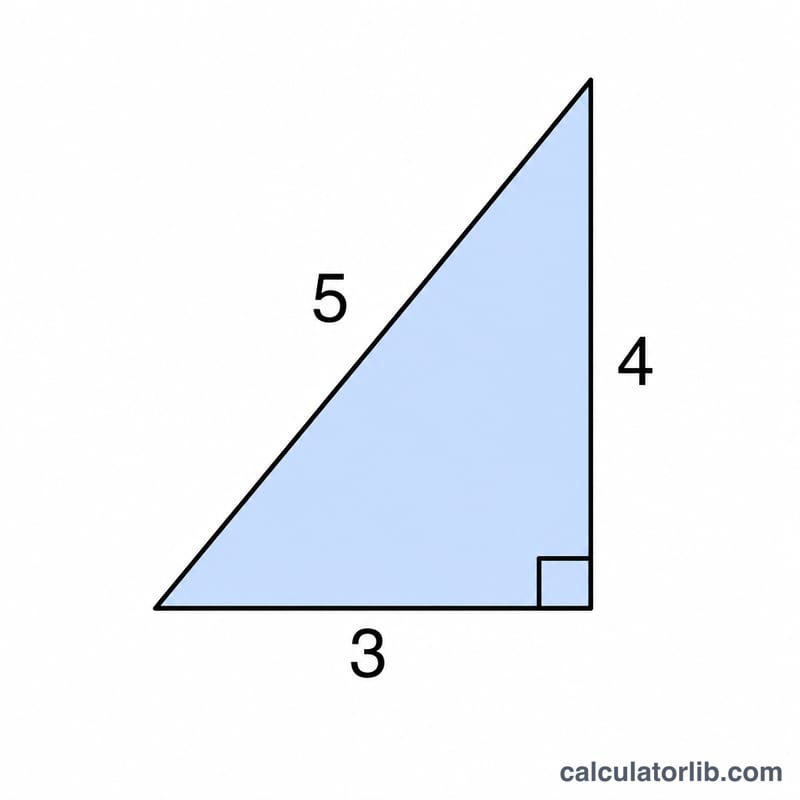
Suppose \(a = 3\) and \(b = 4\). The hypotenuse is $$\sqrt{3^{2} + 4^{2}} = \sqrt{9 + 16} = \sqrt{25} = 5.$$ The perimeter is therefore $$3 + 4 + 5 = 12 \text{ units.}$$ This is the classic 3-4-5 right triangle.
FAQ
Do I need to know all three sides? No. For a right triangle, the two legs are enough — the hypotenuse is calculated automatically.
What units should I use? Any unit works, as long as both legs use the same one. The perimeter is reported in that same unit.
Can I enter the hypotenuse instead of a leg? This tool expects the two legs. If you have a leg and the hypotenuse, find the missing leg with \(\sqrt{c^{2} - a^{2}}\) first, then enter both legs.