
What This Calculator Does
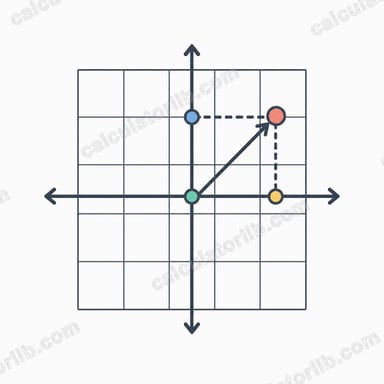
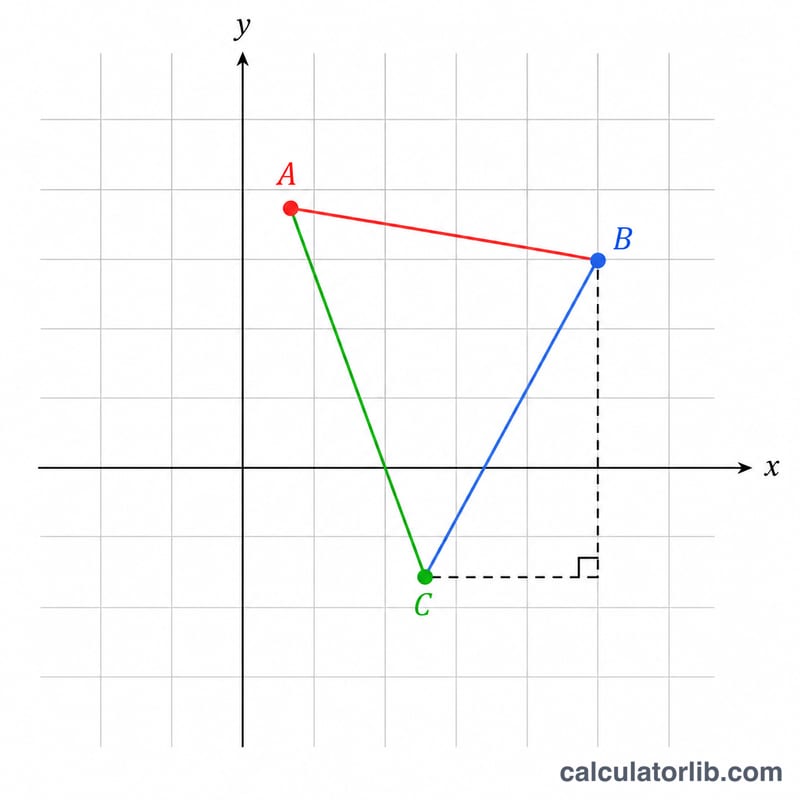
This tool calculates the perimeter of a triangle when you know the coordinates of its three vertices A(x₁, y₁), B(x₂, y₂), and C(x₃, y₃). Instead of measuring sides manually, it applies the distance formula to each pair of vertices and adds the three side lengths together. It works for any triangle plotted on the Cartesian plane.
How to Use It
Enter the x and y coordinate of each of the three corners. The calculator returns the total perimeter plus the individual lengths of sides AB, BC, and CA so you can verify your work or use them elsewhere.
The Formula Explained
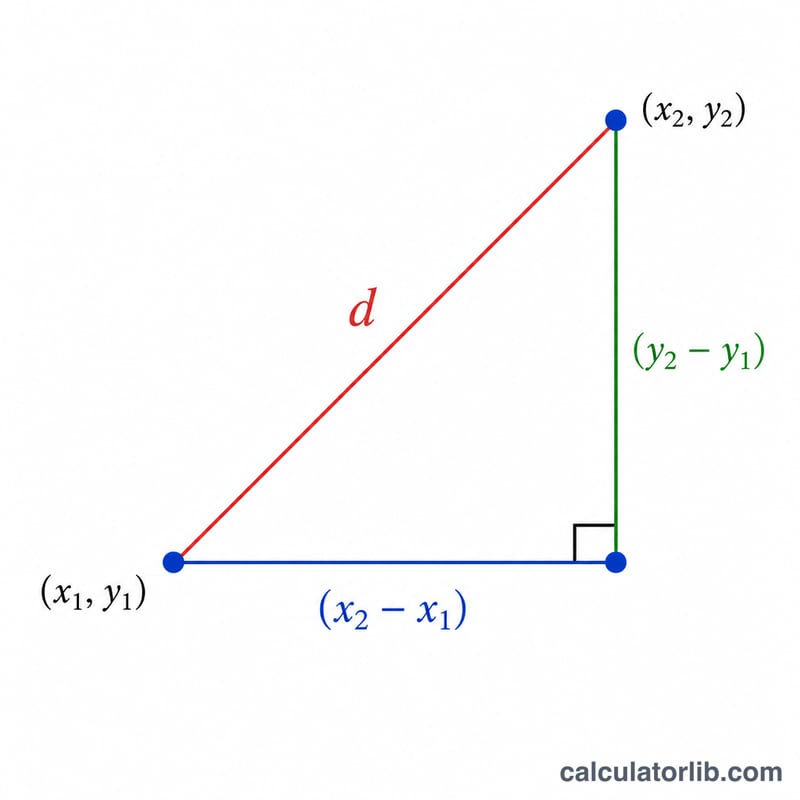
The straight-line distance between two points is found with the Pythagorean-based distance formula: \(d = \sqrt{(x_2-x_1)^2 + (y_2-y_1)^2}\). Apply it three times — once for each side — then sum:
$$P = d(AB) + d(BC) + d(CA)$$Units match whatever unit your coordinates are in.
Worked Example
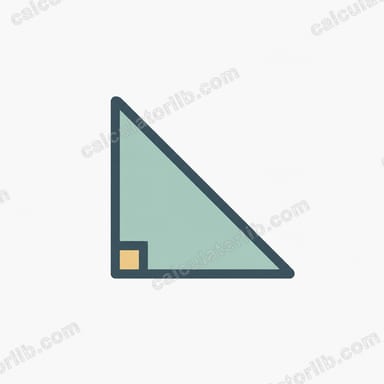
Take A(0, 0), B(4, 0), and C(0, 3). Side AB = \(\sqrt{4^2 + 0^2} = 4\). Side BC = \(\sqrt{(0-4)^2 + (3-0)^2} = \sqrt{16 + 9} = \sqrt{25} = 5\). Side CA = \(\sqrt{0^2 + 3^2} = 3\). The perimeter is \(4 + 5 + 3 =\) 12 units — a classic 3-4-5 right triangle.
FAQ
Does the order of the vertices matter? No. The perimeter is the same regardless of how you label or order the three corners.
Can I use negative coordinates? Yes. Negative x or y values are fully supported because the differences are squared.
What if the three points are collinear? Then they don't form a real triangle; the "perimeter" returned will simply be twice the longest segment, so check your points.