
What Is a Prism's Surface Area?
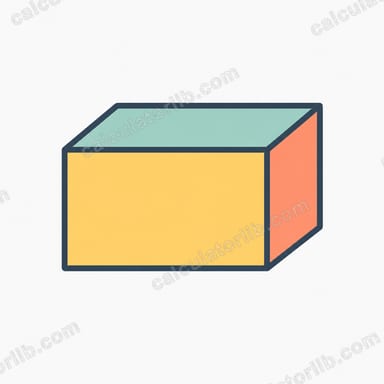
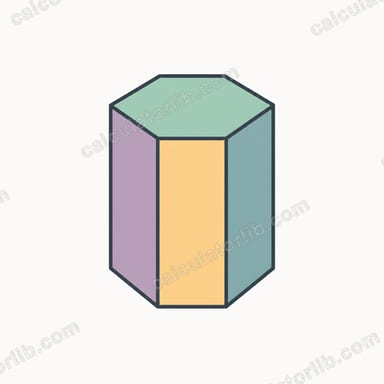
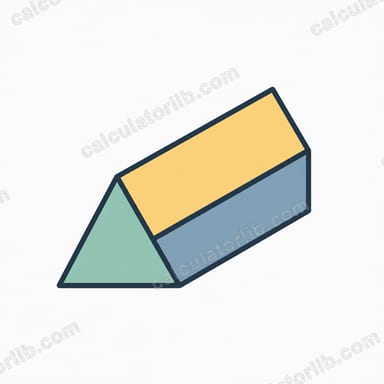
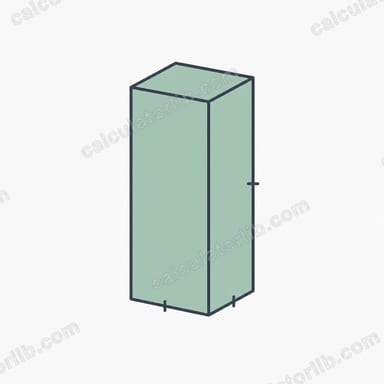
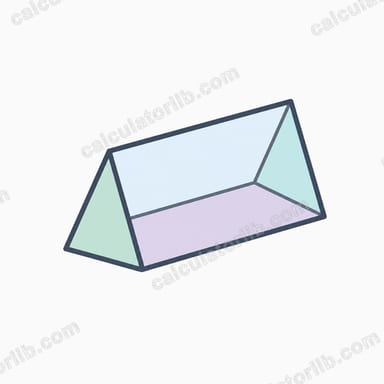
A prism is a solid with two identical parallel base faces connected by rectangular (or parallelogram) side faces. Its total surface area is the sum of the two bases plus the lateral surface that wraps around the sides. This calculator works for any prism — triangular, rectangular, pentagonal, hexagonal, or irregular — as long as you know the area and perimeter of one base and the prism's height (length).
How to Use This Calculator
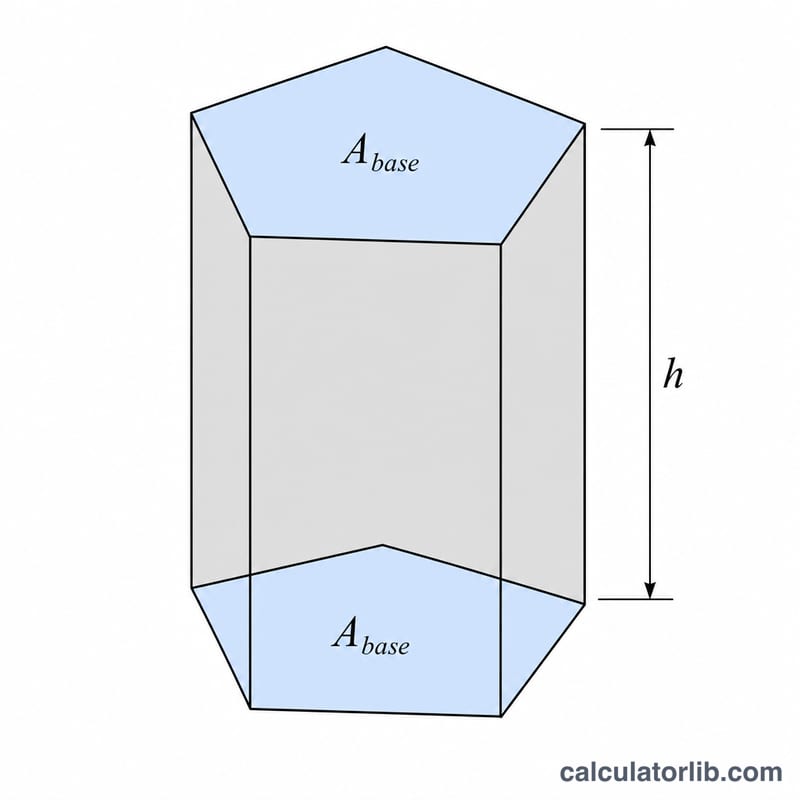
Enter three values: the base area (the area of one end face), the base perimeter (the distance around that face), and the height (the perpendicular distance between the two bases). The calculator returns the total surface area together with a breakdown of the two base faces and the lateral area. Use consistent units; the result is in those units squared.
The Formula Explained
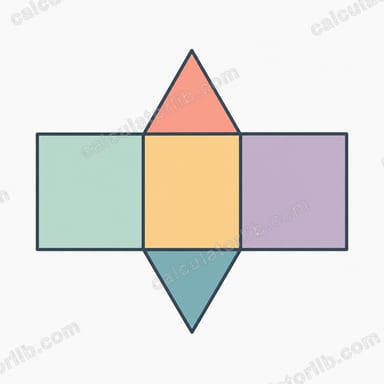
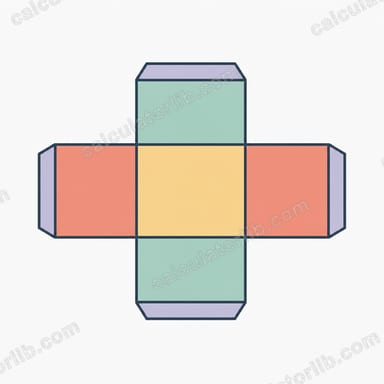
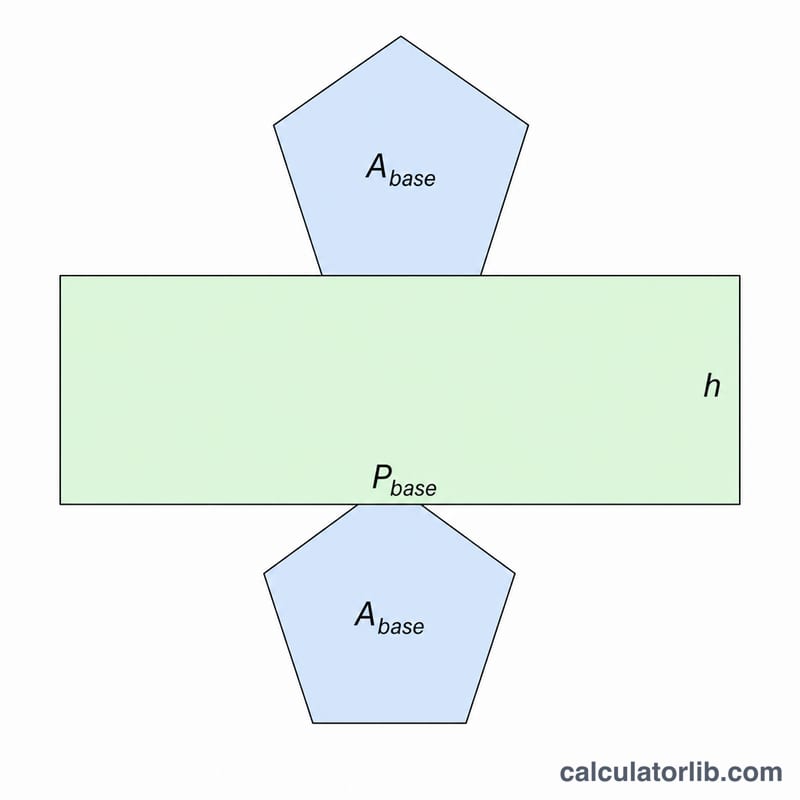
The formula is $$\text{SA} = 2 \cdot A_{\text{base}} + P_{\text{base}} \cdot h.$$ The term 2 · Abase accounts for the two identical end caps. The term Pbase · h is the lateral area: if you "unrolled" the side faces flat, you would get a rectangle whose width is the base perimeter and whose height is the prism height.
Worked Example
Suppose a triangular prism has a base area of 12, a base perimeter of 16, and a height of 10. The two bases contribute \(2 \times 12 = 24\). The lateral area is \(16 \times 10 = 160\). The total surface area is $$24 + 160 = 184 \text{ square units}.$$
FAQ
Does this work for a cylinder? A cylinder is a circular prism. Use base area = \(\pi r^2\) and base perimeter = \(2\pi r\), and the same formula applies.
What units does it use? Any consistent length unit. If your inputs are in centimetres, the surface area is in square centimetres.
What is "height" here? It is the length of the prism — the distance between the two parallel bases, not the height of the base triangle.