
What Is the Probability Fraction Calculator?
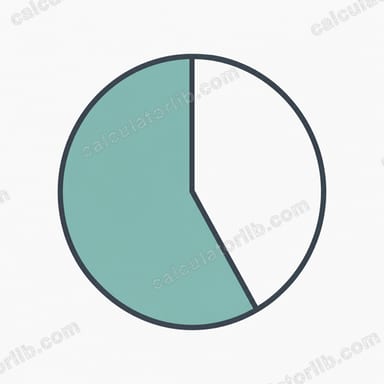
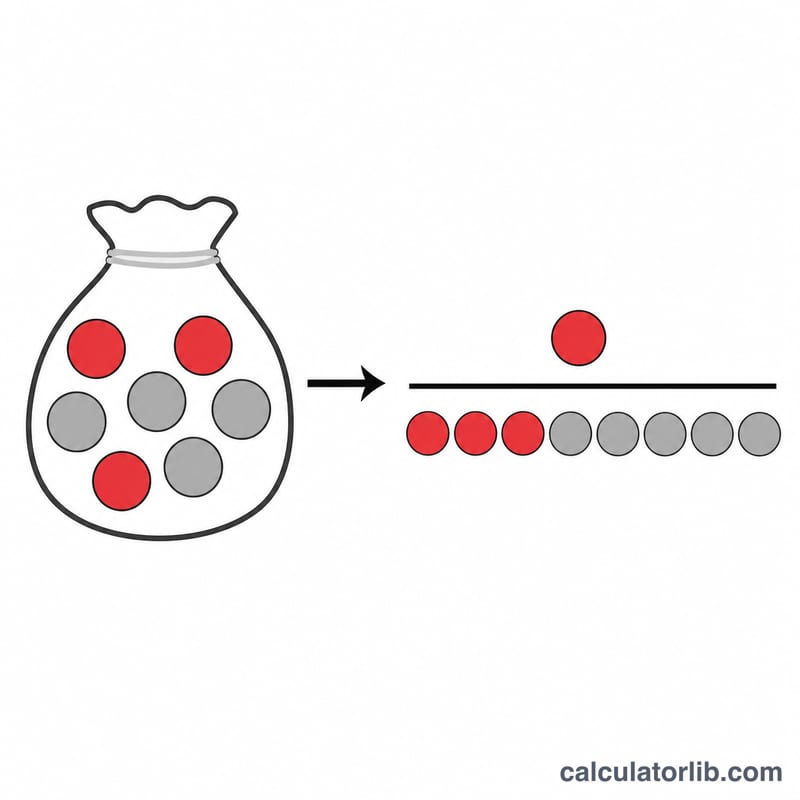
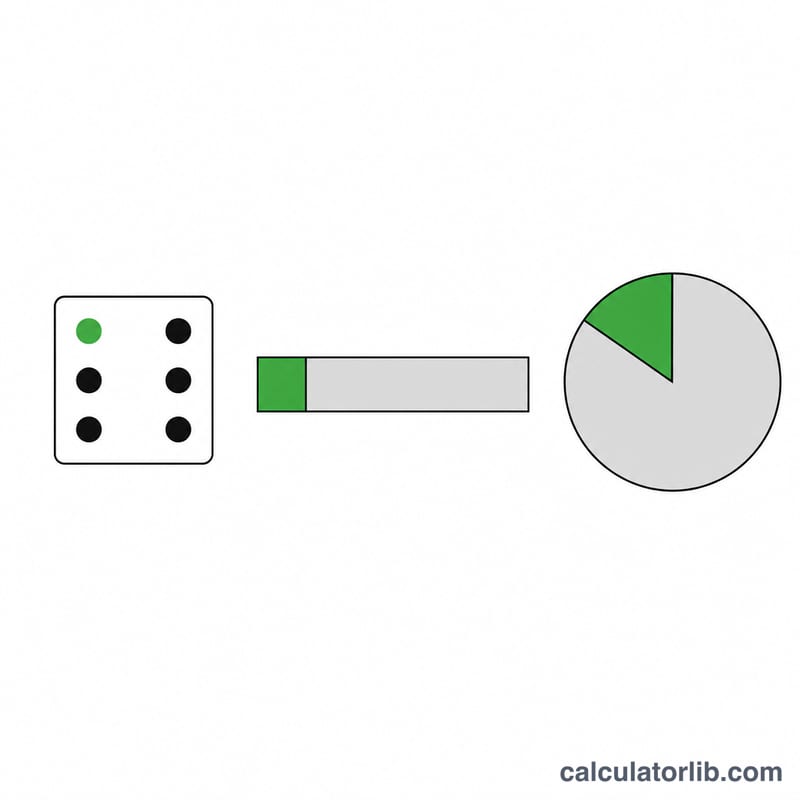
This calculator finds the probability of an event using the classic ratio of favorable outcomes to total possible outcomes. It returns the result as a decimal between 0 and 1, as a percentage, and as odds in favor. It works for any situation where outcomes are equally likely — dice rolls, coin flips, card draws, raffles, and more.
How to Use It
Enter the number of favorable outcomes (the ways your event can happen) and the total outcomes (all possible equally likely results). The calculator divides the two and converts the answer to a percentage and to odds. Total outcomes must be greater than zero.
The Formula Explained
Probability is defined as $$P = \frac{\text{Favorable}}{\text{Total}}$$ Multiplying by 100 gives the percentage chance. Odds in favor are expressed as \(\text{Favorable} : (\text{Total} - \text{Favorable})\). For example, a probability of \(0.25\) is the same as 25% and odds of \(1 : 3\) against (or \(0.333 : 1\) in favor).
Worked Example
Suppose you roll a single die and want the probability of rolling a number greater than 4 (that is, a 5 or 6). There are 2 favorable outcomes and 6 total outcomes. $$P = 2 \div 6 = 0.3333$$ which is 33.33%. Odds in favor are \(2 : 4\), or \(0.5 : 1\).
FAQ
Can probability be more than 1? No. A valid probability is always between 0 and 1 (0% to 100%). If you enter more favorable than total outcomes you are outside the valid range.
What is the difference between probability and odds? Probability compares favorable outcomes to the total, while odds compare favorable outcomes to unfavorable ones.
Do outcomes need to be equally likely? Yes — this simple ratio assumes every outcome has the same chance of occurring.