
What is the RC Gear Ratio Calculator?
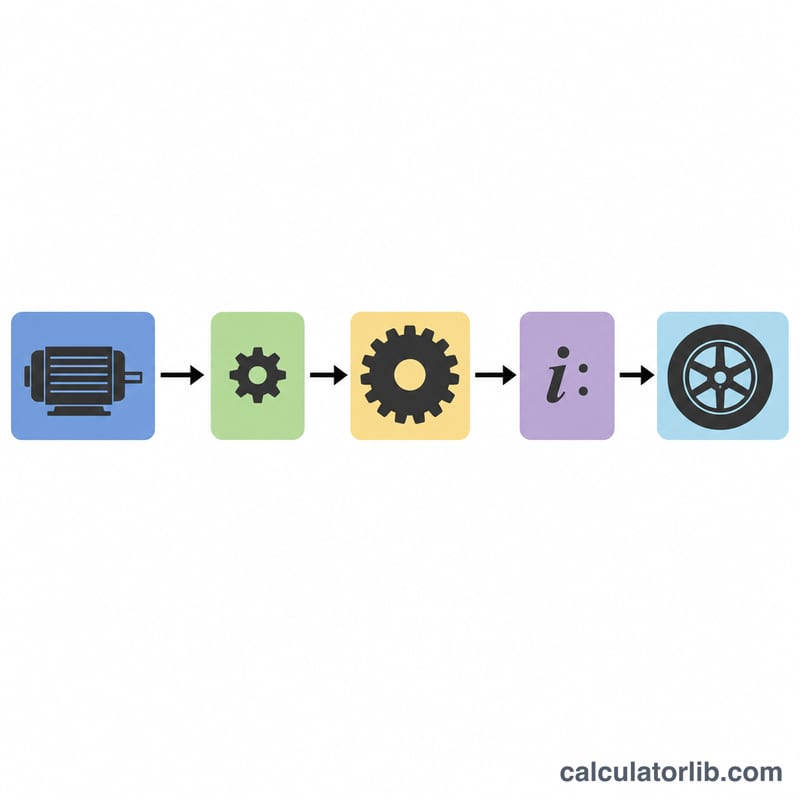
This tool calculates the final drive ratio (FDR) of a radio-controlled car. The FDR tells you how many times the motor must spin to turn the wheels once. A higher FDR gives more torque and acceleration but a lower top speed; a lower FDR gives higher top speed but less punch and more heat. It applies to any electric or nitro RC platform regardless of brand or country.
How to use it
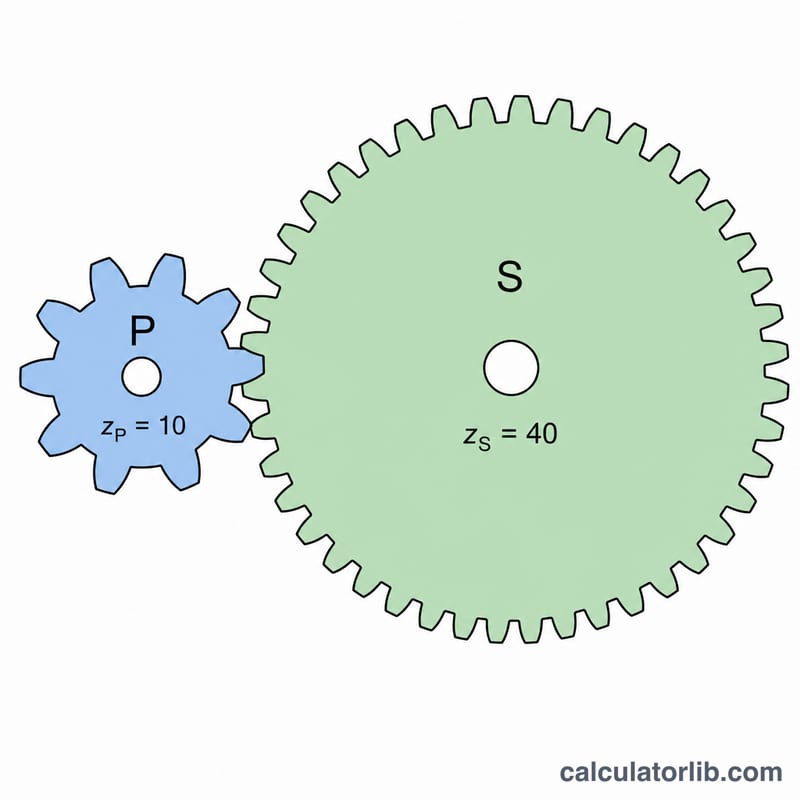
Enter the number of teeth on your spur gear (the large gear), the teeth on your pinion gear (the small gear on the motor shaft), and your vehicle's internal ratio — the combined transmission and differential ratio published by the manufacturer. If you only want the external pinion/spur ratio, set the internal ratio to 1. The calculator instantly returns the FDR plus the intermediate pinion/spur ratio.
The formula explained
The gearing math is simply:
$$\text{FDR} = \frac{\text{Spur Teeth}}{\text{Pinion Teeth}} \times \text{Internal Ratio}$$
The spur-to-pinion division gives the external reduction, and multiplying by the internal ratio rolls in the transmission and differential gearing to produce the total reduction from motor to wheel.
Worked example
Suppose you run an 87-tooth spur with a 23-tooth pinion on a chassis with a 2.6 internal ratio. The pinion/spur ratio is \(87 \div 23 = 3.783\). Multiply by 2.6 to get a final drive ratio of 9.83 : 1 — meaning the motor turns about 9.83 times for every wheel revolution.
$$\text{FDR} = \frac{87}{23} \times 2.6 = 9.83$$FAQ
Should I increase or decrease the ratio for more speed? Decrease the FDR — fit a larger pinion or smaller spur. Watch motor temperature, as too low a ratio causes overheating.
What internal ratio should I use? Check your kit manual; common touring/buggy values range from about 2.0 to 3.0. Use 1 to ignore it.
Why does FDR matter? It directly trades top speed against acceleration and affects how hard your motor and ESC work.