
What Is a Recessed Lighting Spacing Calculator?
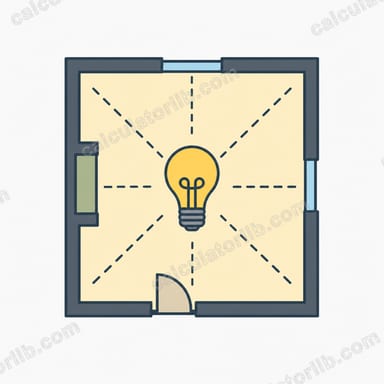
A recessed lighting calculator helps you plan how many recessed (can) lights you need for a room and how far apart to place them. Instead of guessing or copying a generic "one can per 4 feet" rule, it uses your room dimensions, ceiling height, target brightness, and the output of each fixture to deliver a tailored layout. The result is even, glare-free illumination with no dark corners or over-lit spots.
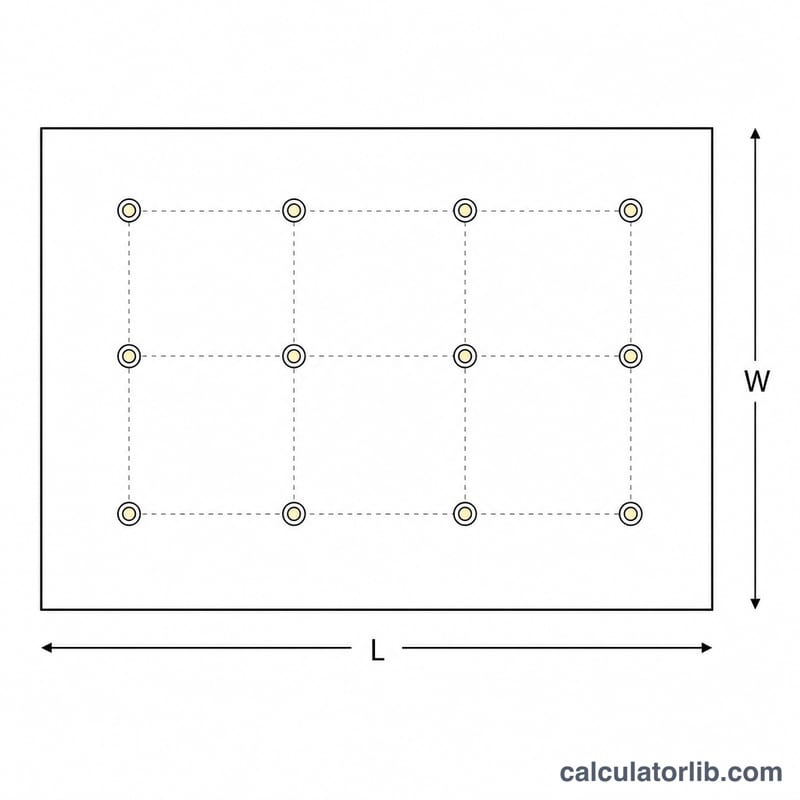
How to Use the Calculator
Enter the following details and the tool does the math instantly:
- Room length and width – in feet, to find the floor area.
- Ceiling height – used to calculate ideal spacing.
- Target foot-candles – the brightness level you want (see suggestions below).
- Lumens per fixture – check the bulb or trim packaging; a common 6-inch LED can produces 600–900 lumens.
The calculator returns the recommended number of fixtures and the spacing between them, both side-to-side and from fixtures to the walls.
The Formulas Explained
Two simple principles drive the result:
- Fixture count: Total lumens needed = Area (sq ft) × Target foot-candles. Divide by lumens per fixture to get the number of cans.
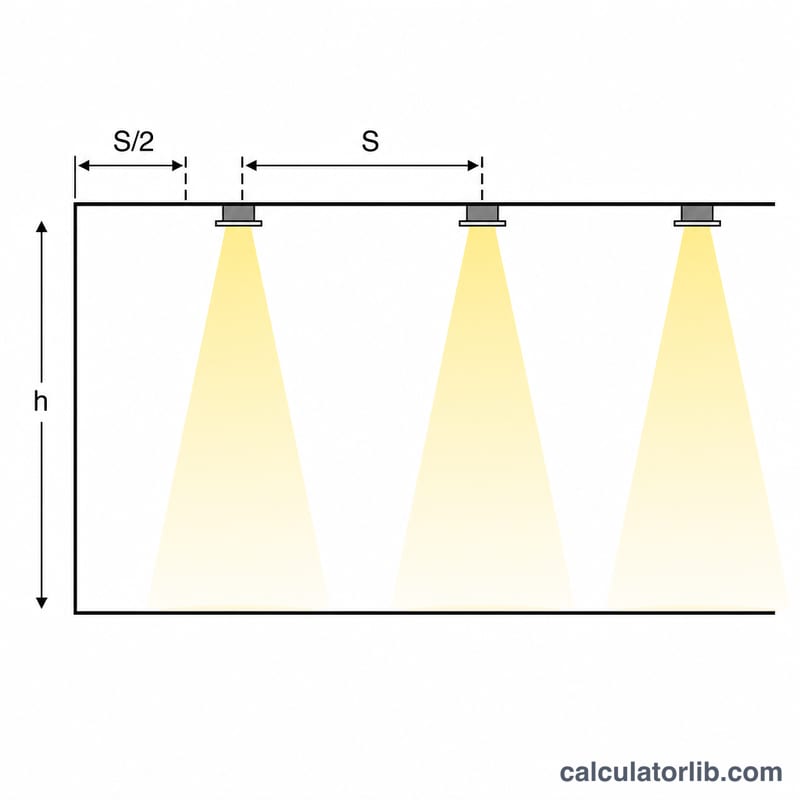
- Spacing rule of thumb: Maximum spacing ≈ Ceiling height × 1.5. With an 8-foot ceiling, that means about 4 feet between fixtures. Place the first row about half that distance (2 feet) from each wall.
The core formula the calculator uses is:
$$N = \left\lceil \frac{\text{Length} \times \text{Width} \times \text{Foot Candles}}{\text{Lumens per Fixture}} \right\rceil$$Spacing and edge distance follow from:
$$S = \sqrt{\frac{\text{Length} \times \text{Width}}{N}} \qquad d_{\text{wall}} = \frac{S}{2}$$And the grid layout is given by:
$$\text{Rows} = \left\lceil \frac{\text{Width}}{S} \right\rceil \qquad \text{Columns} = \left\lceil \frac{\text{Length}}{S} \right\rceil$$Recommended foot-candle targets: living rooms 10–20, kitchens 30–40, bathrooms 30–40, hallways 5–10, and task areas like reading nooks 40–50.
Worked Example
Imagine a 12 ft × 10 ft kitchen (120 sq ft) with an 8 ft ceiling, targeting 35 foot-candles, using 800-lumen LED cans.
- Total lumens needed: \(120 \times 35 = 4{,}200\) lumens
- Fixtures: \(4{,}200 \div 800 \approx 5.25\), rounded up to 6 fixtures
- Spacing: \(8 \times 1.5 = 4\) ft maximum between fixtures; about 2 ft from the walls
A clean layout would be two rows of three lights, evenly distributed.
Frequently Asked Questions
How far should recessed lights be from the wall? Generally 2 to 3 feet, or roughly half your fixture-to-fixture spacing, to wash the walls evenly with light.
Can I use fewer high-lumen fixtures? Yes, but spacing them too far apart creates uneven pools of light. Stick to the ceiling-height spacing rule for smooth coverage.
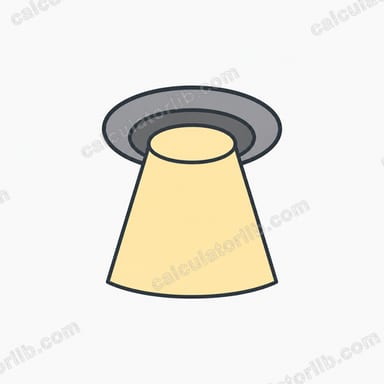
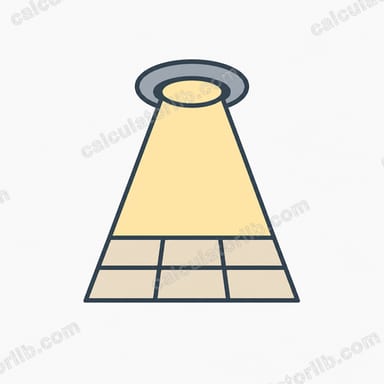
Does fixture beam angle matter? It does. Wider beam angles (60°+) cover more area per fixture, while narrow spots are better for accenting features.