
What Is the Rectangle Length Calculator?
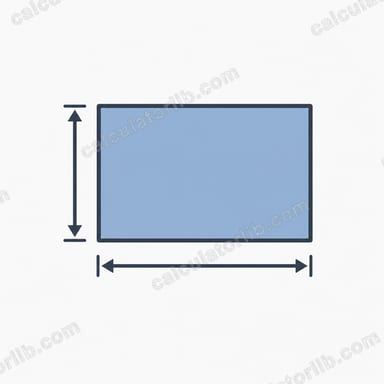
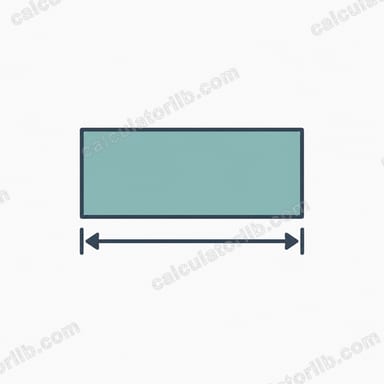
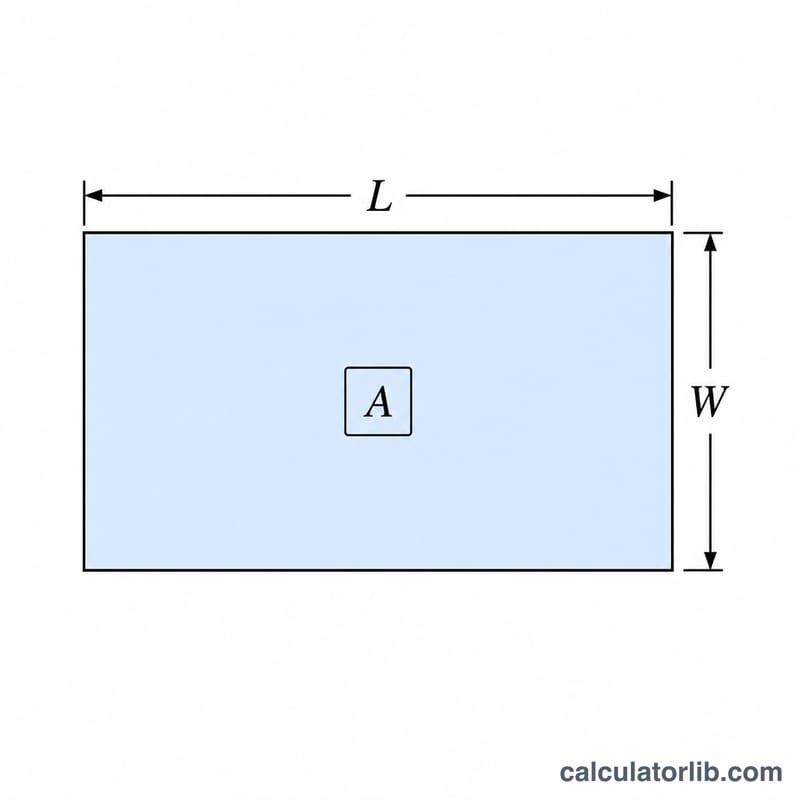
The Rectangle Length Calculator is a simple geometry tool that finds the unknown length of a rectangle when you already know two related measurements. A rectangle has four sides where opposite sides are equal, so it is defined by just two values: length and width. If you know the area and the width, or the perimeter and the width, this calculator can solve for the missing length instantly. This works with any unit of measurement — centimetres, metres, inches, or feet — as long as you stay consistent.
How to Use It
Pick the information you already have, enter the known values, and the calculator returns the length. Most versions support two common scenarios:
- From area: Enter the area and the width to find the length.
- From perimeter: Enter the perimeter and the width to find the length.
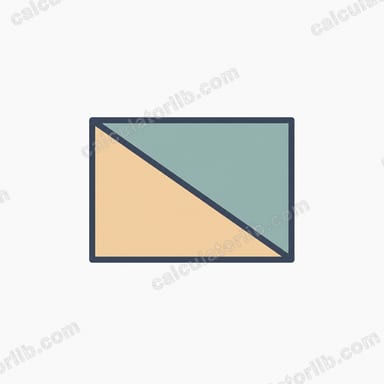
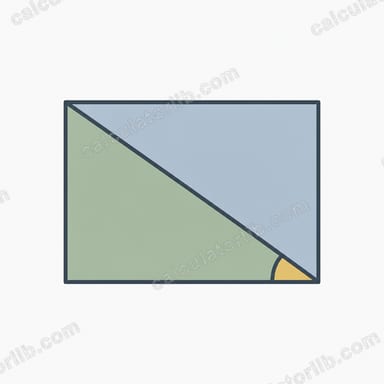
- From the diagonal: If you know the diagonal and width, the length can also be calculated.
Make sure all measurements use the same units before calculating to avoid errors.
The Formula Explained
The length of a rectangle is derived from the standard rectangle formulas:
- Using area: Length = Area ÷ Width
- Using perimeter: Length = (Perimeter ÷ 2) − Width
- Using diagonal: Length = √(Diagonal² − Width²)
Each method rearranges a familiar rectangle equation to isolate the length, so the right formula depends on the data you have.
Worked Example
Suppose a rectangular garden has an area of 48 square metres and a width of 6 metres. Using the area formula:
Length = 48 ÷ 6 = 8 metres.
Now imagine a rectangle with a perimeter of 30 cm and a width of 5 cm. Using the perimeter formula:
Length = (30 ÷ 2) − 5 = 15 − 5 = 10 cm.
Frequently Asked Questions
Can I find the length without knowing the width? No. A rectangle's length cannot be determined from area or perimeter alone — you always need one more measurement, usually the width or diagonal.
What if my width is larger than expected? If using the perimeter formula gives a negative result, your width exceeds half the perimeter, which means the values you entered are impossible for a real rectangle.
Does this work for squares? Yes. A square is a special rectangle, so the length and width will simply be equal.