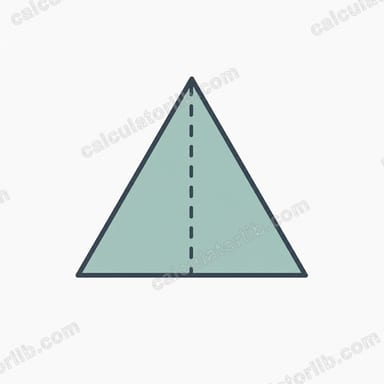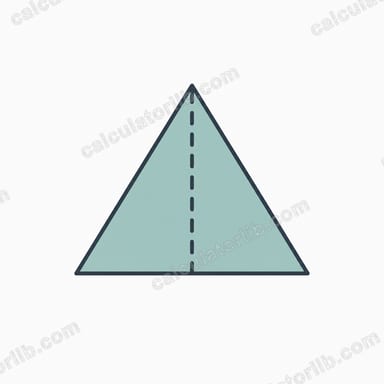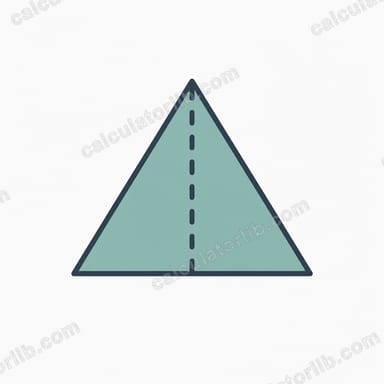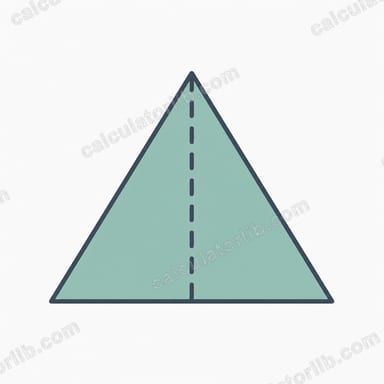

What This Calculator Does
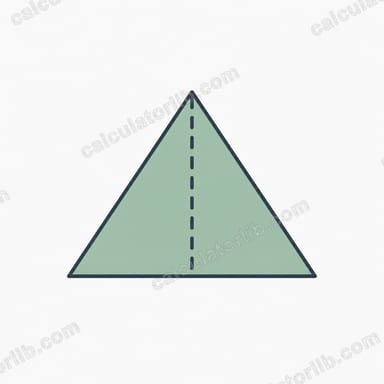
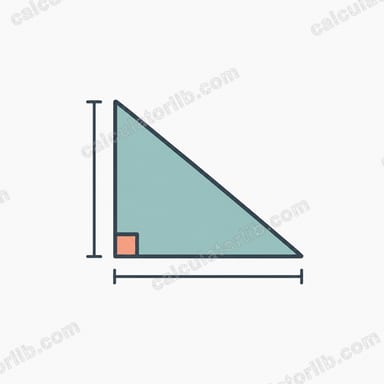
This tool computes the area of any triangle when you know its base length and the perpendicular height (altitude) measured to that base. It works for every kind of triangle — right, acute, obtuse, isosceles, equilateral, or scalene — because the area depends only on the base and how far the opposite vertex sits from it.
How to Use It
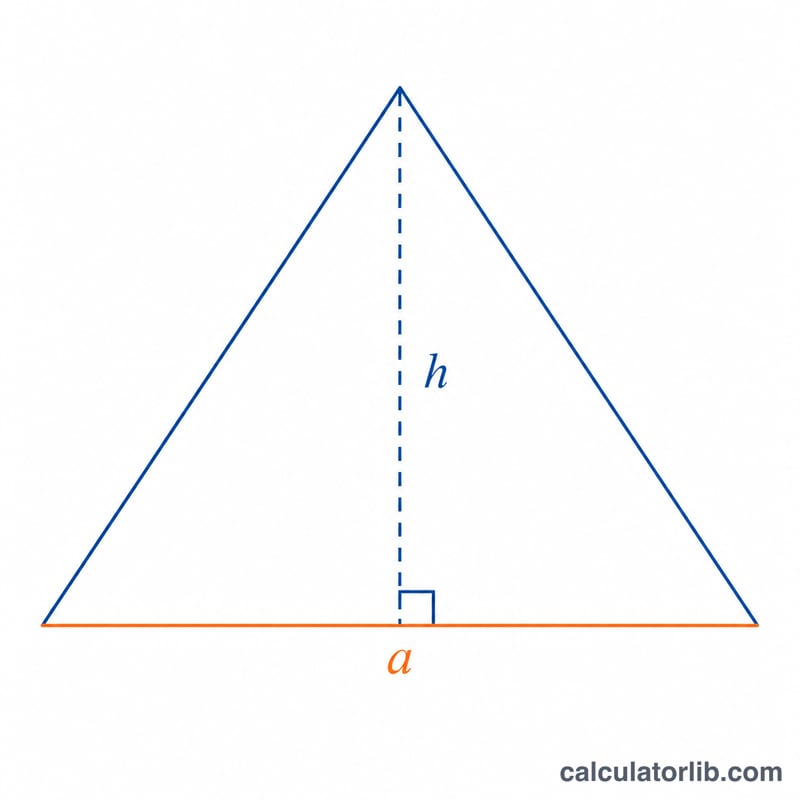
Enter the base length in the "Base a" field and the perpendicular height in the "Height h" field, then read the area. The calculator is unit-agnostic: it performs no unit conversion. Whatever length unit you use for both inputs (cm, m, inch, feet), the area is returned in that unit squared. Just make sure the base and height use the same unit.
The Formula Explained
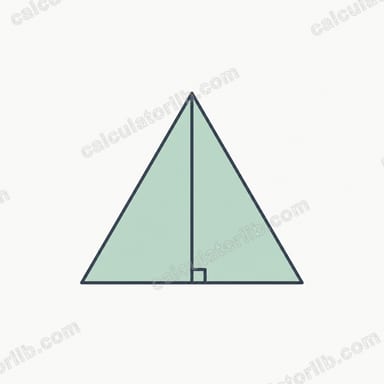
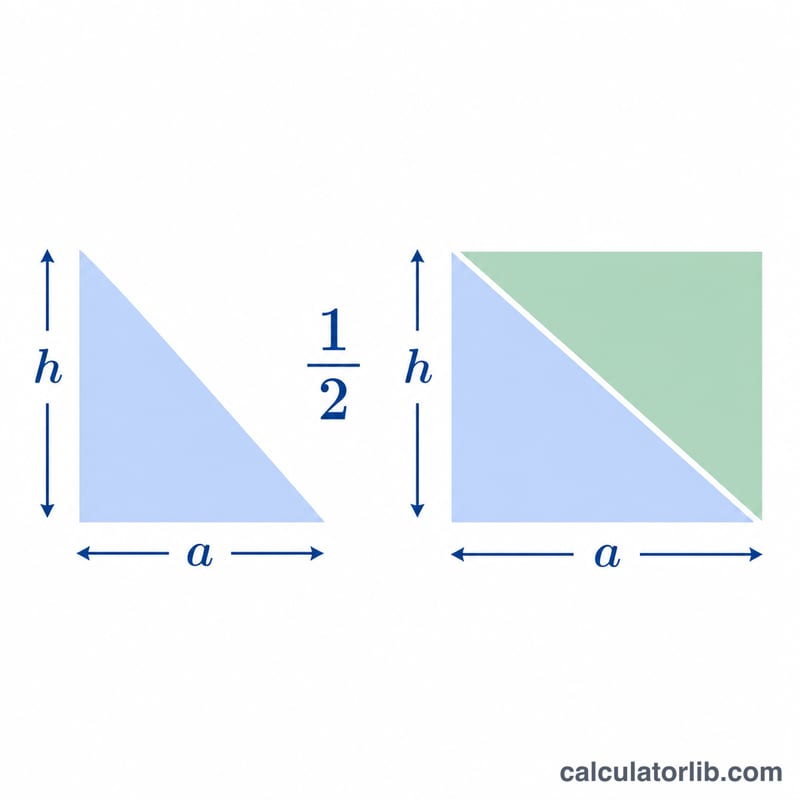
The area of a triangle is given by $$S = \frac{1}{2} \times a \times h$$, where \(a\) is the base and \(h\) is the perpendicular height to that base. The factor of one half reflects that a triangle is exactly half of the parallelogram (or rectangle) that shares the same base and height. The height must be the perpendicular altitude, not a slanted side.
Worked Example
Suppose a triangle has a base of 6 and a height of 4. Then $$S = 0.5 \times 6 \times 4 = 12$$ square units. For the default values base = 2 and height = 1, the area is \(0.5 \times 2 \times 1 = 1\) square unit.
FAQ
Does the height have to be perpendicular? Yes. The height is the shortest (perpendicular) distance from the chosen base to the opposite vertex, never a slant side length.
What units does the area use? The area is in the square of whatever length unit you used for both inputs. The page does not convert units, so keep base and height in matching units.
What if I enter zero or a negative number? A base or height of zero gives an area of zero (a degenerate triangle). Negative values are not physically meaningful, so the calculator uses their absolute value.