
什麼是平均數標準誤?
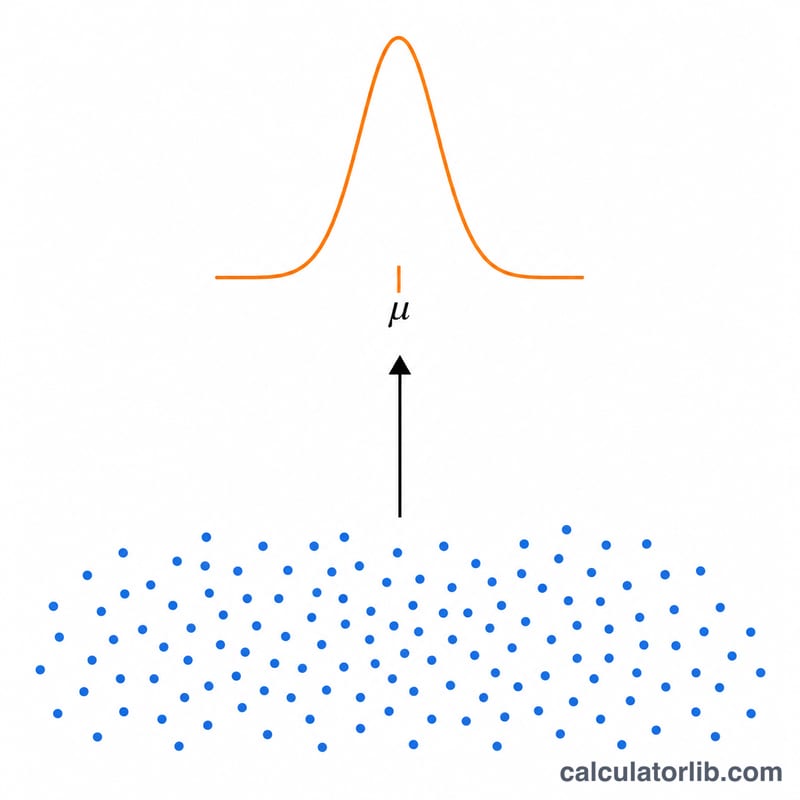
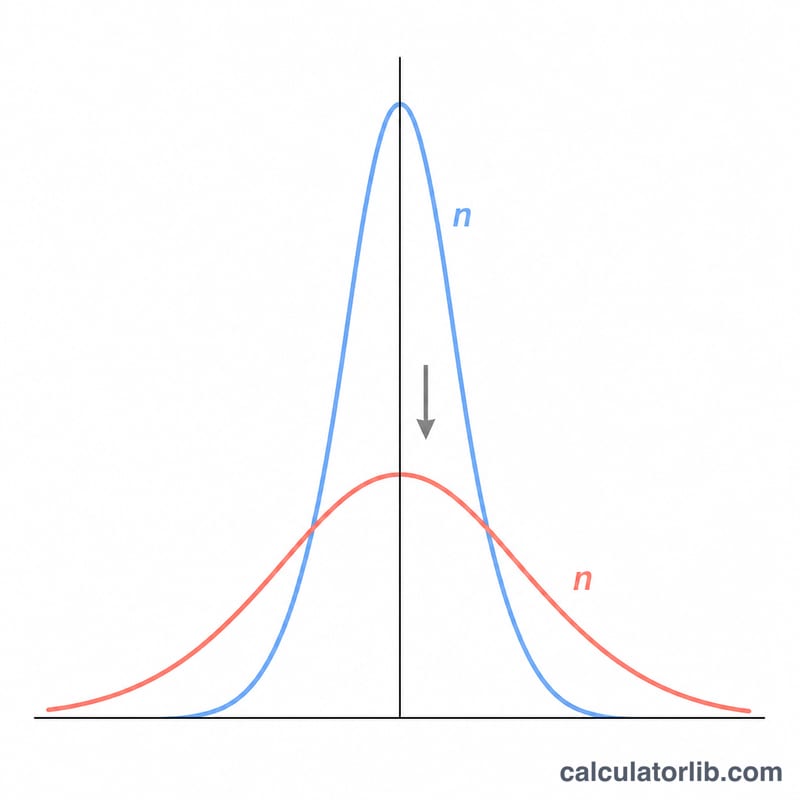
平均數標準誤(SEM)用來衡量樣本平均數與真實母體平均數之間預期會有多大的偏離。標準差描述的是個別資料點的分散程度,而 SEM 描述的則是你對「平均值」這項估計的精準度。樣本數越大,標準誤就越小,代表你算出的樣本平均數越能可靠地代表母體平均數。
如何使用這個計算器
只要輸入樣本標準差(s)與樣本數(n),就能立即得到結果。計算器會將標準差除以樣本數的平方根。如果你手邊只有原始資料,請先計算出標準差,再連同觀測值的數量一起填入即可。
公式說明
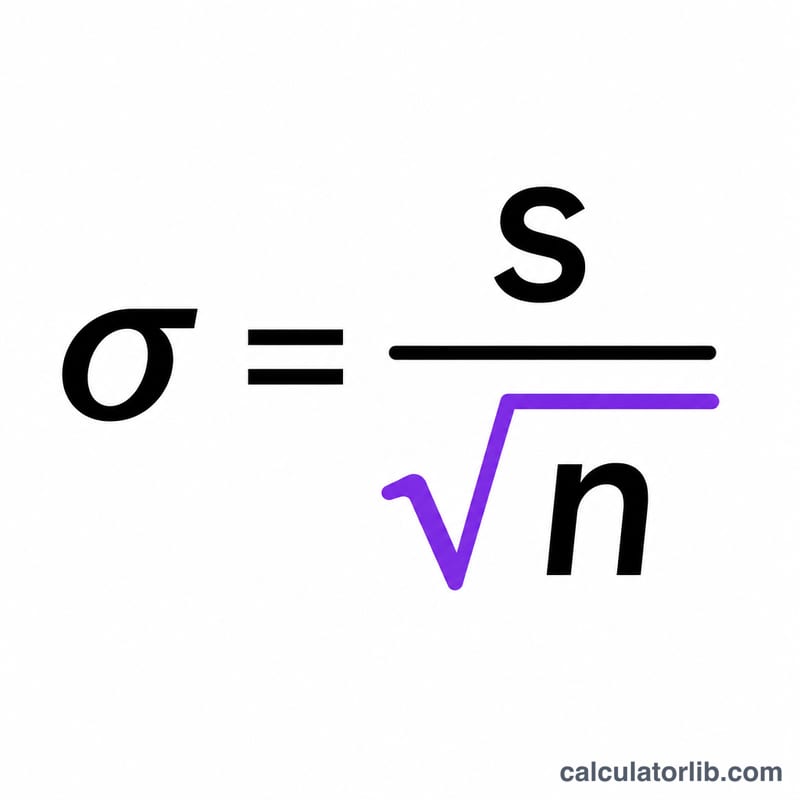
公式為 $$\text{SEM} = \frac{s}{\sqrt{n}}$$ 其中 \(s\) 是樣本標準差,\(n\) 是觀測值的數量。由於 \(n\) 位在平方根之下,因此樣本數增加為四倍,標準誤卻只會減半——這是在規劃研究、估算所需樣本數時非常實用的經驗法則。
Advertisement
範例演算
假設有一組 25 筆測量值的樣本,其標準差為 15。則 SEM 為 $$\text{SEM} = \frac{15}{\sqrt{25}} = \frac{15}{5} = 3$$ 也就是說,這個樣本平均數的標準誤為 3 個單位。常見的 95% 信賴區間大約就是 平均數 \(\pm 1.96 \times 3\)。
Advertisement
常見問題
SEM 和標準差是同一回事嗎?不是。標準差衡量的是各資料點之間的變異程度;SEM 衡量的則是樣本平均數作為母體平均數估計值時的變異程度。
為什麼樣本數越大,SEM 就越小?因為平均了更多的觀測值之後,隨機誤差會被抵消、降低,所以平均數會成為更穩定的估計值。
如果我只知道母體標準差怎麼辦?你仍然可以用它來代替 \(s\),公式維持不變,依然是 \(s / \sqrt{n}\)。