Connect via MCP →

Enter Calculation

Formula

Formula: Hyperbolic Functions Table Calculator
Show calculation steps (1)
  1. tanh

    tanh: Hyperbolic Functions Table Calculator

    Hyperbolic tangent as the ratio of sinh to cosh; bounded in (-1, 1).

Advertisement

Results

Hyperbolic Function Table
81
rows computed (sinh, cosh, tanh) at 6 significant digits
x sinh(x) cosh(x) tanh(x)
-2 -3.62686 3.7622 -0.964028
-1.95 -3.44321 3.58548 -0.960319
-1.9 -3.26816 3.41773 -0.956237
-1.85 -3.10129 3.25853 -0.951746
-1.8 -2.94217 3.10747 -0.946806
-1.75 -2.79041 2.96419 -0.941376
-1.7 -2.64563 2.82832 -0.935409
-1.65 -2.50746 2.69951 -0.928858
-1.6 -2.37557 2.57746 -0.921669
-1.55 -2.24961 2.46186 -0.913785
-1.5 -2.12928 2.35241 -0.905148
-1.45 -2.01427 2.24884 -0.895693
-1.4 -1.9043 2.1509 -0.885352
-1.35 -1.79909 2.05833 -0.874053
-1.3 -1.69838 1.97091 -0.861723
-1.25 -1.60192 1.88842 -0.848284
-1.2 -1.50946 1.81066 -0.833655
-1.15 -1.42078 1.73741 -0.817754
-1.1 -1.33565 1.66852 -0.800499
-1.05 -1.25386 1.60379 -0.781806
-1 -1.1752 1.54308 -0.761594
-0.95 -1.09948 1.48623 -0.739783
-0.9 -1.02652 1.43309 -0.716298
-0.85 -0.956116 1.38353 -0.691069
-0.8 -0.888106 1.33743 -0.664037
-0.75 -0.822317 1.29468 -0.635149
-0.7 -0.758584 1.25517 -0.604368
-0.65 -0.696748 1.21879 -0.57167
-0.6 -0.636654 1.18547 -0.53705
-0.55 -0.578152 1.1551 -0.50052
-0.5 -0.521095 1.12763 -0.462117
-0.45 -0.465342 1.10297 -0.421899
-0.4 -0.410752 1.08107 -0.379949
-0.35 -0.35719 1.06188 -0.336376
-0.3 -0.30452 1.04534 -0.291313
-0.25 -0.252612 1.03141 -0.244919
-0.2 -0.201336 1.02007 -0.197375
-0.15 -0.150563 1.01127 -0.148885
-0.1 -0.100167 1.005 -0.099668
-0.05 -0.0500208 1.00125 -0.0499584
0 0 1 0
0.05 0.0500208 1.00125 0.0499584
0.1 0.100167 1.005 0.099668
0.15 0.150563 1.01127 0.148885
0.2 0.201336 1.02007 0.197375
0.25 0.252612 1.03141 0.244919
0.3 0.30452 1.04534 0.291313
0.35 0.35719 1.06188 0.336376
0.4 0.410752 1.08107 0.379949
0.45 0.465342 1.10297 0.421899
0.5 0.521095 1.12763 0.462117
0.55 0.578152 1.1551 0.50052
0.6 0.636654 1.18547 0.53705
0.65 0.696748 1.21879 0.57167
0.7 0.758584 1.25517 0.604368
0.75 0.822317 1.29468 0.635149
0.8 0.888106 1.33743 0.664037
0.85 0.956116 1.38353 0.691069
0.9 1.02652 1.43309 0.716298
0.95 1.09948 1.48623 0.739783
1 1.1752 1.54308 0.761594
1.05 1.25386 1.60379 0.781806
1.1 1.33565 1.66852 0.800499
1.15 1.42078 1.73741 0.817754
1.2 1.50946 1.81066 0.833655
1.25 1.60192 1.88842 0.848284
1.3 1.69838 1.97091 0.861723
1.35 1.79909 2.05833 0.874053
1.4 1.9043 2.1509 0.885352
1.45 2.01427 2.24884 0.895693
1.5 2.12928 2.35241 0.905148
1.55 2.24961 2.46186 0.913785
1.6 2.37557 2.57746 0.921669
1.65 2.50746 2.69951 0.928858
1.7 2.64563 2.82832 0.935409
1.75 2.79041 2.96419 0.941376
1.8 2.94217 3.10747 0.946806
1.85 3.10129 3.25853 0.951746
1.9 3.26816 3.41773 0.956237
1.95 3.44321 3.58548 0.960319
2 3.62686 3.7622 0.964028

What this calculator does

This tool builds a table of the three basic hyperbolic functions — hyperbolic sine (sinh), hyperbolic cosine (cosh) and hyperbolic tangent (tanh) — for every value of x in a range you choose. You set a start value, an end value and a step increment, and the calculator iterates across the interval, computing each function at each point. It is handy for studying function shapes, checking homework, or generating data points to plot.

How to use it

Enter the Start value and End value of x, then a positive Increment (step). Optionally pick how many significant digits to display. The increment must be greater than zero, and the end value should be at least the start value. The number of rows is approximately \( \lfloor (\text{end} - \text{start}) / \text{step} \rfloor + 1 \); very small steps over wide ranges are capped at 2000 rows to keep the table manageable.

The formulas explained

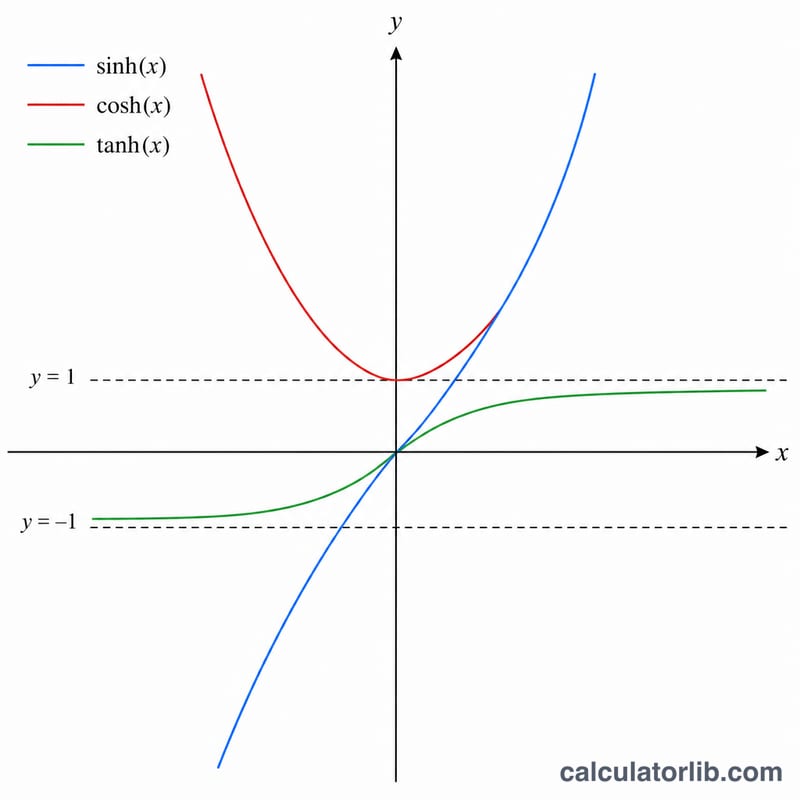
The hyperbolic functions are defined from the exponential function: $$\sinh x = \frac{e^{x}-e^{-x}}{2},\quad \cosh x = \frac{e^{x}+e^{-x}}{2}$$ Their ratio gives $$\tanh x = \frac{\sinh x}{\cosh x} = \frac{e^{x}-e^{-x}}{e^{x}+e^{-x}}$$ Because \(\cosh x\) is always at least 1, tanh never divides by zero, and tanh always lies strictly between \(-1\) and \(1\). sinh and tanh are odd functions while cosh is even, so \(\sinh 0 = 0\), \(\cosh 0 = 1\) and \(\tanh 0 = 0\).
Advertisement
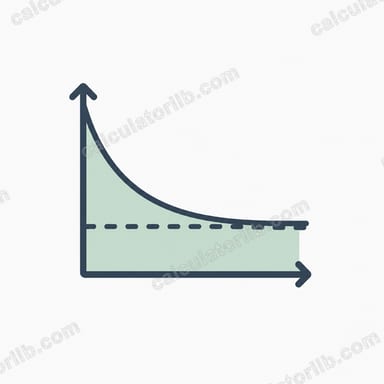
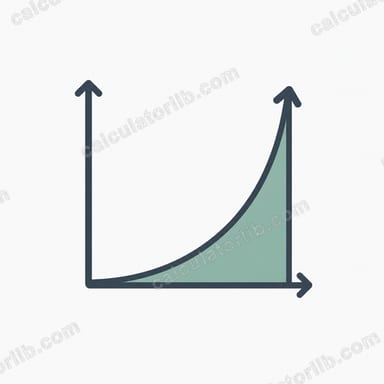
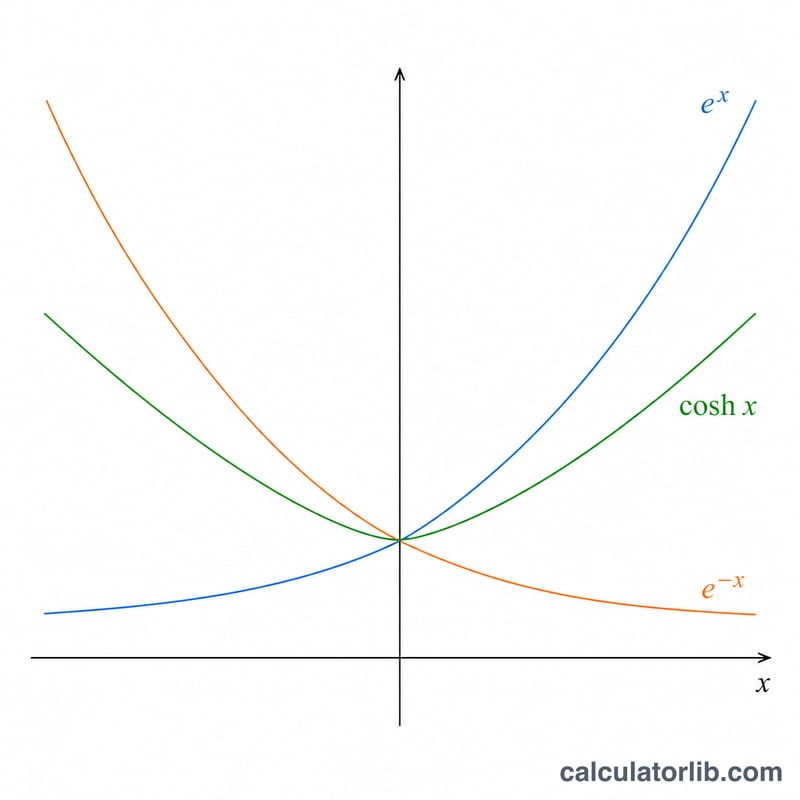
Exponential curves e^x and e^-x forming hyperbolic functions
sinh and cosh are built from the growing and decaying exponentials e^x and e^-x.
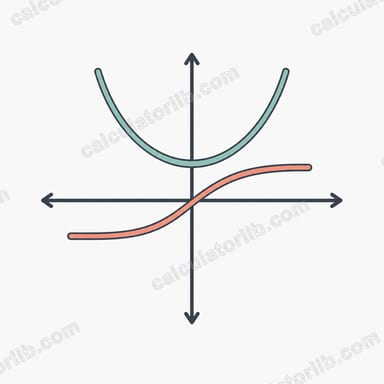
Graphs of sinh, cosh and tanh curves on the same axes
The three core hyperbolic functions: sinh (odd, S-shaped), cosh (even, U-shaped) and tanh (bounded between -1 and 1).

Worked example

With start = \(-2\), end = 2, step = 1 you get five rows for x = \(-2, -1, 0, 1, 2\). At \(x = 2\): \(e^{2} = 7.389056\) and \(e^{-2} = 0.135335\), so $$\sinh 2 = \frac{7.389056 - 0.135335}{2} = 3.626860$$ $$\cosh 2 = \frac{7.389056 + 0.135335}{2} = 3.762196$$ $$\tanh 2 = \frac{3.626860}{3.762196} = 0.964028$$ By symmetry \(x = -2\) gives the negatives of sinh and tanh and the same cosh.

FAQ

Why must the step be positive? A zero or negative step would never advance toward the end value, producing an infinite loop or no progress, so it is rejected.

What happens for very large x? For \(|x|\) beyond roughly 710, sinh and cosh overflow the range of a double and show as Infinity; the tool flags this with a warning.

Does x have units? No. The argument x is a dimensionless real number and is used directly with no scaling.


Last updated: