
What This Calculator Does
When you win a large lottery prize you usually choose between a one-time lump sum (the "cash option") and an annuity paid in equal installments over many years. This tool estimates the after-tax value of each so you can compare them side by side. Tax rules and lottery rules vary by country and state — the figures here are simplified estimates, not tax advice.
How to Use It
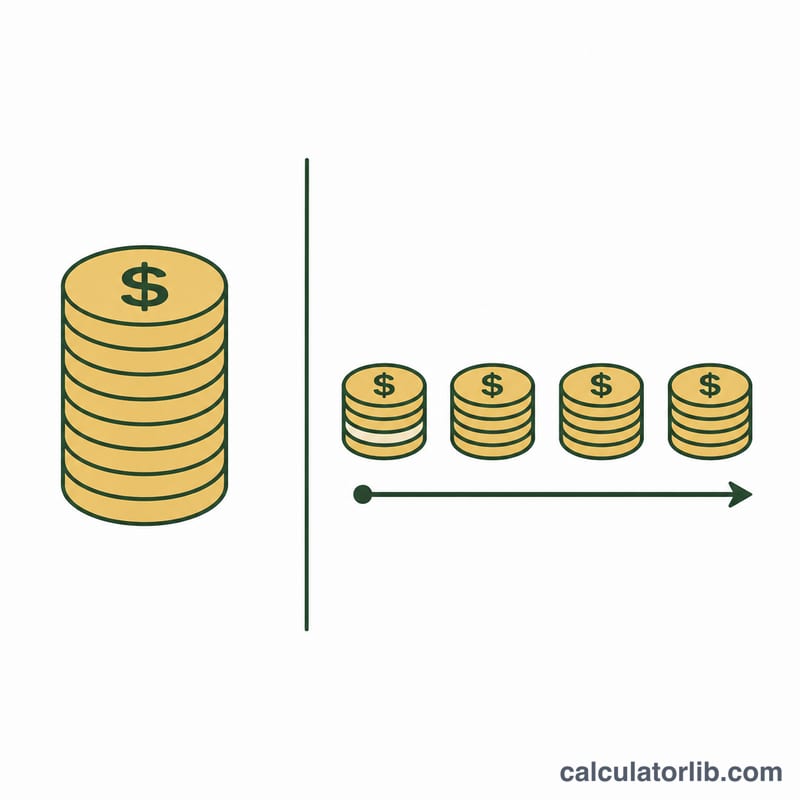
Enter the advertised jackpot, the cash option as a percentage of the jackpot (commonly 50–65%), the number of annuity years (often 30), and your combined effective tax rate. The calculator shows the net lump sum, the net annual annuity payment, and the total annuity received over the full term.
The Formula Explained
The lump sum is the jackpot multiplied by the cash-option fraction, then reduced by tax: \( \text{Lump} = J \times c \times (1 - t) \). The annuity divides the full advertised jackpot evenly across the years and reduces each payment by tax: \( \text{Annuity/yr} = (J \div n) \times (1 - t) \). Annuities pay out the larger advertised total, while the lump sum pays a smaller amount now that you can invest yourself.
$$\text{Lump} = J \times c \times (1 - t)$$$$\text{Annuity/yr} = (J \div n) \times (1 - t)$$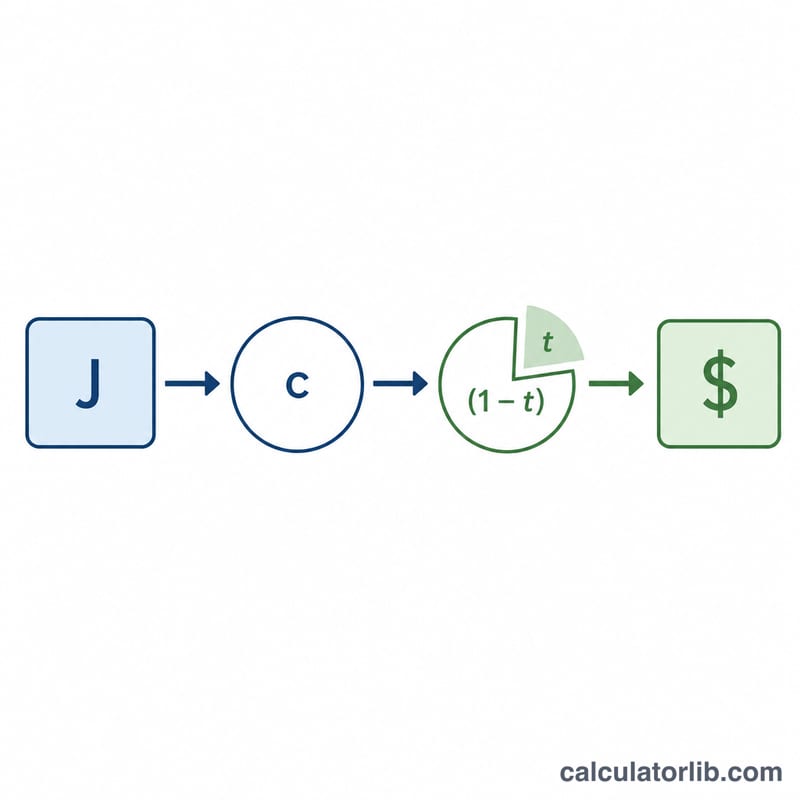
Worked Example
A $100,000,000 jackpot with a 60% cash option, 30-year annuity, and a 37% tax rate. Lump gross = $60,000,000; after 37% tax = $37,800,000. Annuity per year = $$(\$100{,}000{,}000 \div 30) \times 0.63 = \$2{,}100{,}000$$ $2,100,000, totaling $63,000,000 over 30 years.
FAQ
Which option is better? The annuity yields a larger headline total, but the lump sum lets you invest immediately. If your investment return beats the lottery's implied annuity rate, the lump sum can win.
Is the tax rate accurate? Use your combined federal, state, and local effective rate. Large winnings often push you into top brackets, so 37%+ is a common assumption in the US.
Why is the lump sum smaller? The cash option is the present-day value the lottery would otherwise invest to fund the full annuity, so it is less than the advertised jackpot.