
What this calculator does
This tool evaluates the modified spherical Bessel functions of the first kind \(i_v(x)\) and second kind \(k_v(x)\), along with their first derivatives \(i'_v(x)\) and \(k'_v(x)\), for a non-negative integer order \(v\) and a positive real argument \(x\). These are pure special functions of mathematics — they apply identically everywhere with no regional or unit assumptions.
Background and formula
The functions solve the modified spherical Bessel equation $$x^2 w'' + 2x w' - (x^2 + v(v+1))w = 0.$$ They relate to the cylindrical modified Bessel functions through a half-integer order shift: \(i_v(x) = \sqrt{\pi/2x}\cdot I_{v+1/2}(x)\) and \(k_v(x) = \sqrt{2/\pi x}\cdot K_{v+1/2}(x)\). Because the \(+1/2\) shift makes the order a half-integer for integer \(v\), the functions reduce to elementary expressions in sinh, cosh and exp. We seed with $$i_0=\frac{\sinh x}{x}, \quad i_1=\frac{\cosh x}{x}-\frac{\sinh x}{x^2}, \quad k_0=\frac{\pi}{2x}e^{-x}, \quad k_1=\frac{\pi}{2x}e^{-x}\left(1+\frac{1}{x}\right),$$ then step upward to the requested order. Derivatives use $$f'_v = -f_{v+1} + \frac{v}{x}f_v.$$
How to use it
Enter the integer order \(v\) (0, 1, 2, …) and the argument \(x\) with \(x > 0\), then read the four outputs. Note the convention here uses \(k_v(x)=\sqrt{2/\pi x}\,K_{v+1/2}(x)\), which introduces the \(\pi/2\) factor seen in \(k_0\); some references omit it.
Worked example (v = 0, x = 2)
$$i_0(2)=\frac{\sinh(2)}{2}=\frac{3.6268604}{2}=1.8134302.$$ $$i_1(2)=\frac{\cosh(2)}{2}-\frac{\sinh(2)}{4}=1.8810978-0.9067151=0.9743827,$$ so \(i'_0(2)=-i_1(2)=-0.9743827\). $$k_0(2)=\frac{\pi}{4}e^{-2}=0.1062930, \quad k_1(2)=k_0\cdot 1.5=0.1594394,$$ so \(k'_0(2)=-k_1(2)=-0.1594394\).
FAQ
Can I use non-integer order \(v\)? This real-valued snippet supports non-negative integer orders, where the functions are elementary. Non-integer orders require full I/K Bessel evaluation.
Why must \(x\) be positive? \(k_v(x)\) diverges as \(x\rightarrow 0\) and results become complex for \(x<0\), so the real version requires \(x > 0\).
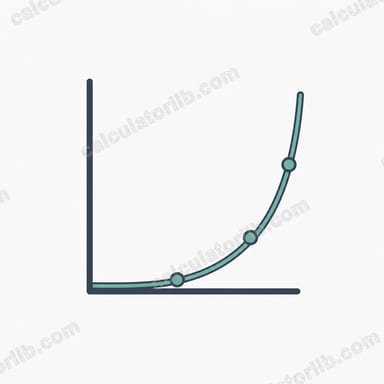
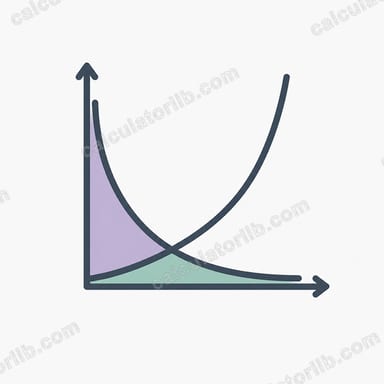
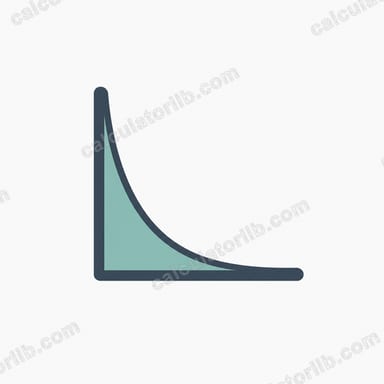
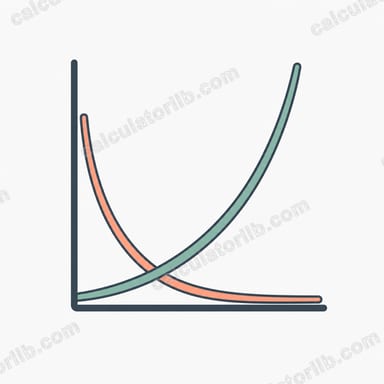
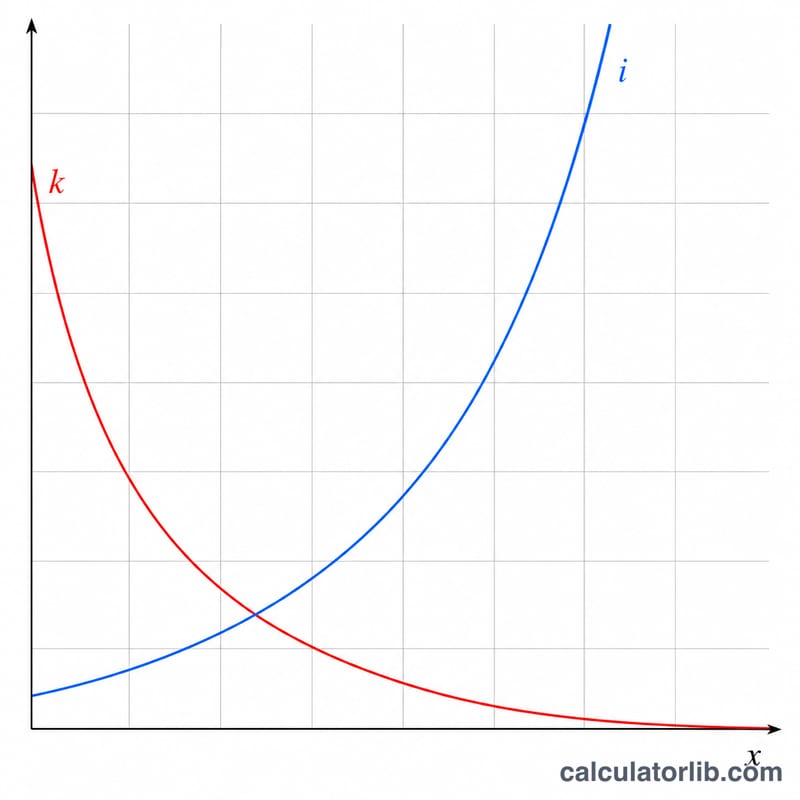
What is the difference between \(i_v\) and \(k_v\)? \(i_v\) grows exponentially and is regular at the origin; \(k_v\) decays exponentially and is singular at the origin.